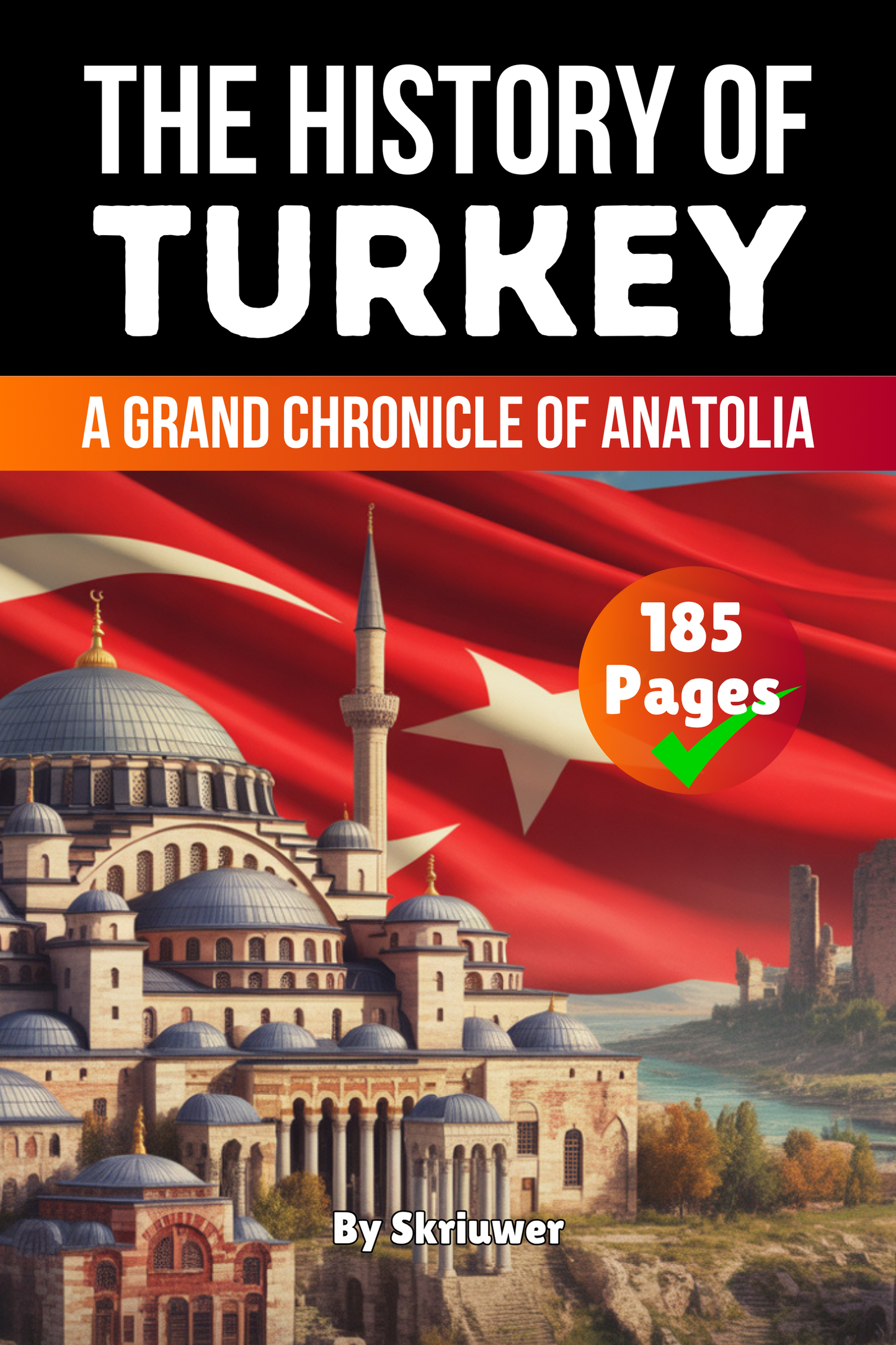
The History of Turkey: A Grand Chronicle of Anatolia
Couldn't load pickup availability
This sweeping book tells the complete story of Anatolia and Turkey across 12,000 years, from the world’s oldest temples to the founding of the modern republic. Written with passion and precision, it brings to life the civilizations, leaders, and turning points that made this land one of history’s greatest crossroads.
Key Chapters and Highlights:
- Göbekli Tepe: The revolutionary 11,000 BC sanctuary that rewrote human prehistory
- Hittite Empire: Bronze Age power plays and mysterious rituals
- Troy, Byzantium, and Constantinople: Legendary cities that changed hands again and again
- Ottoman Golden Age: Sultans, janissaries, and the conquest of 1453
- Fall of empire and birth of the republic: Atatürk’s vision and the creation of modern Turkey
Reader Feedback Example: "This is the Turkey book I’ve been searching for my whole life. Every page feels alive with history, and the storytelling is incredible." – Emre D. (Verified Purchase)
Why Readers Love This Book:
- Beautifully written narrative that reads like your favorite historical epic
- Perfect for anyone fascinated by ancient mysteries, Byzantine splendor, Ottoman grandeur, or Atatürk’s revolution
- Ideal companion for travelers to Istanbul, Cappadocia, or Ephesus
- Essential reading for history lovers who want the full, dramatic story in one place
Discover why this narrow strip of land has shaped religions, empires, and ideas for millennia. Whether you’re planning a trip or simply love a nation that refuses to stay buried in the past, this book delivers the complete, unforgettable journey.
Add to cart today and experience one of history’s most astonishing stories.
TABLE OF CONTENTS
CHAPTER 1: PREHISTORIC ANATOLIA – THE LAND BEFORE RECORDS
-
Earliest human settlement and cave communities
-
Transition from hunter-gatherers to agricultural societies
-
Formation of Neolithic settlements like Çatalhöyük and Göbekli Tepe
CHAPTER 2: THE HITTITE EMPIRE – ESTABLISHMENT & INFLUENCE
-
Origins of the Hittites and Indo-European connections
-
Rise of Hattusa as the capital city
-
Military campaigns, diplomatic treaties, and cultural achievements
CHAPTER 3: BRONZE AGE COLLAPSE AND IRON AGE KINGDOMS
-
Regional upheavals marking the end of major Bronze Age powers
-
Arrival of new ethnic groups and shifts in political landscapes
-
Formation and significance of post-Hittite and early Iron Age states
CHAPTER 4: PHRYGIA, LYDIA, AND IONIAN GREECE
-
Phrygian rule under legendary kings like Midas
-
Lydian wealth, coinage innovations, and the reign of Croesus
-
Greek coastal colonies and the growth of Ionian culture
CHAPTER 5: PERSIAN RULE IN ANATOLIA AND THE ACHAEMENID ERA
-
Persian conquests and the establishment of satrapies
-
Administrative structure and impact on local cultures
-
Revolts, including the Ionian Revolt, against Persian governance
CHAPTER 6: ALEXANDER THE GREAT & THE HELLENISTIC KINGDOMS
-
Alexander’s campaigns across Anatolia
-
The spread of Hellenistic culture and city-building
-
Division of territories among Alexander’s successors (Diadochi)
CHAPTER 7: ROMAN ANATOLIA – THE EARLY IMPERIAL PERIOD
-
Transition from Hellenistic rule to Roman governance
-
Infrastructure development and trade networks
-
Integration of local traditions under Roman administration
CHAPTER 8: LATE ROMAN ERA – THE RISE OF CHRISTIANITY
-
Administrative reforms and the shift to a more centralized empire
-
Spread of Christianity and early Christian communities
-
Changes in social and religious practices within Anatolia
CHAPTER 9: EARLY BYZANTINE PERIOD – CONTINUITY AND CHANGE
-
Transformation of the Eastern Roman Empire
-
Military conflicts and defense against external threats
-
Religious evolution, councils, and Byzantine cultural identity
CHAPTER 10: LATER BYZANTINE PERIOD – STRUGGLES AND TRANSFORMATIONS
-
Power struggles and internal divisions
-
Cultural and architectural achievements in Byzantine Anatolia
-
Increasing pressure from emerging Turkish forces
CHAPTER 11: THE ARRIVAL OF THE SELJUK TURKS
-
Migration of the Seljuk Turks into Anatolia
-
Victory at Manzikert and its consequences
-
Foundations of Seljuk governance and cultural influences
CHAPTER 12: THE ANATOLIAN BEYLIKS – FRAGMENTATION AND COMPETITION
-
Regional rulers establishing independent principalities
-
Economic and cultural developments under various Beyliks
-
Military alliances and conflicts shaping the region’s balance of power
CHAPTER 13: ORIGINS OF THE OTTOMAN STATE
-
Rise of Osman I and the early Ottoman principality
-
Strategic expansion and consolidation of power
-
Socio-political structures that formed the basis of Ottoman governance
CHAPTER 14: OTTOMAN EXPANSION AND GROWTH
-
Conquest of Bursa and later captures of major cities
-
Military organization, including the Janissaries
-
Diplomacy, trade, and alliances guiding further territorial gains
CHAPTER 15: THE CLASSICAL OTTOMAN PERIOD
-
Institutional and administrative frameworks
-
Architectural developments and cultural fluorescence
-
Peak of imperial power under notable sultans
CHAPTER 16: SHIFTS AND REFORMS IN THE 17TH CENTURY
-
Economic challenges and military pressures
-
Initial reform attempts to modernize the army and bureaucracy
-
Social and cultural ramifications of ongoing conflicts
CHAPTER 17: THE TULIP PERIOD AND EARLY 18TH-CENTURY REFORMS
-
Cultural renaissance and European influences
-
Court life and patronage of the arts
-
Limitations and failures of early modernization efforts
CHAPTER 18: THE 19TH CENTURY – REFORMS AND WESTERN INFLUENCES
-
Growing western impact on Ottoman politics and society
-
Legal and administrative reforms, including the Tanzimat
-
Economic struggles and responses to internal/external pressures
CHAPTER 19: LATE OTTOMAN DECLINE AND CRISES
-
Rising nationalist movements and territorial losses
-
Internal reforms aimed at halting decline
-
Financial difficulties and global power rivalries
CHAPTER 20: WORLD WAR I AND THE TWILIGHT OF EMPIRE
-
Entry into the Great War and its impact on Anatolia
-
Social upheaval, administrative breakdown, and final collapse
-
Legacy of the Ottoman era leading into the modern period
Product Details
Dimensions: 6 × 9 inches / 15.24 x 22.86 cm
Cover: Paperback

Why Skriuwer.com?
-
Supporting Frisian Language
When you buy from Skriuwer, you're not just getting a book—you’re helping create more Frisian books and educational resources like LearnFrisian.com. Your support directly helps us preserve and grow the Frisian language for future generations.
-
Making Languages Accessible
We believe in making languages easy to learn and accessible. While Frisian is our passion, we also want to help people learn other key languages like Dutch and English by providing helpful resources and learning tools.
-
Investing in Future Projects
Your purchase fuels more than just current projects. It helps us dream big and plan for the future, whether that’s developing new books, launching language-learning platforms, or supporting other educational initiatives. You're helping us build something lasting!
Preserving the Frisian Language
At Skriuwer.com, we believe that the Frisian language is more than just words—it's a living, breathing part of our heritage. But like many minority languages, it faces challenges of survival in an ever-changing world. That’s why our mission is simple yet vital: to keep the Frisian language alive and thriving for generations to come.
Every book we create, every story we tell, and every word we publish is part of a larger effort to preserve and celebrate Frisian culture. But we can’t do it alone. With your help, we can make a real difference.

How You Can Help:
- When you purchase one of our books, you’re not just adding a beautiful piece of literature to your collection—you’re directly supporting the preservation of the Frisian language. Each book helps to spread the richness of our language to more people.
- You can also contribute to this cause by learning the Frisian language through our partner site, www.learnfrisian.com.
- Donate: If you believe in our mission, you can also make a contribution to help us continue our work. Whether it’s funding new publications, supporting educational programs, or helping us reach more Frisian speakers, your donation can make a lasting impact. Just click the button below to contribute!
Together, we can ensure that the Frisian language remains a vibrant part of our world. Join us in this journey—your support today means a brighter future for our language tomorrow.