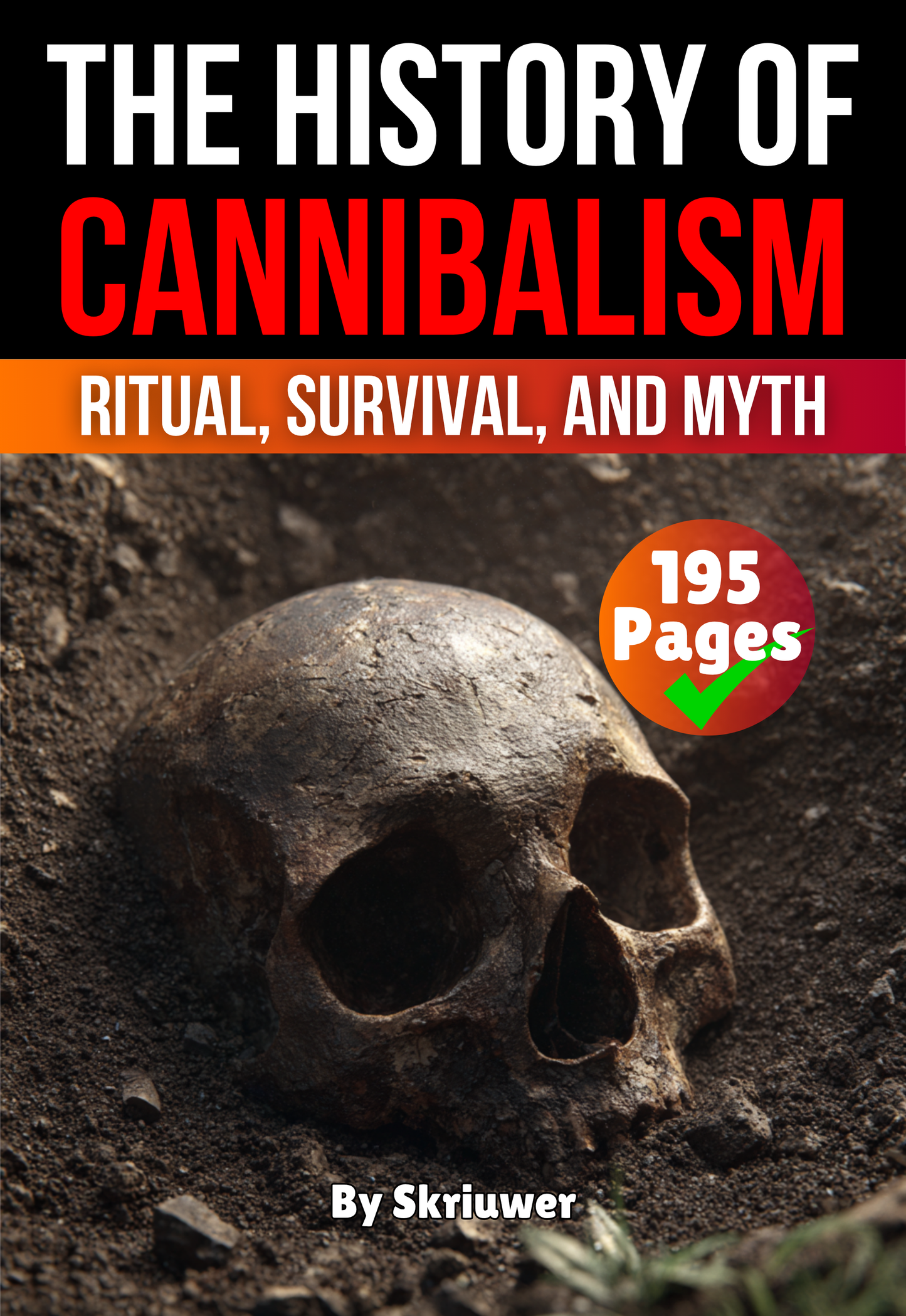

The History of Cannibalism: Ritual, Survival, and Myth
Kan beschikbaarheid voor afhalen niet laden
This compelling book explores the historical and anthropological evidence surrounding cannibalism across cultures and eras. Written with academic rigor and gripping storytelling, it examines documented cases, ritual practices, survival situations, and how the topic has been used in propaganda and law.
What the book covers:
- Archaeological evidence from prehistoric sites to medieval Europe
- Ritual practices in Mesoamerica and the Andes
- Survival cannibalism in maritime disasters and sieges
- Colonial-era accusations and their political uses
- Legal precedents like the Mignonette case ("custom of the sea")
- Modern forensic findings and cultural myths
Reader Feedback Example: "Finally a serious, well-researched look at one of history’s most misunderstood subjects. The balance of evidence and context is outstanding." – Dr. Lena Almeida (Anthropologist)
Why readers call it essential:
- 100 % based on primary sources, archaeological reports, court records, and survivor accounts
- Perfect for anthropology students, true-crime readers, colonial history buffs, or anyone fascinated by extreme human behavior Ideal companion for books like Alive, The Indifferent Stars Above, or academic works on ritual and survival Clear, unflinching writing that separates fact from fiction without sensationalism
If you’ve ever wondered how societies draw the line between sacred ritual, desperate survival, and ultimate taboo, this book gives you the evidence to understand it all.
Add to cart today and explore one of humanity’s most enduring and complex subjects with the depth it deserves.
TABLE OF CONTENTS
CHAPTER 1: EARLY MYTHS AND PREHISTORIC EVIDENCE
-
Archaeological signs of possible cannibalism among prehistoric hominids.
-
Mythological tales that shaped early perceptions of man-eating (giants, supernatural beings).
-
Debates over survival vs. ritual motivations in cave sites and ancient remains.
CHAPTER 2: CANNIBALISM IN THE ANCIENT NEAR EAST AND THE MEDITERRANEAN WORLD
-
References in Mesopotamian inscriptions and biblical texts linking siege starvation to man-eating.
-
Greek and Roman reports of “barbarians” practicing cannibalism—factual or propaganda?
-
The role of mythic narratives (Thyestes, Polyphemus) in defining the taboo.
CHAPTER 3: CANNIBALISM IN ANCIENT EGYPT AND NORTH AFRICA
-
Examination of the “Cannibal Hymn” in Pyramid Texts.
-
Sparse direct evidence but persistent rumors—Egyptian funerary practices often misread.
-
North African “man-eater” accusations used by external observers (Greek, Roman) to demonize locals.
CHAPTER 4: CANNIBAL PRACTICES AMONG EARLY EUROPEAN SOCIETIES
-
Neolithic and Bronze Age skeletal remains with cut marks suggesting occasional ritual consumption.
-
Greek and Roman labeling of certain European tribes as man-eaters—real or exaggerated?
-
Famine-driven anthropophagy in primitive farming communities under harsh conditions.
CHAPTER 5: RITUAL CANNIBALISM IN PRE-COLUMBIAN MESOAMERICA
-
Aztec human sacrifice and possible flesh consumption in religious ceremonies.
-
Archaeological and codex evidence of ritual feasts post-sacrifice.
-
Spanish conquistador accounts fueling exaggerated “New World cannibal” narratives.
CHAPTER 6: ANDEAN SURVIVAL CANNIBALISM AND CULTURAL PRACTICES
-
Highland famine or siege scenarios occasionally leading to anthropophagy.
-
Ritual possibilities among Moche or other pre-Inca cultures—disputed evidence.
-
Inca emphasis on ancestor veneration overshadowing sensational Spanish rumors.
CHAPTER 7: CANNIBALISM IN THE PACIFIC: POLYNESIA, MELANESIA, AND BEYOND
-
Fijian “Cannibal Isles” reputation; missionary vs. local perspectives.
-
Melanesian headhunting and occasional ritual man-eating.
-
Polynesian warfare rites with possible trophy consumption (Maori, Marquesas) documented by explorers.
CHAPTER 8: CANNIBALISM AMONG INDIGENOUS PEOPLES OF NORTH AMERICA
-
Archaeological debates (Cowboy Wash) over Ancestral Puebloan cannibalism.
-
Iroquois war-captive rituals—real or inflated Jesuit accounts?
-
Famine or siege incidents vs. colonial exploitation of the “man-eater” label.
CHAPTER 9: ACCOUNTS OF CANNIBALISM IN MEDIEVAL CHRONICLES
-
European siege warfare resulting in starvation-driven anthropophagy).
-
Monastic chroniclers’ moral framing: divine punishment, apocalyptic imagery.
-
Use of cannibal accusations to demonize enemies, heretics, or “barbarian” invaders.
CHAPTER 10: RELIGIOUS AND SYMBOLIC INTERPRETATIONS IN THE MIDDLE AGES
-
Tension between the Eucharist (symbolic body and blood) and the absolute taboo of human flesh.
-
Heretical groups accused of man-eating to justify persecution (Cathars, Waldensians).
-
Cannibalism as a moral device in saintly legends and cautionary tales.
CHAPTER 11: THE ROLE OF CANNIBALISM IN TRAVEL NARRATIVES AND EXPLORATION
-
Medieval and Renaissance travelogues (Sir John Mandeville, Marco Polo) mixing fact and fiction.
-
Spanish Caribbean “Cannibal Law” legitimizing conquest and slavery.
-
Propaganda value in labeling distant peoples as man-eaters to ensure colonial support.
CHAPTER 12: EUROPEAN WITCH HUNTS, FOLKLORE, AND CANNIBAL STEREOTYPES
-
Accusations of witches consuming infants at the sabbath—extreme diabolical image.
-
Fairy tale ogres and child-eating hags reinforcing the cannibal monster archetype.
-
Witch trial confessions under torture blurring rumor, fear, and reality.
CHAPTER 13: CANNIBALISM IN AFRICA
-
Arab, Portuguese, and later explorers’ recurring claims about sub-Saharan cannibal tribes.
-
Misinterpretations of funerary or ancestral rites leading to blanket “man-eater” labels.
CHAPTER 14: THE CARIBBEAN MYTHS AND REALITIES
-
Origins of the term “cannibal” from “Carib” and the Spanish enslavement policies.
-
Bartolomé de las Casas and other skeptics challenging broad-brush allegations.
-
Local inter-island conflicts (Taíno vs. Carib) feeding European exploitative narratives.
CHAPTER 15: CANNIBALISM AND COLONIAL ENCOUNTERS
-
Dutch, Portuguese, and British expansions across Africa, Asia, and the Pacific reviving man-eater tropes.
-
Local powers leveraging cannibal accusations to forge alliances or demonize rivals.
CHAPTER 16: GRIM TALES
-
Harrowing European wars (French Wars of Religion, Thirty Years’ War) creating conditions for man-eating.
-
Moral and religious interpretations: divine wrath or demonic influence.
CHAPTER 17: LITERARY DEPICTIONS AND MORBID FASCINATION
-
Shakespearean tragedies (Caliban, Titus Andronicus) using cannibal tropes for shock and moral crisis.
-
Chapbooks, broadsides, and popular stage shows feeding the public’s appetite for horror.
CHAPTER 18: SHIFTING ATTITUDES TOWARD CANNIBALISM IN THE ENLIGHTENMENT AND BEYOND
-
Enlightenment philosophers (Diderot, Voltaire, Rousseau) questioning colonial myths.
-
Travel narratives becoming more empirical (Captain Cook’s Pacific observations).
-
The push for rational, evidence-based inquiry paving the way for 19th-century anthropology.
CHAPTER 19: ANTHROPOLOGICAL DEBATES OF THE 19TH CENTURY
-
Emergence of “armchair anthropologists” collating missionary and explorer reports.
-
Divided camps: skeptics vs. believers regarding ritual man-eating prevalence.
-
Integration of cannibalism into evolutionary social theories—“savagery” vs. “civilization.”
CHAPTER 20: CANNIBALISM’S LEGACY IN HISTORICAL MEMORY
-
How centuries of narratives shaped public perceptions and academic discourse on man-eating.
-
Colonial repercussions for societies labeled cannibal—subjugation, cultural erasure, or forced change.
Product Details
Dimensions: 6 × 9 inches / 15.24 x 22.86 cm
Cover: Paperback

Why Skriuwer.com?
-
Supporting Frisian Language
When you buy from Skriuwer, you're not just getting a book—you’re helping create more Frisian books and educational resources like LearnFrisian.com. Your support directly helps us preserve and grow the Frisian language for future generations.
-
Making Languages Accessible
We believe in making languages easy to learn and accessible. While Frisian is our passion, we also want to help people learn other key languages like Dutch and English by providing helpful resources and learning tools.
-
Investing in Future Projects
Your purchase fuels more than just current projects. It helps us dream big and plan for the future, whether that’s developing new books, launching language-learning platforms, or supporting other educational initiatives. You're helping us build something lasting!
Behoud van de Friese taal
Bij Skriuwer.com geloven we dat de Friese taal meer is dan alleen woorden – het is een levend onderdeel van ons erfgoed. Maar net als veel minderheidstalen staat het Fries voor uitdagingen om te overleven in een steeds veranderende wereld. Daarom is onze missie eenvoudig maar van levensbelang: de Friese taal levend houden en laten bloeien voor de generaties die komen.
Elk boek dat we maken, elk verhaal dat we vertellen en elk woord dat we publiceren, is onderdeel van een grotere inspanning om de Friese cultuur te behouden en te vieren. Maar we kunnen dit niet alleen. Met jouw hulp kunnen we een echt verschil maken.

Hoe je kunt helpen:
Koop een boek: Als je een van onze boeken koopt, voeg je niet alleen een prachtig literair werk toe aan je collectie, maar ondersteun je ook direct het behoud van de Friese taal. Elk boek helpt om de rijkdom van onze taal naar meer mensen te brengen. Je kunt ook bijdragen aan deze missie door Fries te leren via onze partnersite, www.learnfrisian.com.
Doneer: Als je in onze missie gelooft, kun je ook een bijdrage leveren om ons werk voort te zetten. Of het nu gaat om het financieren van nieuwe publicaties, het ondersteunen van educatieve programma's of het bereiken van meer Friese sprekers, jouw donatie kan een blijvend verschil maken. Klik gewoon op de knop hieronder om bij te dragen!
Samen kunnen we ervoor zorgen dat de Friese taal een levendig deel van onze wereld blijft. Doe met ons mee op deze reis – jouw steun vandaag betekent een betere toekomst voor onze taal morgen.