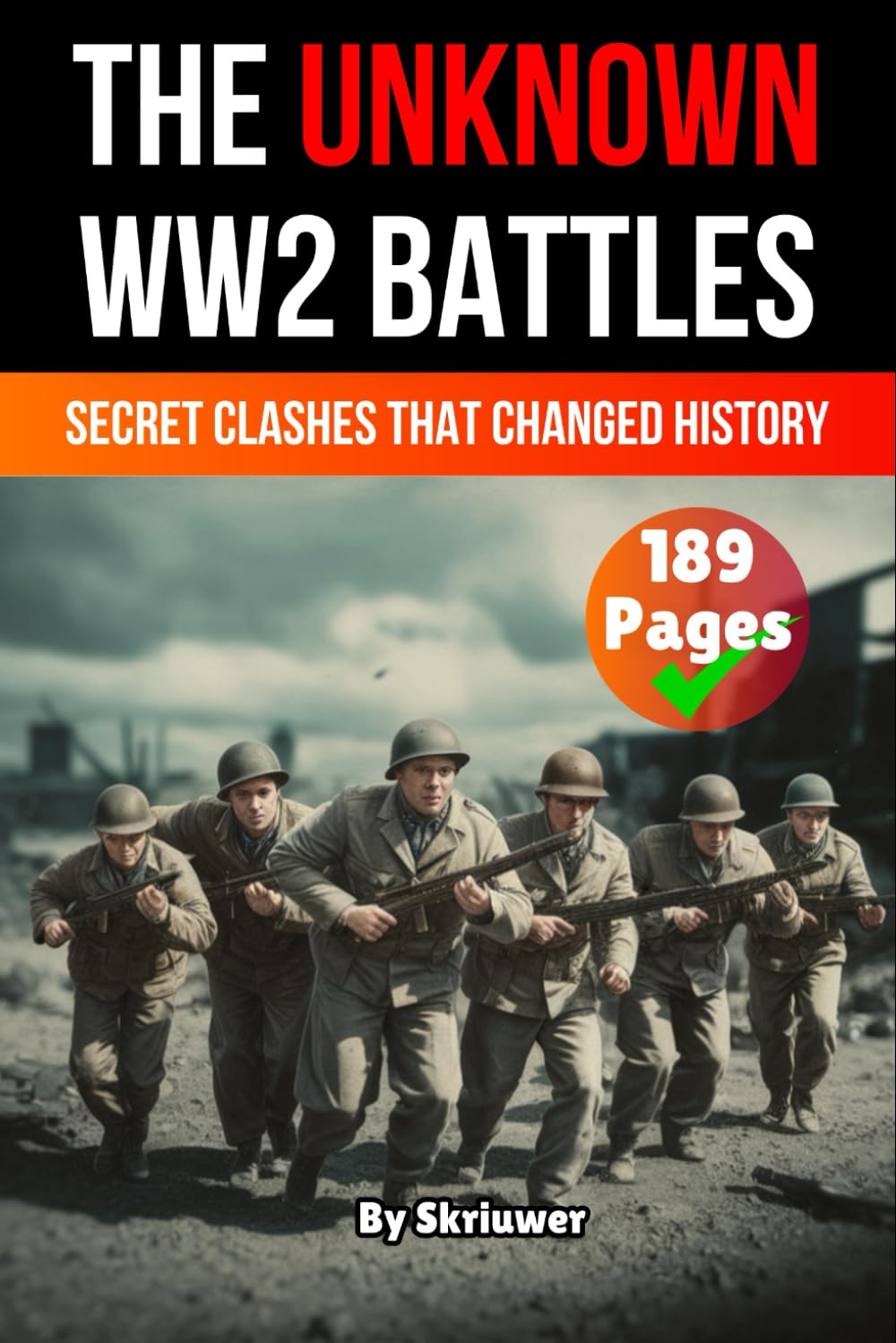
The Unknown World War 2 Battles Book: Secret Clashes That Changed History | Paperback Book
Couldn't load pickup availability
This book examines lesser-known battles and events of World War II that contributed to the war's outcome. It discusses engagements across various theaters, including Europe, Asia, and Africa.
Key Topics Covered:
- Border Conflicts: The Battles of Lake Khasan (1938) and Khalkhin Gol (1939) between Japan and the Soviet Union.
- Eastern Front Contributions: Siberian troop movements and their role in defending Moscow.
- Resistance Efforts: Actions during the Warsaw Uprising (1944).
- Naval Operations: The Channel Dash (1942) by German warships.
- Allied Campaigns: Operations in Madagascar, the Scheldt Estuary, and other areas like Monte La Difensa and Lake Ladoga.
Additional Historical Points:
- Siege Support: The Road of Life during the Siege of Leningrad.
- Special Operations: Units like the Chindits in Burma.
- Defensive Actions: Engagements in locations such as Brest Fortress and Parpach Narrows.
Reader Feedback Example: "This book discusses battles and their strategic impacts." — Capt. James R. (Ret. US Army Historian)
Book Features:
- Focused Analysis: Explores how specific events influenced larger campaigns.
- Intended Audience: Suitable for those interested in World War II military history.
TABLE OF CONTENTS
CHAPTER 1: INTRODUCTION
- Sets the stage for World War II
- Explains why smaller, lesser-known battles matter
- Highlights the global scope of the conflict
CHAPTER 2: THE FIRST SPARKS OF CONFLICT
- Traces early tensions and minor border clashes
- Shows how local incidents hinted at a bigger war
- Reveals the atmosphere in different nations before 1939
CHAPTER 3: THE BATTLE OF LAKE KHASAN
- Describes a brief Soviet-Japanese clash in 1938
- Emphasizes how even small fights shaped bigger strategies
- Reveals harsh conditions and rapid troop movements
CHAPTER 4: THE BATTLE OF KHALKHIN GOL
- Explores a longer Soviet-Japanese conflict in 1939
- Details evolving tactics and lessons learned by both sides
- Highlights the importance of coordination in remote battlefields
CHAPTER 5: THE SIEGE OF BREST FORTRESS
- Focuses on early German invasion of the Soviet Union
- Explains how a small garrison held out heroically
- Shows the human cost of prolonged defense under siege
CHAPTER 6: THE DEFENSE OF OLEVSK
- Takes us to a less-known Eastern Front confrontation
- Shows local soldiers and civilians working together
- Demonstrates how smaller towns impacted the wider war
CHAPTER 7: THE CHANNEL DASH
- Covers a bold German naval operation through the English Channel
- Reveals how surprise and coordination were used
- Examines British confusion and lessons for naval defense
CHAPTER 8: THE BATTLE OF CAPE MATAPAN
- Focuses on a key naval clash in the Mediterranean
- Highlights radar advantages and nighttime engagement tactics
- Explains the strategic importance of controlling sea lanes
CHAPTER 9: THE BATTLE OF THE KERCH PENINSULA
- Shows fierce fighting on the Eastern Front’s coastal region
- Recounts amphibious landings and retreats
- Analyzes how terrain shifts influenced control
CHAPTER 10: THE FIGHT AT LAKE LADOGA
- Reveals how Leningrad survived via supply routes across the lake
- Describes bitter cold and constant threat from enemy forces
- Explains the significance of this lifeline for the city’s endurance
CHAPTER 11: THE BATTLE FOR THE ALEUTIAN ISLANDS
- Highlights fighting on American soil in Alaska
- Shows the effect of harsh weather and terrain
- Underscores the global reach of the Pacific conflict
CHAPTER 12: THE BATTLE OF MADAGASCAR
- Details a British operation against Vichy French forces
- Explains how distant islands mattered for naval bases
- Reveals combined land, air, and sea elements in a remote theater
CHAPTER 13: THE FIGHT FOR MONTE LA DIFENSA
- Focuses on mountainous combat in Italy
- Demonstrates special operations and nighttime surprise tactics
- Shows how determined troops overcame steep and fortified slopes
CHAPTER 14: THE CLASH AT NARVA
- Takes place in Eastern Europe, overshadowed by bigger battles
- Recounts months of trench warfare and heavy artillery
- Shows local Estonian involvement and the symbolic fight for territory
CHAPTER 15: THE WARSAW UPRISING
- Highlights Polish resistance against German occupation
- Demonstrates courage despite lack of outside support
- Reveals the tragic destruction of the city and civilian toll
CHAPTER 16: THE BATTLE OF THE PARPACH NARROWS
- Explores a narrow but strategic part of Crimea
- Delves into Soviet amphibious attempts and German counters
- Shows how terrain bottlenecks shaped campaign outcomes
CHAPTER 17: THE BURMA CAMPAIGN
- Covers jungle warfare and monsoon hardships
- Describes multi-national forces, including British, Indian, and Chinese
- Underscores the role of air supply and local cooperation
CHAPTER 18: THE BATTLE OF THE SCHELDT
- Focuses on securing the vital port of Antwerp
- Shows the challenge of flooded terrain and coastal defenses
- Highlights Canadian and Allied operations to open crucial supply lines
CHAPTER 19: HIDDEN FRONTS IN THE ATLANTIC
- Explores covert raids, espionage, and secret weather stations
- Underscores small-scale operations that diverted enemy resources
- Reveals how local knowledge and stealth shaped success
CHAPTER 20: CONCLUSION: REMEMBERING THE UNSEEN
- Reflects on how these lesser-known battles fit into the bigger war
- Shows the importance of local resistance and individual bravery
- Highlights lessons learned and the enduring need for peace
Product Details
Dimensions: 5.8 × 8.3 inches / 15.24 x 22.86 cm
Cover: Paperback

Why Skriuwer.com?
-
Supporting Frisian Language
When you buy from Skriuwer, you're not just getting a book—you’re helping create more Frisian books and educational resources like LearnFrisian.com. Your support directly helps us preserve and grow the Frisian language for future generations.
-
Making Languages Accessible
We believe in making languages easy to learn and accessible. While Frisian is our passion, we also want to help people learn other key languages like Dutch and English by providing helpful resources and learning tools.
-
Investing in Future Projects
Your purchase fuels more than just current projects. It helps us dream big and plan for the future, whether that’s developing new books, launching language-learning platforms, or supporting other educational initiatives. You're helping us build something lasting!
Preserving the Frisian Language
At Skriuwer.com, we believe that the Frisian language is more than just words—it's a living, breathing part of our heritage. But like many minority languages, it faces challenges of survival in an ever-changing world. That’s why our mission is simple yet vital: to keep the Frisian language alive and thriving for generations to come.
Every book we create, every story we tell, and every word we publish is part of a larger effort to preserve and celebrate Frisian culture. But we can’t do it alone. With your help, we can make a real difference.
How You Can Help:
- When you purchase one of our books, you’re not just adding a beautiful piece of literature to your collection—you’re directly supporting the preservation of the Frisian language. Each book helps to spread the richness of our language to more people.
- You can also contribute to this cause by learning the Frisian language through our partner site, www.learnfrisian.com.
- Donate: If you believe in our mission, you can also make a contribution to help us continue our work. Whether it’s funding new publications, supporting educational programs, or helping us reach more Frisian speakers, your donation can make a lasting impact. Just click the button below to contribute!
Together, we can ensure that the Frisian language remains a vibrant part of our world. Join us in this journey—your support today means a brighter future for our language tomorrow.