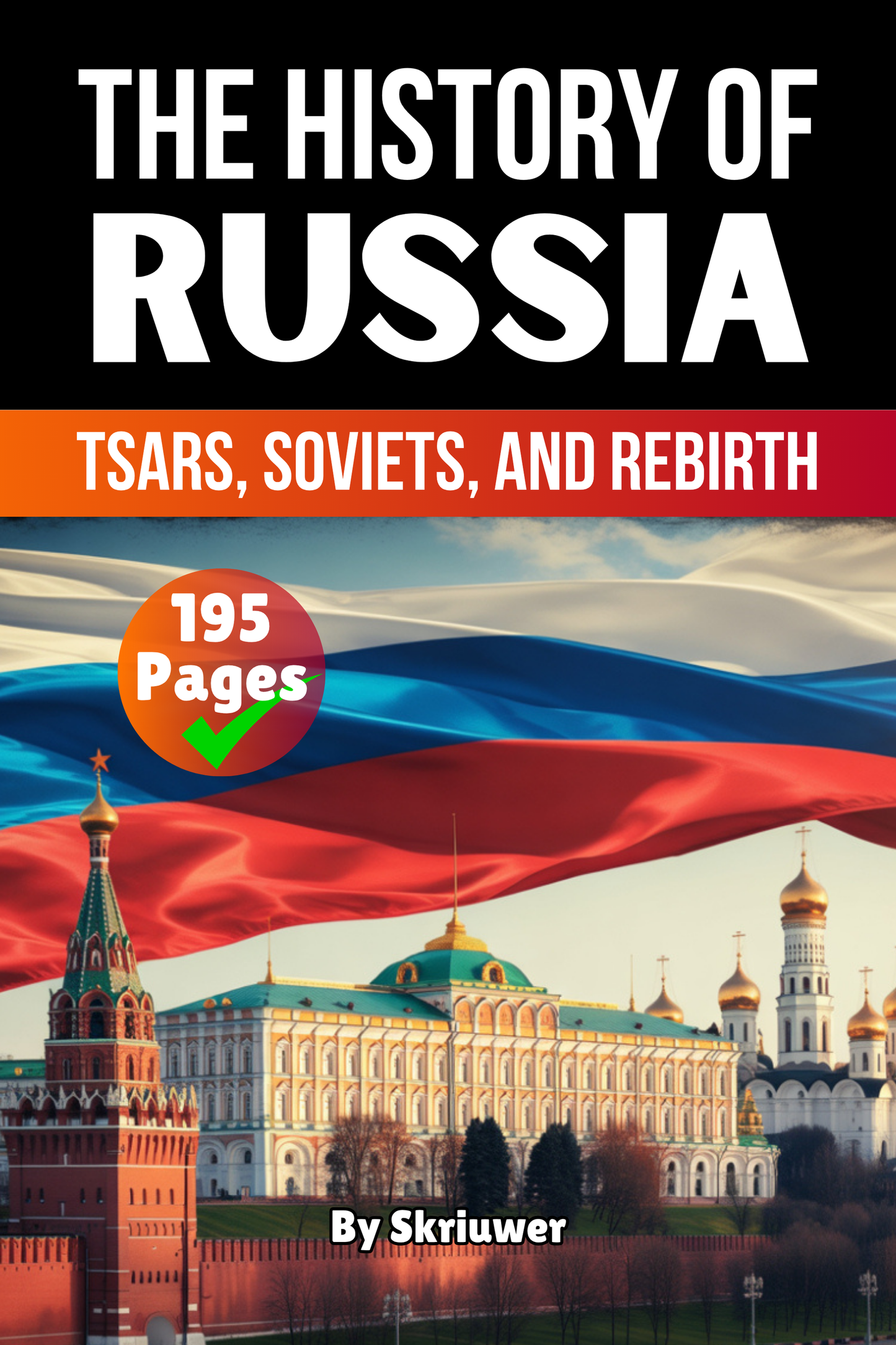
The History of Russia: Tsars, Soviets, and Rebirth | Paperback Book
Couldn't load pickup availability
This gripping book tells the full story of Russia’s rise from Viking-age tribes to global superpower. Written in vivid, page-turning style, it connects 1,200 years of leaders, revolutions, and cultural forces that still shape the world today.
Key Chapters and Highlights:
- Viking founders and the birth of Kievan Rus’
- Ivan the Terrible and Peter the Great’s dramatic transformations
- Napoleon’s invasion and Russia’s scorched-earth defiance
- The 1917 revolutions and the creation of the Soviet Union
- Stalin era, World War II, and Cold War tensions
- Post-Soviet rebirth and 21st-century Russia
Reader Feedback Example: "This is the Russia book I’ve been waiting for! Clear, exciting, and honest." – Alex K. (Verified Purchase)
Why Readers Love This Edition:
- Engaging storytelling that reads like a thriller while staying completely factual
- Ideal for anyone fascinated by world history, current events, or shows like The Last Czars and Chernobyl
- Perfect gift for students, travelers to Moscow or St. Petersburg, or anyone who wants to truly understand today’s headlines
Discover why Russia has captivated (and confounded) the world for centuries. From golden-domed cathedrals to space-race triumphs, this book brings every era to life with clarity and passion.
Add to cart today and experience Russia’s unforgettable story in one powerful volume.
TABLE OF CONTENTS
Chapter 1: Early Tribes and the Dawn of Rus’
-
Introduction to Slavic tribes and Varangian influences
-
Formation of small fortified towns and trade routes
-
Role of geography in early Rus’ development
Chapter 2: The Rise of Kievan Rus’
-
Emergence of Kiev as the central Slavic power
-
Key rulers: Prince Oleg, Vladimir the Great
-
Christianization of Rus’ and ties to the Byzantine Empire
Chapter 3: The Fragmentation of Rus’ and the Mongol Invasion
-
Decline of Kievan Rus’ into smaller principalities
-
Impact of the Mongol (Tatar) forces and the Golden Horde
-
Shift of power from Kiev to emerging centers
Chapter 4: The Rise of Moscow and the Gathering of Russian Lands
-
Moscow’s ascent under local princes (e.g. Daniil of Moscow)
-
Role of Orthodox faith in uniting the Rus’ territories
-
Early formation of a centralized Russian state
Chapter 5: The Reign of Ivan the Terrible
-
Ivan IV as first Tsar of Russia
-
Expansionary policies and the Oprichnina
-
Transformation of governance and social structures
Chapter 6: The Time of Troubles
-
Turmoil after Ivan IV’s death: famine, invasions, False Dmitris
-
Polish intervention and the rise of the Romanov dynasty
-
Chaos in succession and eventual re-stabilization
Chapter 7: The Romanov Dynasty Begins
-
Michael Romanov’s accession and early Romanov governance
-
Stabilization of the realm and administrative changes
-
Society and politics under the first Romanov rulers
Chapter 8: Peter the Great and Westernization
-
Peter the Great’s sweeping reforms (army, navy, government)
-
Construction of St. Petersburg and new European ties
-
The Great Northern War and Russia’s growing global role
Chapter 9: Catherine the Great and Expansion
-
Catherine II’s Enlightenment ideals and territorial growth
-
Reforms, Pugachev Rebellion, and Partitions of Poland
-
Enhancing Russia’s status as a major European power
Chapter 10: Russia in the Late 18th and Early 19th Centuries
-
Transition after Catherine: reigns of Paul I and Alexander I
-
Shifting alliances in Europe and build-up to conflict with Napoleon
-
Continued debates on reform vs. autocratic stability
Chapter 11: The Napoleonic Wars and Aftermath
-
Napoleon’s invasion and the Patriotic War of 1812
-
Role of Borodino, burning of Moscow, and eventual French defeat
-
European affairs reshaped and Russia’s heightened influence
Chapter 12: Reform, Serf Emancipation, and Economic Shifts
-
Alexander II’s reforms: Emancipation of the Serfs (1861)
-
Zemstvos, judicial changes, and early industrial development
-
Consequences for peasants, nobility, and the emerging middle class
Chapter 13: Late 19th-Century Russia and the Seeds of Unrest
-
Rapid industrialization under ministers like Sergei Witte
-
Growth of Marxist and Populist movements
-
Conservative turn under Alexander III and intensifying Russification
Chapter 14: Cultural and Intellectual Movements in Imperial Russia
-
Golden Age of literature: Pushkin, Dostoevsky, Tolstoy
-
Slavophile vs. Westernizer debates on Russian identity
-
Developments in music (e.g. Tchaikovsky, Mighty Handful) and art (Peredvizhniki)
Chapter 15: The Early 20th Century and the Prelude to Upheaval
-
Ongoing industrial growth and social tensions
-
Russo-Japanese War, 1905 Revolution, and creation of the Duma
-
Rise of political parties & signs of deeper unrest before World War I
Chapter 16: Russia in World War I
-
Russia’s entry into the Great War and early defeats
-
Logistics, war-weariness, and failing Tsarist leadership
-
Strain on the home front and the empire’s slide toward crisis
Chapter 17: Socio-Economic Structure Before the Revolutions
-
Hierarchy among peasants, workers, nobles, and middle-class professionals
-
Persistent land hunger, growth of factory labor, and ethnic tensions
-
Fragile society under extreme wartime pressure
Chapter 18: The 1917 Revolutions
-
February Revolution toppling the Romanov dynasty
-
Short-lived Provisional Government and rise of the Soviets
-
October Revolution by the Bolsheviks, promising “peace, land, and bread”
Chapter 19: Aftermath of Revolution
-
Immediate Bolshevik policies: Decrees on Peace and Land, workers’ control
-
Treaty of Brest-Litovsk and end of Russia’s role in World War I
-
Dismantling old institutions, rise of the Cheka, and seeds of civil conflict
Chapter 20: Reflections on Russia’s Historical Legacy
-
Long-term themes: autocracy, Orthodoxy, multi-ethnic empire
-
Contrasts of reform and repression, tradition and innovation
-
Cultural achievements from Kievan origins to the early 20th century
-
The legacy of 1917 as a profound turning point, ending the imperial era
Product Details
Dimensions: 6 × 9 inches / 15.24 x 22.86 cm
Cover: Paperback

Why Skriuwer.com?
-
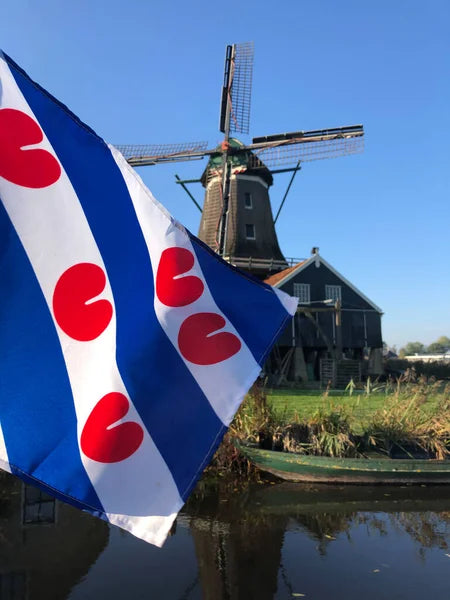
Supporting Frisian Language
When you buy from Skriuwer, you're not just getting a book—you’re helping create more Frisian books and educational resources like LearnFrisian.com. Your support directly helps us preserve and grow the Frisian language for future generations.
-
Making Languages Accessible
We believe in making languages easy to learn and accessible. While Frisian is our passion, we also want to help people learn other key languages like Dutch and English by providing helpful resources and learning tools.
-
Investing in Future Projects
Your purchase fuels more than just current projects. It helps us dream big and plan for the future, whether that’s developing new books, launching language-learning platforms, or supporting other educational initiatives. You're helping us build something lasting!
Preserving the Frisian Language
At Skriuwer.com, we believe that the Frisian language is more than just words—it's a living, breathing part of our heritage. But like many minority languages, it faces challenges of survival in an ever-changing world. That’s why our mission is simple yet vital: to keep the Frisian language alive and thriving for generations to come.
Every book we create, every story we tell, and every word we publish is part of a larger effort to preserve and celebrate Frisian culture. But we can’t do it alone. With your help, we can make a real difference.

How You Can Help:
- When you purchase one of our books, you’re not just adding a beautiful piece of literature to your collection—you’re directly supporting the preservation of the Frisian language. Each book helps to spread the richness of our language to more people.
- You can also contribute to this cause by learning the Frisian language through our partner site, www.learnfrisian.com.
- Donate: If you believe in our mission, you can also make a contribution to help us continue our work. Whether it’s funding new publications, supporting educational programs, or helping us reach more Frisian speakers, your donation can make a lasting impact. Just click the button below to contribute!
Together, we can ensure that the Frisian language remains a vibrant part of our world. Join us in this journey—your support today means a brighter future for our language tomorrow.