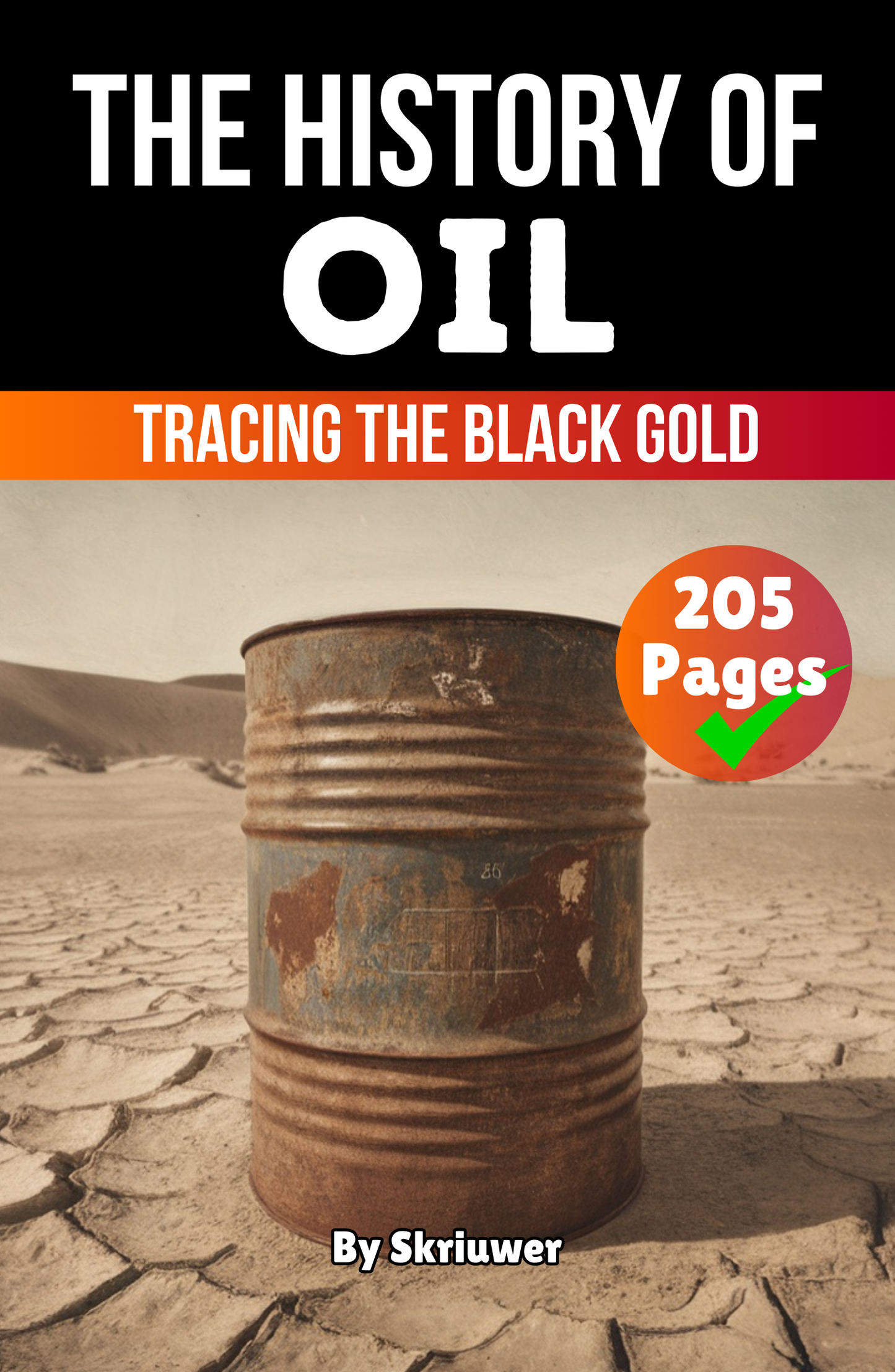
The History of Oil: Tracing the Black Gold | Paperback Book
Couldn't load pickup availability
This book traces the history of oil and its uses over approximately 5,000 years, from ancient applications to the modern petroleum industry. It discusses how oil influenced construction, warfare, medicine, and economics.
Key Topics Covered:
- Ancient Uses: Bitumen in Mesopotamia and Egypt for building and preservation.
- Medieval and Byzantine Periods: Developments like Greek fire and trade.
- 19th Century Discoveries: Early drilling techniques and the rise of the oil industry.
- Industrial and Colonial Era: Refining processes, environmental effects, and global competition.
Additional Historical Points:
- Cultural and Military Applications: Waterproofing, medical treatments, and strategic resources.
- Economic Impacts: Figures like John D. Rockefeller and company practices.
Book Features:
- Comprehensive Timeline: Covers periods from antiquity to the 20th century.
- Intended Audience: Suitable for those interested in resource history and its societal roles.
TABLE OF CONTENTS
CHAPTER 1: ANCIENT BEGINNINGS OF OIL USE
- Earliest discoveries of natural seepages
- Practical applications in building and sealing
- Archaeological findings and their significance
- Myths and folklore about oil
CHAPTER 2: OIL IN EARLY CIVILIZATIONS OF MESOPOTAMIA AND EGYPT
- Bitumen in Mesopotamian architecture and canal systems
- Religious importance in Egyptian mummification
- Trade routes and resource control
- Cultural views on preservation and afterlife
CHAPTER 3: OIL IN ANCIENT CHINA AND EAST ASIA
- Early well-drilling techniques
- Use of oil for lamps and heating
- Spread of oil knowledge via trade networks
- Regional adaptations in East Asian cultures
CHAPTER 4: OIL IN CLASSICAL GREECE AND ROME
- Observations and writings of ancient scholars
- Military uses, including “Greek fire”
- Infrastructure development with oil-based substances
- Influence of Rome’s expansion on oil awareness
CHAPTER 5: OIL IN THE EARLY ISLAMIC WORLD
- Scholarly interest in natural resources
- Advances in distillation and alchemy
- Trade links spanning from North Africa to Central Asia
- Urban growth and oil’s practical roles
CHAPTER 6: OIL ACROSS MEDIEVAL EUROPE
- Limited but notable uses of bitumen
- Transmission of oil knowledge from the Middle East
- Role of monasteries in preserving technical texts
- Growth of small-scale craft industries
CHAPTER 7: EARLY TRADE ROUTES AND THE RENAISSANCE INFLUENCE
- Expansion of global exploration
- Renewed scientific curiosity in natural resources
- Bitumen in European shipbuilding and repairs
- Stimulus for further experimentation
CHAPTER 8: OIL IN THE AGE OF EXPLORATION
- Discovery of new seep sites in the Americas
- Competition between European powers
- Early documentation of oil’s potential
- Impact of maritime journeys and resource claims
CHAPTER 9: PROTO-INDUSTRIAL USES OF OIL BEFORE 1800
- Emerging industrial crafts and rudimentary machinery
- Use of oil for lubrication and minimal-scale lighting
- Shift from local to broader economic interest
- Precursors to modern drilling ideas
CHAPTER 10: GROWING SCIENTIFIC INTEREST IN GEOLOGY AND OIL
- Early geological surveys and theories
- Mapping likely regions for oil seepage
- New scientific instruments for resource exploration
- Influence on developing scientific communities
CHAPTER 11: ADVENTURERS AND EXPLORERS SEEKING OIL (17TH–18TH CENTURIES)
- Personal accounts of black, tar-like springs
- Risk and reward of early oil ventures
- Cultural fascination with “miracle substances”
- Shift from folk knowledge to systematic search
CHAPTER 12: OIL IN THE LIVES OF EARLY COLONIAL SOCIETIES
- Interactions with indigenous knowledge of oil
- Use of oil for lamps, medicine, and heating
- Challenges in gathering enough oil for communities
- Role of local governance in regulating resources
CHAPTER 13: OIL EXTRACTION TECHNIQUES IN THE EARLY 19TH CENTURY
- Shallow pit digging and crude well technology
- Mechanical innovations to increase output
- Early commercial selling of raw oil
- Case studies of pioneering attempts
CHAPTER 14: THE RISE OF EARLY OIL REFINING (19TH CENTURY)
- Basic processes for separating oil fractions
- Small-scale operations and local refineries
- Market demands for lamp fuel and lubricants
- Gradual improvement in refining efficiency
CHAPTER 15: OIL AND TRANSPORTATION SHIFTS OF THE 19TH CENTURY
- Experiments with oil-based engines and steam power
- Development of lubricants for railroads and ships
- Transition from traditional fuels to emerging oil usage
- Practical challenges in distribution and storage
CHAPTER 16: OIL AND POLITICAL POWER BEFORE THE LATE 19TH CENTURY
- Resource control by local leaders and small states
- Early negotiations and trade agreements
- Economic influence on regional conflicts
- Social hierarchy and ownership of oil lands
CHAPTER 17: CULTURAL AND SOCIAL IMPACT OF OIL IN THE 19TH CENTURY
- Public perception of “rock oil” and innovation
- Growth of local industries and job creation
- Evolving attitudes toward environmental effects
- Early debates and protests over oil expansion
CHAPTER 18: ENVIRONMENTAL VIEWS AND EARLY CONCERNS
- Noticing the effects on water and soil
- First attempts at regulating seepage sites
- Health impacts on local communities
- Emerging calls for responsible usage
CHAPTER 19: GLOBAL SEARCHES FOR OIL IN THE LATE 19TH CENTURY
- Increased curiosity beyond known oil fields
- Entrepreneurial ventures and speculation
- International communication of new discoveries
- Laying groundwork for future major booms
CHAPTER 20: THE THRESHOLD OF THE MODERN OIL ERA
- Early successes leading to more ambitious drilling
- Refining breakthroughs hinting at large-scale production
- Societal changes driven by new energy options
- Transition to the industrial age and beyond
Product Details
Dimensions: 5.8 × 8.3 inches / 15.24 x 22.86 cm
Cover: Paperback

Why Skriuwer.com?
-
Supporting Frisian Language
When you buy from Skriuwer, you're not just getting a book—you’re helping create more Frisian books and educational resources like LearnFrisian.com. Your support directly helps us preserve and grow the Frisian language for future generations.
-
Making Languages Accessible
We believe in making languages easy to learn and accessible. While Frisian is our passion, we also want to help people learn other key languages like Dutch and English by providing helpful resources and learning tools.
-
Investing in Future Projects
Your purchase fuels more than just current projects. It helps us dream big and plan for the future, whether that’s developing new books, launching language-learning platforms, or supporting other educational initiatives. You're helping us build something lasting!
Preserving the Frisian Language
At Skriuwer.com, we believe that the Frisian language is more than just words—it's a living, breathing part of our heritage. But like many minority languages, it faces challenges of survival in an ever-changing world. That’s why our mission is simple yet vital: to keep the Frisian language alive and thriving for generations to come.
Every book we create, every story we tell, and every word we publish is part of a larger effort to preserve and celebrate Frisian culture. But we can’t do it alone. With your help, we can make a real difference.

How You Can Help:
- When you purchase one of our books, you’re not just adding a beautiful piece of literature to your collection—you’re directly supporting the preservation of the Frisian language. Each book helps to spread the richness of our language to more people.
- You can also contribute to this cause by learning the Frisian language through our partner site, www.learnfrisian.com.
- Donate: If you believe in our mission, you can also make a contribution to help us continue our work. Whether it’s funding new publications, supporting educational programs, or helping us reach more Frisian speakers, your donation can make a lasting impact. Just click the button below to contribute!
Together, we can ensure that the Frisian language remains a vibrant part of our world. Join us in this journey—your support today means a brighter future for our language tomorrow.