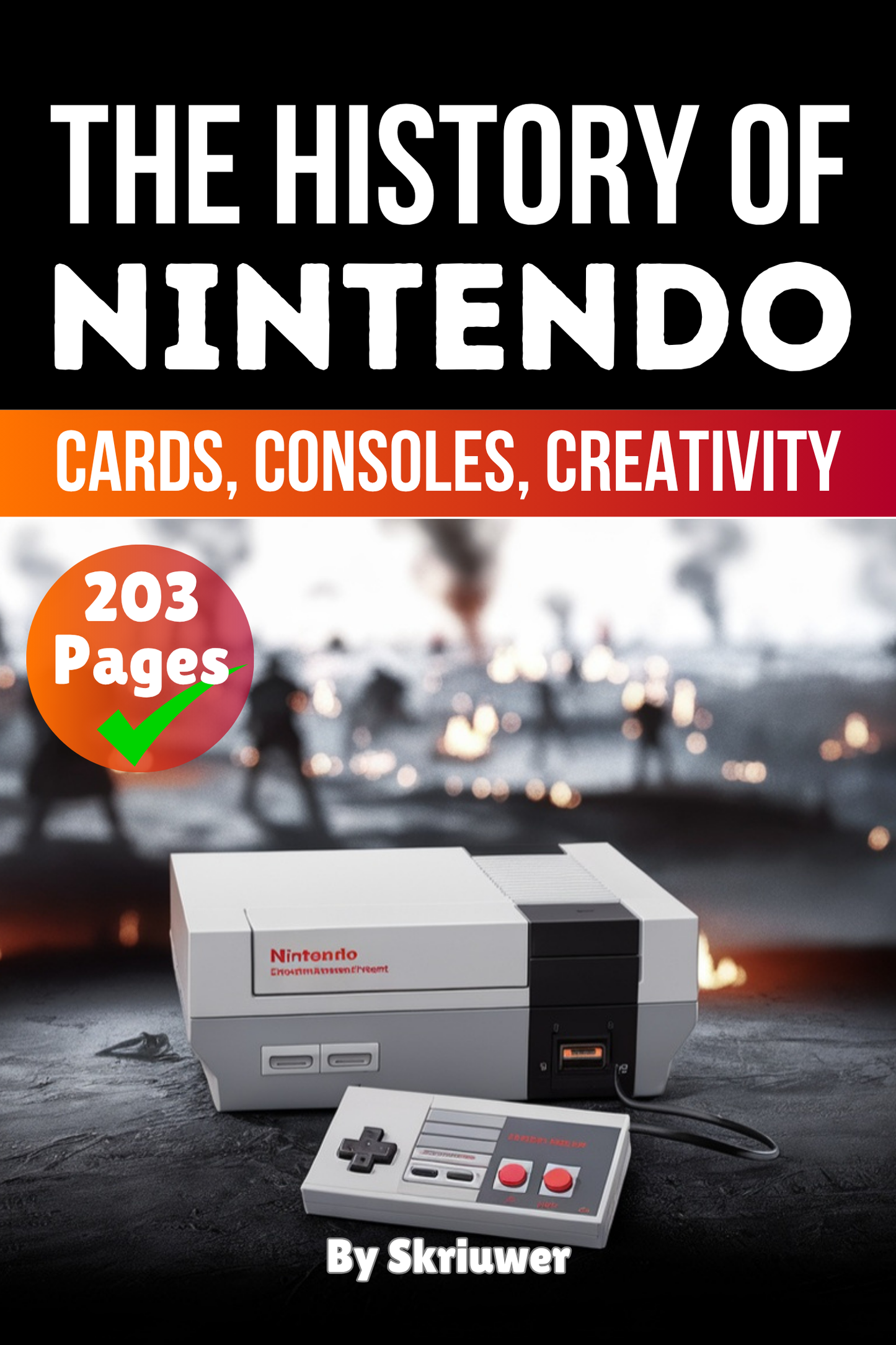
The History of Nintendo: Cards, Consoles, Creativity | Paperback Book
Couldn't load pickup availability
This book traces Nintendo's history from its founding in 1889 as a card company to its role in the video game industry. It discusses key products, business decisions, and developments.
Key Topics Covered:
- Early Years: Hanafuda cards and survival strategies.
- Leadership Changes: Hiroshi Yamauchi's tenure and innovations like the Ultra Hand.
- Business Ventures: Attempts such as taxi services and love hotels.
- Console Launches: The NES with R.O.B. accessory and entry into the U.S. market.
- Game Boy and Tetris: The acquisition and its impact.
- Virtual Boy Project: Development under Gunpei Yokoi and its outcome, followed by Pokémon.
Additional Historical Points:
- Game Development: Donkey Kong's original concept as a Popeye game.
- Industry Competition: Developer revenue shares and rivalries with Sega.
- Partnerships: Collaborations with Sony and Philips, leading to the PlayStation.
- Other Details: Shigeru Miyamoto's work on Super Mario 64 and Disney discussions for Zelda.
Reader Feedback Example: "This book covers Nintendo's business decisions and product launches." — David K. (Verified Purchase)
Book Features:
- Detailed Account: Includes corporate and creative aspects.
- Intended Audience: Suitable for those interested in gaming industry history.
TABLE OF CONTENTS
CHAPTER 1: NINTENDO’S ROOTS (1889–1907)
- Founding of Nintendo by Fusajiro Yamauchi
- Production of Hanafuda playing cards
- Early struggles and small successes in Kyoto
- Initial family involvement in the business
CHAPTER 2: EARLY 20TH CENTURY GROWTH (1908–1929)
- Introduction of new card styles and manufacturing methods
- Expansion within Japan’s playing card market
- Leadership changes in the Yamauchi family
- Steps toward large-scale production
CHAPTER 3: SURVIVING GLOBAL CHALLENGES (1930–1945)
- Impact of the Great Depression on Nintendo
- Adapting card production during hard economic times
- Effects of World War II on the company’s operations
- Maintaining brand identity amid upheaval
CHAPTER 4: POST-WAR REVIVAL (1946–1959)
- Rebuilding strategies after World War II
- New focus on playing cards and marketing
- Hiroshi Yamauchi’s early leadership moves
- Forming key partnerships for future growth
CHAPTER 5: EXPERIMENTING WITH TOYS (1960–1965)
- Shift from cards to mechanical toys
- Early experimental products and first successes
- Role of toy designers and engineers
- Lessons learned from non-card ventures
CHAPTER 6: ENTERING THE ELECTRONIC AGE (1966–1972)
- Creation and success of the Ultra Hand
- Gunpei Yokoi’s influence on product design
- First electronic toy partnerships
- Foundations laid for future video game development
CHAPTER 7: ARCADE BEGINNINGS (1973–1977)
- Move to arcade and electromechanical games
- Laser clay shooting systems and new technology
- Adapting to changing consumer tastes
- Planning the shift to video-based gaming
CHAPTER 8: THE GAME & WATCH ERA (1978–1982)
- Gunpei Yokoi’s design philosophy for handheld LCD games
- Rise of the Game & Watch line worldwide
- Growing Nintendo’s brand beyond Japan
- Setting the stage for home console ambitions
CHAPTER 9: LAUNCHING THE FAMICOM (1983–1984)
- Nintendo’s entry into home video gaming
- Development and release of the Family Computer (Famicom)
- Technical breakthroughs and early obstacles
- Initial plans to bring the console outside Japan
CHAPTER 10: THE NES AND GLOBAL EXPANSION (1985–1987)
- Launch of the Nintendo Entertainment System (NES) in North America
- Recovery of the video game market post-crash
- Iconic early NES titles shaping the industry
- Building brand loyalty in Western markets
CHAPTER 11: DOMINANCE OF THE NES (1988–1990)
- Nintendo’s strong market presence
- Introduction of new franchises and third-party partnerships
- Major promotional events like Nintendo World Championships
- Growing competition in the console market
CHAPTER 12: THE GAME BOY REVOLUTION (1989–1992)
- Launch and instant success of the Game Boy
- Tetris and other key titles driving handheld popularity
- Impact of portable gaming on consumers
- Strengthening Nintendo’s handheld leadership
CHAPTER 13: THE SUPER NINTENDO (1990–1993)
- Transition to 16-bit technology
- Essential SNES games defining the era
- Rivalries with other 16-bit consoles
- Advancements in graphics and sound
CHAPTER 14: THE RISE OF COMPETITORS (1991–1994)
- Challenges posed by Sega, NEC, and others
- Importance of exclusive game libraries
- Nintendo’s marketing and competitive strategies
- Shifting consumer expectations in console gaming
CHAPTER 15: ADVANCES IN 16-BIT GAMING (1993–1995)
- Graphical enhancements with new hardware chips
- Hit series like “Donkey Kong Country”
- Emergence of new genres and player communities
- Preparation for the next generation of consoles
CHAPTER 16: THE VIRTUAL BOY AND MISSED STEPS (1995–1996)
- Development background of the Virtual Boy
- Reasons behind its limited success
- Lessons learned in product design and marketing
- Short- and long-term effects on Nintendo’s outlook
CHAPTER 17: THE NINTENDO 64 (1996–1997)
- Introduction of 3D gameplay and analog control
- Launch titles like “Super Mario 64” revolutionize gaming
- Choice to remain with cartridge-based games
- New forms of multiplayer experiences
CHAPTER 18: LATE N64 YEARS AND MARKET CHANGES (1998–1999)
- Expansion of the Nintendo 64’s library
- Growing competition from rival consoles
- Add-on hardware like the 64DD
- Shift in Nintendo’s strategies as the 20th century ends
CHAPTER 19: HANDHELD WARS – GAME BOY COLOR (1998–2000)
- Move from the original Game Boy to Game Boy Color
- Competitive handheld market with emerging rivals
- Pokémon’s influence on global Game Boy success
- Building momentum for further handheld innovations
CHAPTER 20: CLOSING THE 20TH CENTURY & NINTENDO’S LEGACY
- Reflection on a century of Nintendo’s growth
- The company’s evolving values and methods
- Setting the stage for next-gen tech after 2000
- Nintendo’s enduring cultural impact
Product Details
Dimensions: 5.8 × 8.3 inches / 15.24 x 22.86 cm
Cover: Paperback

Why Skriuwer.com?
-
Supporting Frisian Language
When you buy from Skriuwer, you're not just getting a book—you’re helping create more Frisian books and educational resources like LearnFrisian.com. Your support directly helps us preserve and grow the Frisian language for future generations.
-
Making Languages Accessible
We believe in making languages easy to learn and accessible. While Frisian is our passion, we also want to help people learn other key languages like Dutch and English by providing helpful resources and learning tools.
-
Investing in Future Projects
Your purchase fuels more than just current projects. It helps us dream big and plan for the future, whether that’s developing new books, launching language-learning platforms, or supporting other educational initiatives. You're helping us build something lasting!
Preserving the Frisian Language
At Skriuwer.com, we believe that the Frisian language is more than just words—it's a living, breathing part of our heritage. But like many minority languages, it faces challenges of survival in an ever-changing world. That’s why our mission is simple yet vital: to keep the Frisian language alive and thriving for generations to come.
Every book we create, every story we tell, and every word we publish is part of a larger effort to preserve and celebrate Frisian culture. But we can’t do it alone. With your help, we can make a real difference.
How You Can Help:
- When you purchase one of our books, you’re not just adding a beautiful piece of literature to your collection—you’re directly supporting the preservation of the Frisian language. Each book helps to spread the richness of our language to more people.
- You can also contribute to this cause by learning the Frisian language through our partner site, www.learnfrisian.com.
- Donate: If you believe in our mission, you can also make a contribution to help us continue our work. Whether it’s funding new publications, supporting educational programs, or helping us reach more Frisian speakers, your donation can make a lasting impact. Just click the button below to contribute!
Together, we can ensure that the Frisian language remains a vibrant part of our world. Join us in this journey—your support today means a brighter future for our language tomorrow.