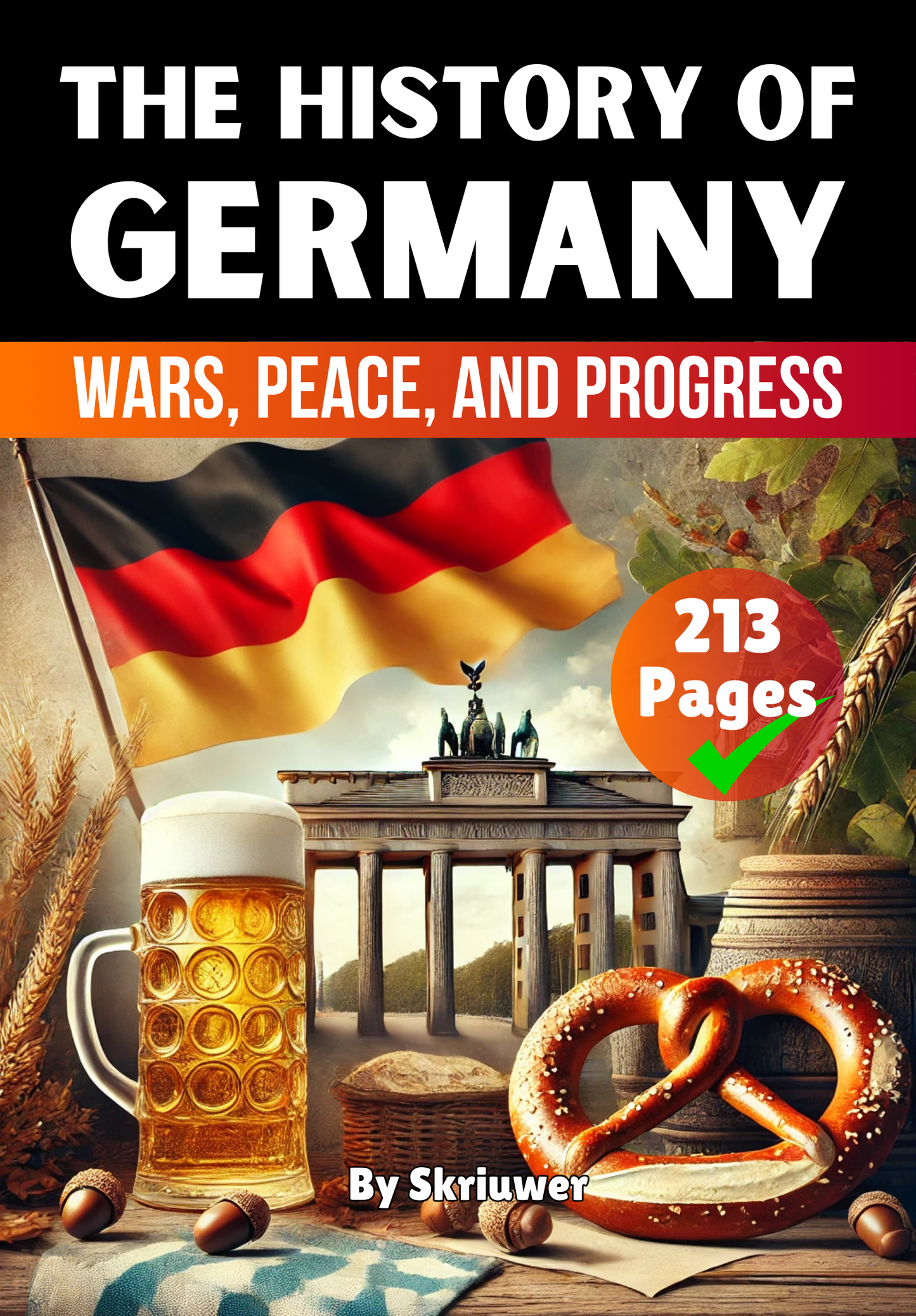
The History of Germany: Wars, Peace, and Progress | Paperback Book
Couldn't load pickup availability
This book provides an overview of Germany's history over 2,000 years, from ancient times to the present day. It covers political, cultural, and social developments across various periods.
Key Topics Covered:
- Ancient and Early Medieval Era: Interactions with Rome and figures like Charlemagne.
- Reformation Period: Martin Luther's role and religious changes.
- 19th Century Unification: Efforts under leaders like Otto von Bismarck.
- 20th Century Events: World Wars, the Weimar Republic, division during the Cold War, and reunification.
- Additional Chapters: The Hanseatic League, Enlightenment under Frederick the Great, and East German state security.
Reader Feedback Example: "This book discusses post-WWII recovery and Cold War topics." — Historical Society Review
Book Features:
- Chronological Structure: Presents events in sequence for clarity.
- Intended Audience: Suitable for those interested in European history and political changes.
TABLE OF CONTENTS
CHAPTER 1: INTRODUCTION – EARLY GERMANIC TRIBES
- Prehistoric landscapes and the first settlements
- Tribal structures, warrior culture, and contact with Rome
- Formation of distinct Germanic identities
CHAPTER 2: THE ROMAN FRONTIER AND CULTURAL EXCHANGE
- Rome’s expansion to the Rhine and Danube
- Trade, conflicts, and the Roman legacy in Germanic lands
- The early shift from archaeology to historical records
CHAPTER 3: THE MIGRATION PERIOD AND THE KINGDOMS OF THE EARLY MIDDLE AGES
- Movement of Goths, Vandals, and Lombards
- Shaping early medieval realms and cultural identities
- Collapse of Roman authority in the Germanic spheres
CHAPTER 4: THE RISE OF THE CAROLINGIANS AND THE FRANKISH REALM
- Carolingian dynasty’s expansion under Charlemagne
- Cultural revival: monasteries, Latin education, and administration
- Transition toward an imperial framework
CHAPTER 5: THE HOLY ROMAN EMPIRE’S FOUNDATIONS
- Post-Carolingian power structures
- Otto I’s coronation and imperial governance
- Balancing local duchies within a broader empire
CHAPTER 6: FEUDALISM AND POWER STRUGGLES
- Manorial life, vassal-lord obligations, and knightly orders
- Growth of aristocratic influence and the church’s role
- The interplay between central authority and local lords
CHAPTER 7: MEDIEVAL SOCIETIES & THE GROWTH OF TOWNS
- Emergence of marketplaces, guilds, and urban charters
- Social strata: nobles, burghers, artisans, and peasants
- The gradual shift toward economic dynamism and trade networks
CHAPTER 8: THE HANSEATIC LEAGUE AND MEDIEVAL TRADE
- Northern German port cities joining for mutual prosperity
- Expansion of maritime routes in the Baltic and North Seas
- The league’s influence on commerce, diplomacy, and urban policy
CHAPTER 9: THE CRUSADES AND THE TEUTONIC KNIGHTS
- German participation in the Holy Land expeditions
- Rise of the Teutonic Order and the Baltic crusades
- Founding of the Teutonic state in Prussia and its impact
CHAPTER 10: THE LATE MIDDLE AGES: FAMINE, PLAGUE, AND SOCIAL CHANGE
- The Great Famine (1315–1317) and the Black Death (1347–1351)
- Effects on population, labor, and rural/urban structures
- Shifting power balances and the beginnings of social mobility
CHAPTER 11: THE PROTESTANT REFORMATION & MARTIN LUTHER
- Luther’s challenge to indulgences and church authority
- Spread of reformist ideas and printing’s role
- The fragmentation of religious unity in German lands
CHAPTER 12: THE PEASANTS’ WAR AND THE REFORMATION’S AFTERMATH
- Social grievances fueling peasant revolts (1524–1525)
- Luther’s stance against radical uprisings
- Consequences for religious alignment and state authority
CHAPTER 13: THE THIRTY YEARS’ WAR AND ITS DEVASTATION
- Roots of the conflict in religious and political tensions
- Massive population losses and the war’s brutal nature
- Shaping modern state sovereignty via the Peace of Westphalia (1648)
CHAPTER 14: THE PEACE OF WESTPHALIA AND RECONSTRUCTION
- Legal and diplomatic frameworks of the 1648 settlement
- Post-war rebuilding, trade revival, and state consolidation
- The evolving balance between imperial authority and princely power
CHAPTER 15: ENLIGHTENMENT THINKING AND THE AGE OF FREDERICK THE GREAT
- Rise of reason, intellectual clubs, and Enlightened Absolutism
- Prussia’s growth under Frederick II’s military and cultural reforms
- Wars of Austrian Succession and Seven Years’ War cementing Prussia’s status
CHAPTER 16: THE FRENCH REVOLUTION’S IMPACT ON GERMAN STATES
- Ideological influence sparking reforms and revolts
- Napoleonic Wars, the Confederation of the Rhine, and the end of the Holy Roman Empire
- Dissolution of feudal ties, mediatization, and the seeds of nationalism
CHAPTER 17: THE NAPOLEONIC WARS AND THE CONFEDERATION OF THE RHINE
- Reorganization under French domination
- Prussian and Austrian struggles, culminating in the War of Liberation
- The Congress of Vienna and the German Confederation’s birth
CHAPTER 18: THE RISE OF NATIONALISM AND THE REVOLUTIONS OF 1848
- Economic integration (Zollverein) fueling unity debates
- Liberal and nationalist uprisings across German states
- Failure of the Frankfurt Assembly and continued fragmentation
CHAPTER 19: OTTO VON BISMARCK AND THE WARS OF GERMAN UNIFICATION
- Realpolitik in practice: Danish, Austro-Prussian, and Franco-Prussian wars
- Bismarck’s maneuvers isolating Austria and France
- 1871 proclamation of the German Empire and the “blood and iron” strategy
CHAPTER 20: THE GERMAN EMPIRE – GROWTH, TENSIONS, AND THE EVE OF A NEW CENTURY
- Constitutional framework blending monarchy with limited parliament
- Rapid industrialization, social changes, and Bismarck’s departure
- Wilhelm II’s ambitions, colonial pursuits, and emerging social conflicts
CHAPTER 21: WORLD WAR I AND THE COLLAPSE OF THE GERMAN EMPIRE (1914–1918)
- Long-term causes: Militarism, alliances, nationalism, & imperial rivalries
- Outbreak of war and the initial surge of patriotic fervor
- Trench warfare, home-front hardships, and economic strains
- The end of the Kaiserreich: Abdication of Wilhelm II and the Armistice
CHAPTER 22: THE WEIMAR REPUBLIC (1919–1933)
- Postwar turmoil and the signing of the Treaty of Versailles
- Constitution-building, social reforms, and cultural dynamism
- Hyperinflation, economic challenges, and political extremism
- The rise of radical parties and the collapse of parliamentary democracy
CHAPTER 23: THE THIRD REICH AND WORLD WAR II
- Hitler’s consolidation of power: Propaganda, the police state, and suppression of dissent
- Racial ideology, persecution of Jews, and the Holocaust
- Expansionist foreign policy leading to the outbreak of WWII
- Wartime devastation, the Eastern Front & eventual defeat of Nazi Germany
CHAPTER 24: POSTWAR OCCUPATION AND THE DIVISION OF GERMANY (1945–1949)
- Allied powers’ control and de-Nazification efforts
- Emergence of East and West: The Soviet zone vs. Western Allied zones
- The Marshall Plan in the West and reparations in the East
- Establishment of the Federal Republic of Germany (FRG) and the German Democratic Republic (GDR)
CHAPTER 25: THE COLD WAR ERA AND THE FALL OF THE BERLIN WALL (1949–1989)
- Cold War tensions and the Berlin Airlift’s legacy
- The construction of the Berlin Wall (1961) and life in a divided Germany
- West German “economic miracle” vs. East German struggles under Soviet influence
- Political shifts, détente, and the rise of Gorbachev
- Peaceful protests, East German reforms & the 1989 fall of the Berlin Wall
Product Details
Dimensions: 5.8 × 8.3 inches / 15.24 x 22.86 cm
Cover: Paperback

Why Skriuwer.com?
-
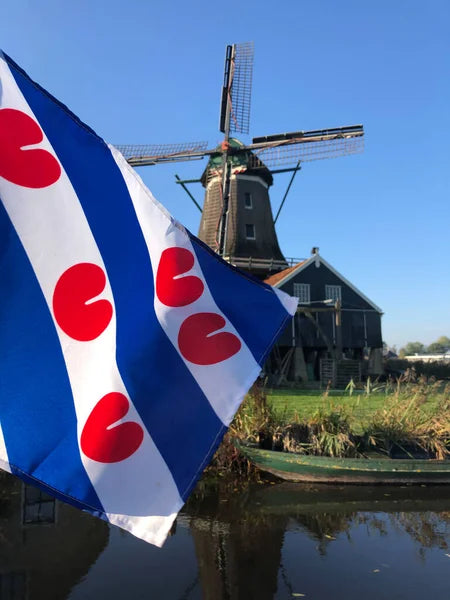
Supporting Frisian Language
When you buy from Skriuwer, you're not just getting a book—you’re helping create more Frisian books and educational resources like LearnFrisian.com. Your support directly helps us preserve and grow the Frisian language for future generations.
-
Making Languages Accessible
We believe in making languages easy to learn and accessible. While Frisian is our passion, we also want to help people learn other key languages like Dutch and English by providing helpful resources and learning tools.
-
Investing in Future Projects
Your purchase fuels more than just current projects. It helps us dream big and plan for the future, whether that’s developing new books, launching language-learning platforms, or supporting other educational initiatives. You're helping us build something lasting!
Preserving the Frisian Language
At Skriuwer.com, we believe that the Frisian language is more than just words—it's a living, breathing part of our heritage. But like many minority languages, it faces challenges of survival in an ever-changing world. That’s why our mission is simple yet vital: to keep the Frisian language alive and thriving for generations to come.
Every book we create, every story we tell, and every word we publish is part of a larger effort to preserve and celebrate Frisian culture. But we can’t do it alone. With your help, we can make a real difference.

How You Can Help:
- When you purchase one of our books, you’re not just adding a beautiful piece of literature to your collection—you’re directly supporting the preservation of the Frisian language. Each book helps to spread the richness of our language to more people.
- You can also contribute to this cause by learning the Frisian language through our partner site, www.learnfrisian.com.
- Donate: If you believe in our mission, you can also make a contribution to help us continue our work. Whether it’s funding new publications, supporting educational programs, or helping us reach more Frisian speakers, your donation can make a lasting impact. Just click the button below to contribute!
Together, we can ensure that the Frisian language remains a vibrant part of our world. Join us in this journey—your support today means a brighter future for our language tomorrow.