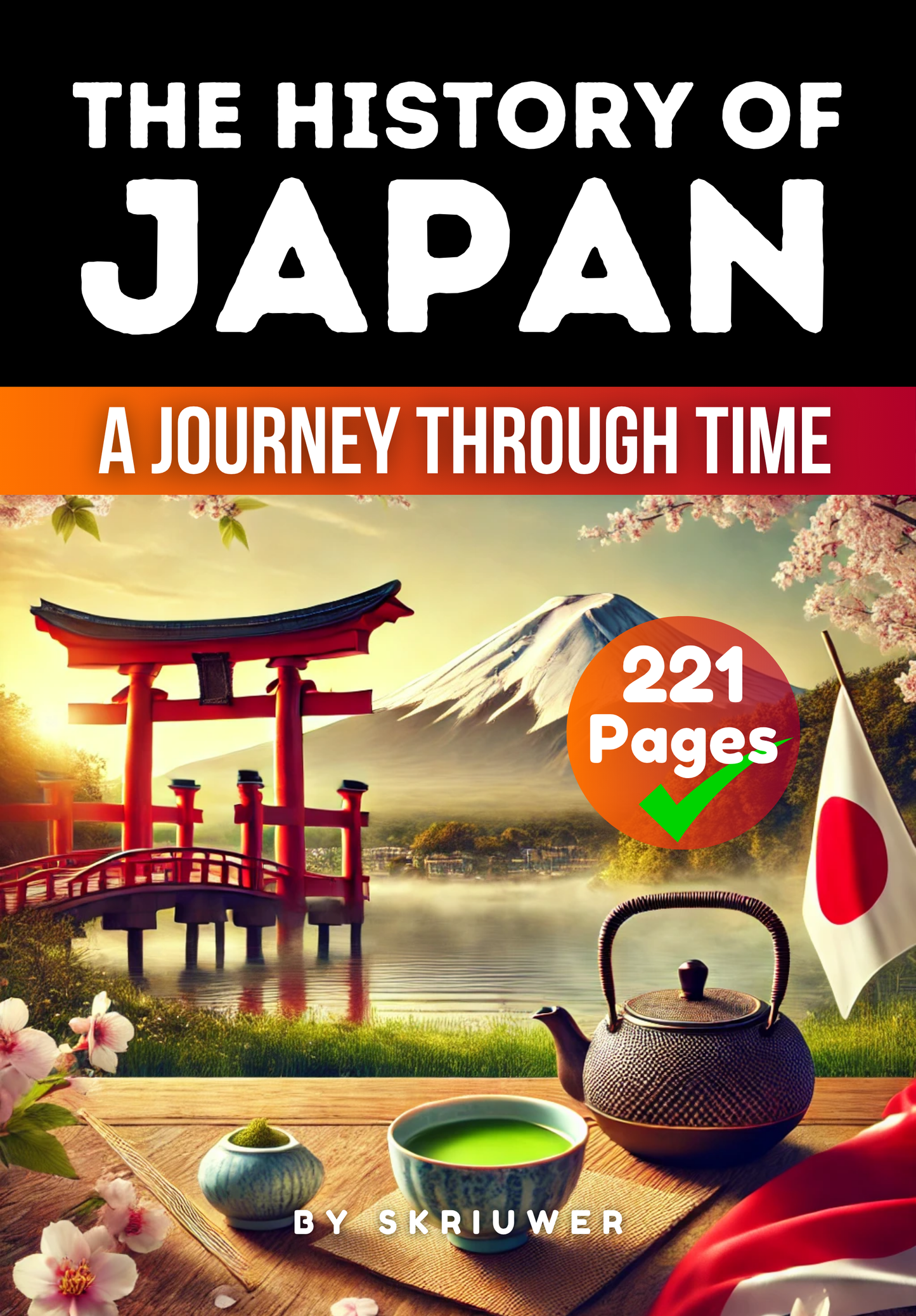

The History of Japan: A Journey Through Time | Paperback Book
Kan beschikbaarheid voor afhalen niet laden
This book offers a fresh, illustrated journey through Japan's history, from prehistoric times to the modern era. Written in clear, engaging prose with 30 new illustrations, it brings key moments to life for readers who want more than standard textbooks.
Key Periods and Highlights:
- Prehistoric Japan: The Jōmon culture's distinctive dogū figurines and early settlement patterns.
- Ancient and Classical Era: The introduction of wet-rice farming and its social impacts, Heian court culture, and the arrival of Buddhism.
- Medieval Japan: The rise of the samurai class, Mongol invasion attempts repelled by storms ("kamikaze"), and internal conflicts.
- Early Modern Era: The Sengoku period's warring states and the Tokugawa shogunate's long peace.
- Meiji Restoration and Beyond: Rapid modernization, post-war recovery, and Japan's economic rise.
Reader Feedback Example: "This book makes Japanese history accessible and exciting. The new illustrations and large print are perfect, my students finally stayed awake!" – Mr. T. Anderson (Social Studies Teacher, Verified Purchase)
Book Features:
- Ideal for fans of Shōgun, Studio Ghibli, anime/manga, or anyone planning a trip to Japan
- Perfect for teens, adults, travelers, and history enthusiasts who want an engaging narrative without dense academic style
Discover why Japan continues to fascinate the world, from ancient rituals to cutting-edge innovation. Whether you're new to Japanese history or deepening your knowledge, this book delivers the story with clarity and visual impact.
Add to cart today and experience Japan's remarkable journey in a whole new way.
TABLE OF CONTENTS
CHAPTER 1: INTRODUCTION TO JAPAN’S EARLY BEGINNINGS
-
Earliest Human Presence and Ice Age Land Bridges
-
Geography of the Archipelago and Climate Changes
-
Foundations for the Jomon Period
CHAPTER 2: THE JOMON PERIOD
-
Cord-Marked Pottery and Hunter-Gatherer Societies
-
Pit Dwellings, Diet, and Spiritual Dogu Figurines
-
Regional Variations and Transition Toward the Yayoi Era
CHAPTER 3: THE YAYOI PERIOD
-
Introduction of Wet-Rice Agriculture
-
Bronze and Iron Technologies, Social Stratification
-
Exchange Networks and Rise of Early Clans
CHAPTER 4: THE KOFUN PERIOD
-
Massive Keyhole-Shaped Tombs (Kofun)
-
Consolidation of Power by Warrior Elites
-
Emergence of Yamato Polity and Imperial Lineage
CHAPTER 5: THE ASUKA PERIOD
-
Introduction and Spread of Buddhism
-
Soga Clan Influence, Prince Shotoku’s Reforms
-
Adoption of Chinese-Style Government and Diplomatic Ties
CHAPTER 6: THE NARA PERIOD
-
First Permanent Capital at Heijō-kyō (Nara)
-
Codification of Ritsuryō Legal Systems
-
Buddhism as State Religion and Cultural Flowering
CHAPTER 7: THE HEIAN PERIOD
-
Imperial Court Culture, Aristocratic Power
-
Literary Achievements – The Tale of Genji and Poetic Innovations
-
Rise of Fujiwara Regency and Courtly Aesthetics
CHAPTER 8: RISE OF THE SAMURAI – KAMAKURA PERIOD
-
Minamoto no Yoritomo’s Shogunate
-
Hojo Regents and Legal Innovations
-
Mongol Invasions and Defense of Japan
CHAPTER 9: THE MUROMACHI PERIOD AND ASHIKAGA SHOGUNATE
-
Northern and Southern Courts, Cultural Flourishing (Zen, Noh)
-
Onin War and Rise of Daimyo Autonomy
-
Trade with China and Evolving Power Structures
CHAPTER 10: THE SENGOKU PERIOD AND WARRING CLANS
-
Fragmented Domains, Constant Civil War
-
Oda Nobunaga, Toyotomi Hideyoshi, and Unification Efforts
-
Samurai Culture and Rapid Shifts in Alliances
CHAPTER 11: THE AZUCHI–MOMOYAMA PERIOD
-
Nobunaga’s Azuchi Castle, Hideyoshi’s Momoyama Castle
-
Final Stages of Unification, Sword Hunts
-
Opulent Art and Architecture, Flourishing Tea Ceremony
CHAPTER 12: EDO PERIOD, PART 1 – EARLY SHOGUNATE GOVERNANCE
-
Tokugawa Ieyasu’s Rise as Shogun
-
Bakuhan System (Centralized Feudalism), Sankin-Kōtai
-
Social Hierarchies and Rigid Class Structures
CHAPTER 13: EDO PERIOD, PART 2 – SOCIETY, ECONOMY, AND CULTURE
-
Urban Growth, Chōnin (Townspeople) Culture
-
Kabuki, Ukiyo-e, Haiku – Artistic Innovations
-
Increasing Economic Complexity, Foreign Intrigues
CHAPTER 14: THE MEIJI RESTORATION, PART 1
-
Overthrow of Tokugawa, Emperor Meiji’s Return to Power
-
Rapid Westernization, Modern Army and Industry
-
Wars with China and Russia, Birth of Empire
CHAPTER 15: THE MEIJI RESTORATION, PART 2
-
Constitutional Monarchy, Political Parties Emergence
-
Industrial Boom, Social Reforms, and Imperial Ambitions
-
Climax of Meiji Era, War Responsibilities, and Transition to Taishō
CHAPTER 16: THE TAISHŌ PERIOD
-
Taishō Democracy, Rise of Party Cabinets
-
World War I, Postwar Economic Fluctuations
-
Cultural and Social Changes, Shift Towards Showa Militarism
CHAPTER 17: EARLY SHOWA PERIOD
-
Emperor Hirohito’s Ascension, Great Depression
-
Manchurian Incident, Rise of Militarism, Sino-Japanese War
-
Pacific War, Allied Occupation, Japan’s Defeat in 1945
CHAPTER 18: MID-SHOWA PERIOD
-
Postwar Occupation Reforms, New Constitution
-
Economic Recovery, Foundations of the ‘Miracle’
-
Rearmament Debates, U.S. Alliance, and Social Shifts
CHAPTER 19: LATE SHOWA PERIOD
-
High-Speed Economic Growth, Bubble Economy
-
Trade Frictions, Consumer Society, Political Scandals
-
Passing of Emperor Hirohito and End of Showa Era
CHAPTER 20: CONCLUSION AND REFLECTIONS ON HISTORICAL JAPAN
-
Major Themes Across Eras: Adaptation, Power Shifts, Recovery
-
Legacies of War, Modernization, and Cultural Continuities
-
Ongoing Influence of Historical Patterns Beyond Showa
Product Details
Dimensions: 6 × 9 inches / 15.24 x 22.86 cm
Cover: Paperback

Why Skriuwer.com?
-
Supporting Frisian Language
When you buy from Skriuwer, you're not just getting a book—you’re helping create more Frisian books and educational resources like LearnFrisian.com. Your support directly helps us preserve and grow the Frisian language for future generations.
-
Making Languages Accessible
We believe in making languages easy to learn and accessible. While Frisian is our passion, we also want to help people learn other key languages like Dutch and English by providing helpful resources and learning tools.
-
Investing in Future Projects
Your purchase fuels more than just current projects. It helps us dream big and plan for the future, whether that’s developing new books, launching language-learning platforms, or supporting other educational initiatives. You're helping us build something lasting!
Behoud van de Friese taal
Bij Skriuwer.com geloven we dat de Friese taal meer is dan alleen woorden – het is een levend onderdeel van ons erfgoed. Maar net als veel minderheidstalen staat het Fries voor uitdagingen om te overleven in een steeds veranderende wereld. Daarom is onze missie eenvoudig maar van levensbelang: de Friese taal levend houden en laten bloeien voor de generaties die komen.
Elk boek dat we maken, elk verhaal dat we vertellen en elk woord dat we publiceren, is onderdeel van een grotere inspanning om de Friese cultuur te behouden en te vieren. Maar we kunnen dit niet alleen. Met jouw hulp kunnen we een echt verschil maken.

Hoe je kunt helpen:
Koop een boek: Als je een van onze boeken koopt, voeg je niet alleen een prachtig literair werk toe aan je collectie, maar ondersteun je ook direct het behoud van de Friese taal. Elk boek helpt om de rijkdom van onze taal naar meer mensen te brengen. Je kunt ook bijdragen aan deze missie door Fries te leren via onze partnersite, www.learnfrisian.com.
Doneer: Als je in onze missie gelooft, kun je ook een bijdrage leveren om ons werk voort te zetten. Of het nu gaat om het financieren van nieuwe publicaties, het ondersteunen van educatieve programma's of het bereiken van meer Friese sprekers, jouw donatie kan een blijvend verschil maken. Klik gewoon op de knop hieronder om bij te dragen!
Samen kunnen we ervoor zorgen dat de Friese taal een levendig deel van onze wereld blijft. Doe met ons mee op deze reis – jouw steun vandaag betekent een betere toekomst voor onze taal morgen.