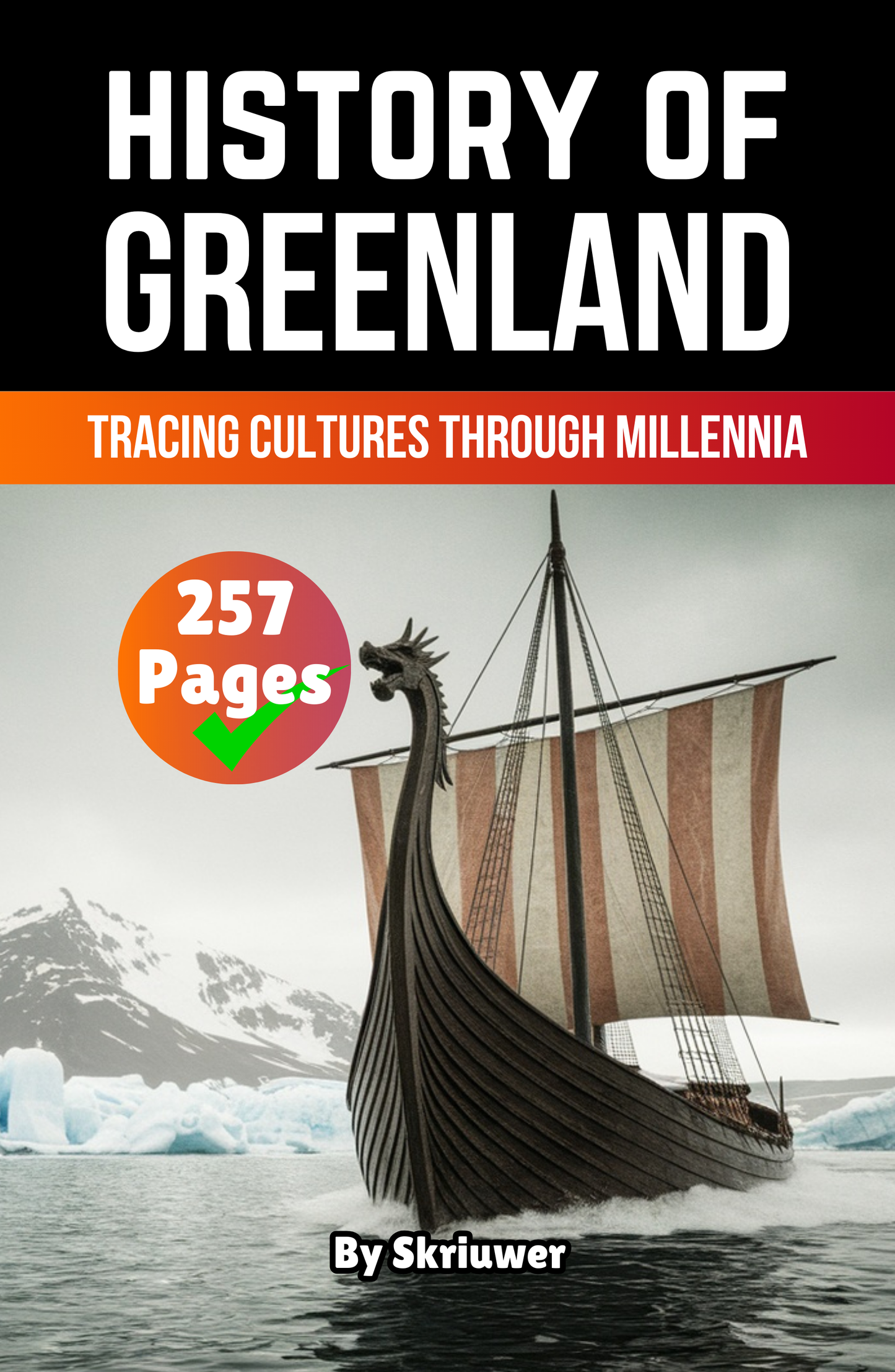
The History of Greenland: Tracing Cultures Through Millennia | Paperback Book
Kan beschikbaarheid voor afhalen niet laden
This book provides an overview of Greenland's historical cultures and their adaptations to the Arctic environment, spanning from prehistory to the colonial era. It examines how various groups, including the Dorset, Norse, Thule, and Inuit, developed strategies for survival and how these influenced the region's development.
Key Topics Covered:
- Dorset Culture: An ancient Paleo-Eskimo group known for carvings and artifacts, which existed from around 500 BCE to between 1000 and 1500 CE.
- Naming of Greenland: Erik the Red's choice of the name to encourage settlement.
- Norse Settlements: Factors contributing to their decline around the 15th century, including environmental changes.
- Thule Innovations: Developments in tools and hunting methods that supported life in the Arctic.
Historical Journey:
- Trade Connections: Networks linking Greenland to Europe and North America for exchange of goods like ivory.
- Missionary Efforts: Hans Egede's arrival in the 18th century and its effects on local populations.
- Whaling and Trade: Shifts in economic and social structures during the 19th century.
- Community Roles: Contributions of women and children in traditional Arctic societies.
Reader Feedback Example: "This book discusses cultural layers and adaptations, including comparisons between Norse and Inuit strategies." — Sarah K. (Anthropology Student)
Book Features:
- Integrated Approach: Draws on archaeology, climate data, and oral traditions to cover periods from Paleo-Eskimo times to Danish colonization.
- Intended Audience: Suitable for those interested in Arctic history, resilience, and cultural legacies.
TABLE OF CONTENTS
CHAPTER 1: GREENLAND’S LAND BEFORE PEOPLE
- Formation of Greenland’s ancient landmass and ice sheet
- Climate changes before human arrival
- Wildlife and natural environment awaiting the first settlers
CHAPTER 2: THE FIRST KNOWN PEOPLE: THE PALEO-ESKIMO WORLD
- Early migrations from Arctic North America
- Tools, shelters, and hunting strategies
- Challenges of adapting to Greenland’s icy conditions
CHAPTER 3: THE SAQQAQ CULTURE AND DAILY LIFE
- Saqqaq technology—small stone blades and harpoon heads
- Housing and seasonal movement patterns
- Artistic carvings and social structures
CHAPTER 4: INDEPENDENCE I AND INDEPENDENCE II CULTURES
- Distinct tool styles in northern Greenland
- Seasonal migrations and High Arctic survival
- Gradual disappearance of early Paleo-Eskimo groups
CHAPTER 5: THE DORSET CULTURE AND ITS LEGACY
- Unique Dorset carvings and harpoon designs
- Spread across Arctic Canada and Greenland
- Transition to the Thule culture and changing climate
CHAPTER 6: THE ARRIVAL OF THE THULE PEOPLE
- Advanced hunting methods using dog sleds and umiaks
- Expansion across Greenland and adaptation to local resources
- Cultural foundations of modern Inuit communities
CHAPTER 7: NORSE VOYAGES – ERIC THE RED AND THE FIRST SETTLEMENTS
- Discovery and naming of “Greenland”
- Establishment of Norse farms in the Eastern and Western Settlements
- Motivations for migration and early interactions with the land
CHAPTER 8: NORSE LIFE AND SOCIETY IN GREENLAND
- Farming, livestock, and ties to European trade
- Role of churches and Christianity in Norse communities
- Daily routines shaped by Arctic conditions
CHAPTER 9: TRADE, TRAVEL, AND CONTACTS WITH EUROPE
- Walrus ivory, seal skins, and exports fueling Norse economy
- Voyages between Greenland, Iceland, and Norway
- Communication gaps and challenges of Atlantic navigation
CHAPTER 10: CHALLENGES AND DECLINE OF THE NORSE SETTLEMENTS
- Climate shift (Little Ice Age) and reduced farming success
- Trade difficulties and isolation
- Final disappearance of Norse communities
CHAPTER 11: INUIT COMMUNITIES AFTER THE NORSE
- Persistence of Inuit culture in the absence of Norse settlers
- Hunting, seasonal camps, and family life
- Use of kayaks, umiaks, and spiritual traditions
CHAPTER 12: EARLY ENCOUNTERS WITH EUROPEAN SAILORS (16TH–17TH CENTURIES)
- Basque, English, and Dutch whaling fleets
- Initial trade exchanges and misunderstandings
- Inuit reactions and limited European influence
CHAPTER 13: MISSIONARIES, CHURCHES, AND CULTURAL CHANGES
- Hans Egede’s arrival and spread of Lutheran missions
- Moravian mission influence and community living
- Blending of Inuit traditions with Christian teachings
CHAPTER 14: DANISH INFLUENCE AND EARLY COLONIZATION
- Establishment of the Royal Greenland Trading Company (KGH)
- Formalizing Danish authority through trade and administration
- Challenges faced by Inuit adapting to colonial rules
CHAPTER 15: GREENLAND IN THE 18TH CENTURY
- Growth of mission stations and small settlements
- Daily routines in hunting, trade, and social life
- Influence of Danish administrators and the trade monopoly
CHAPTER 16: WHALING, TRADE, AND EXPLORATION IN THE 19TH CENTURY
- Rise of international whaling fleets and resource pressures
- Continued mission work and gradual shifts in local economy
- Explorers seeking Northwest Passage and local interactions
CHAPTER 17: DAILY LIFE AND SOCIAL STRUCTURES IN THE 19TH CENTURY
- Roles of men, women, and children in subsistence hunting
- Housing styles, seasonal movement, and shared community tasks
- Impact of mission education and minor local leadership roles
CHAPTER 18: GROWING CHANGES IN ECONOMY AND POLITICS BEFORE 1900
- Critiques of the trade monopoly and small attempts at reform
- Increased literacy and hints of local governance
- Foreign whaling decline and evolving Danish administration
CHAPTER 19: GREENLAND AT THE THRESHOLD OF MODERN INFLUENCE
- Renewed debates over free trade vs. monopoly
- Scientific expeditions fueling Arctic curiosity
- Emergence of advisory councils and mixed-heritage voices
CHAPTER 20: REFLECTIONS ON GREENLAND’S LONG PAST
- Major themes of adaptation and resilience across eras
- Layered cultural influences, from Paleo-Eskimos to Danish missions
- Balancing tradition with new technologies and outside ideas
Product Details
Dimensions: 5.8 × 8.3 inches / 15.24 x 22.86 cm
Cover: Paperback

Why Skriuwer.com?
-
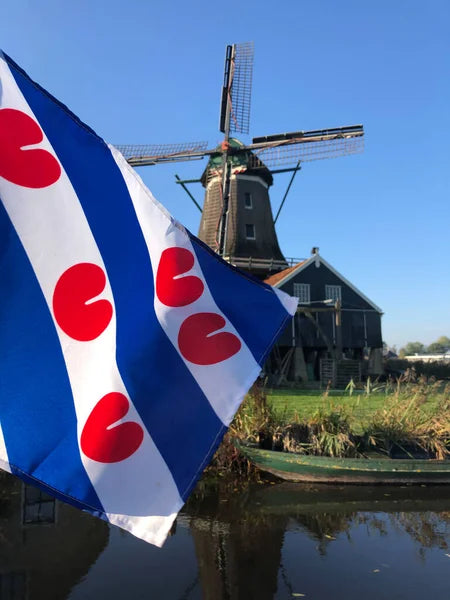
Supporting Frisian Language
When you buy from Skriuwer, you're not just getting a book—you’re helping create more Frisian books and educational resources like LearnFrisian.com. Your support directly helps us preserve and grow the Frisian language for future generations.
-
Making Languages Accessible
We believe in making languages easy to learn and accessible. While Frisian is our passion, we also want to help people learn other key languages like Dutch and English by providing helpful resources and learning tools.
-
Investing in Future Projects
Your purchase fuels more than just current projects. It helps us dream big and plan for the future, whether that’s developing new books, launching language-learning platforms, or supporting other educational initiatives. You're helping us build something lasting!
Behoud van de Friese taal
Bij Skriuwer.com geloven we dat de Friese taal meer is dan alleen woorden – het is een levend onderdeel van ons erfgoed. Maar net als veel minderheidstalen staat het Fries voor uitdagingen om te overleven in een steeds veranderende wereld. Daarom is onze missie eenvoudig maar van levensbelang: de Friese taal levend houden en laten bloeien voor de generaties die komen.
Elk boek dat we maken, elk verhaal dat we vertellen en elk woord dat we publiceren, is onderdeel van een grotere inspanning om de Friese cultuur te behouden en te vieren. Maar we kunnen dit niet alleen. Met jouw hulp kunnen we een echt verschil maken.

Hoe je kunt helpen:
Koop een boek: Als je een van onze boeken koopt, voeg je niet alleen een prachtig literair werk toe aan je collectie, maar ondersteun je ook direct het behoud van de Friese taal. Elk boek helpt om de rijkdom van onze taal naar meer mensen te brengen. Je kunt ook bijdragen aan deze missie door Fries te leren via onze partnersite, www.learnfrisian.com.
Doneer: Als je in onze missie gelooft, kun je ook een bijdrage leveren om ons werk voort te zetten. Of het nu gaat om het financieren van nieuwe publicaties, het ondersteunen van educatieve programma's of het bereiken van meer Friese sprekers, jouw donatie kan een blijvend verschil maken. Klik gewoon op de knop hieronder om bij te dragen!
Samen kunnen we ervoor zorgen dat de Friese taal een levendig deel van onze wereld blijft. Doe met ons mee op deze reis – jouw steun vandaag betekent een betere toekomst voor onze taal morgen.