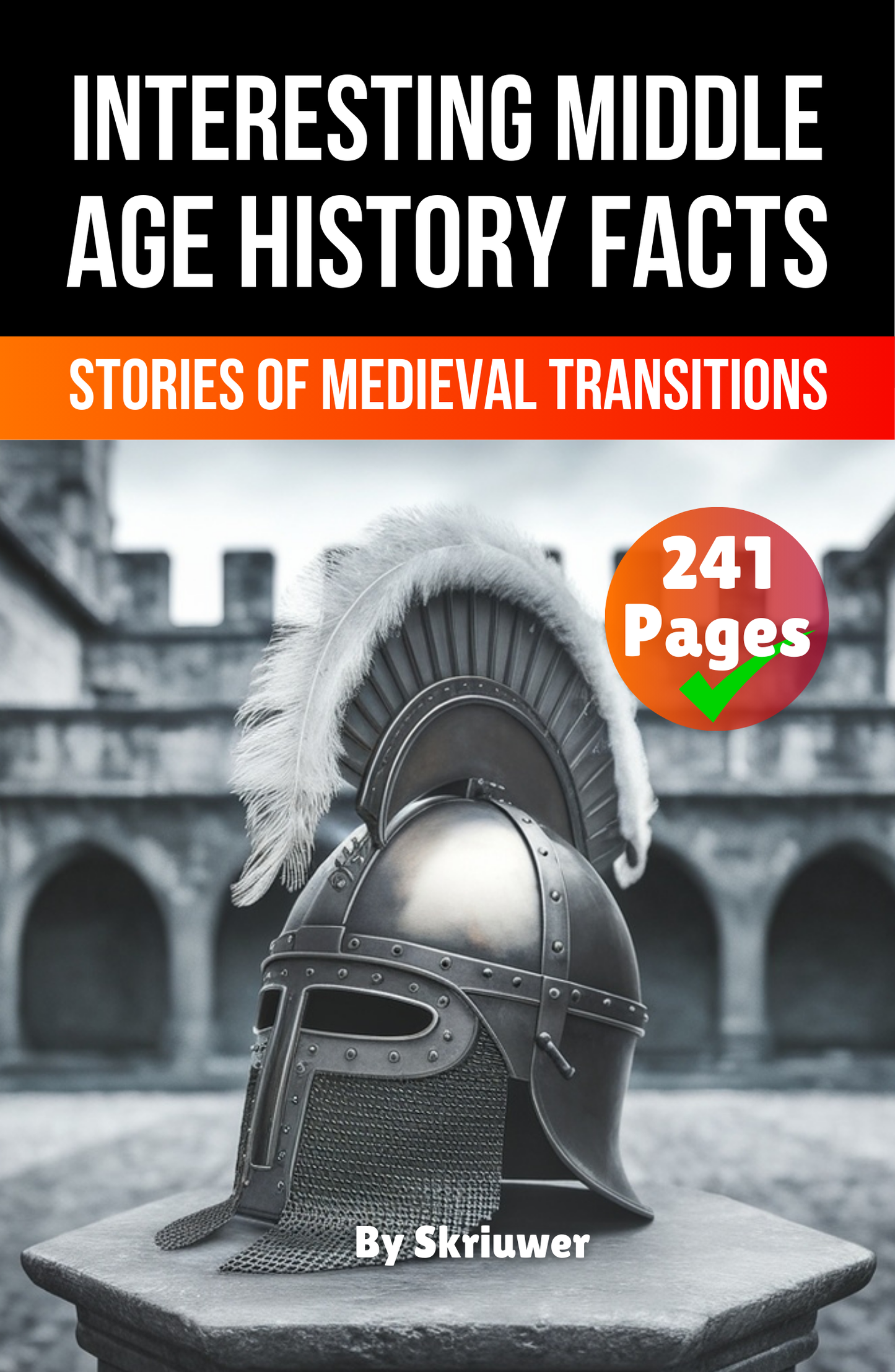
Interesting Middle Age History Facts: Stories of Medieval Transitions | Paperback Book
Couldn't load pickup availability
This book examines the Middle Ages in Europe, focusing on social, economic, and cultural changes from approximately the 5th to the 15th century. It discusses how events and practices influenced the transition to later periods.
Key Topics Covered:
- Viking Activities: Raids, settlements, and interactions with other regions.
- Black Death Impacts: The pandemic's effects on population and feudal structures.
- Figures like Joan of Arc: Roles in conflicts and religious contexts.
- Chivalric Traditions: Codes and their application in warfare.
- Social Responses: Accusations during crises and community dynamics.
- Guild Systems: Development of trade organizations and economic shifts.
Additional Historical Points:
- Byzantine Diplomacy: Exchanges with neighboring groups.
- Peasant Life: Festivals and relations with nobility.
- Military Technology: Developments in siege warfare.
- Religious Communities: Administration in monastic settings.
Reader Feedback Example: "This book discusses the plague's effects and social changes." — MedievalMind (Verified Purchase)
Book Features:
- Engaging Narrative: Presents historical developments across centuries.
- Intended Audience: Suitable for those interested in medieval European history.
TABLE OF CONTENTS
CHAPTER 1: EARLY MIDDLE AGES: THE WORLD AFTER ROME
- Collapse of Roman authority and rise of new Germanic kingdoms
- Monastic centers preserving knowledge
- Blend of Roman and tribal customs forming early medieval culture
CHAPTER 2: THE BYZANTINE EMPIRE: A SHINING LIGHT IN THE EAST
- Continuation of Roman traditions under Eastern emperors
- Justinian’s Code and monumental building projects (Hagia Sophia)
- Iconoclasm controversies and flourishing of Orthodox Christianity
CHAPTER 3: THE SPREAD OF CHRISTIANITY: MONKS, MISSIONARIES, AND EVERYDAY FAITH
- Missionary work converting Germanic and Celtic peoples
- Monastic life and illuminated manuscripts
- Role of parish priests and church festivals in daily life
CHAPTER 4: GROWING KINGDOMS: MEROVINGIANS & CAROLINGIANS
- Clovis and the Merovingian dynasty
- Charles Martel, Pepin the Short, and Charlemagne’s empire
- Development of feudal ties and coronation by the Pope
CHAPTER 5: THE VIKING AGE: RAIDERS & EXPLORERS
- Swift longships, raids across Europe, and settlement in new lands
- Viking culture, pagan beliefs, and gradual Christianization
- Foundations of trade networks and exploration (Iceland, Greenland, Vinland)
CHAPTER 6: FEUDALISM: LORDS & VASSALS
- Land-based relationships and personal oaths of loyalty
- Manorial system linking peasants, knights, and nobles
- Local justice, inheritance, and the feudal contract
CHAPTER 7: KNIGHTS & CHIVALRY: CODES OF HONOR & WARFARE
- Page, squire, and knighthood training
- Chivalry’s ideals vs. real warfare
- Tournaments, jousts, and the role of the warhorse
CHAPTER 8: PEASANT LIFE & MEDIEVAL TOWNS: WORK, MARKETS, AND DAILY ROUTINES
- Manorial routines, farming cycles, and serf obligations
- Emergence of towns, merchant activities, and guild structures
- Social mobility and the contrast between rural and urban lifestyles
CHAPTER 9: CASTLES & SIEGE WARFARE: PROTECTING LAND & PEOPLE
- Evolution from motte-and-bailey to stone fortresses
- Daily life in the castle: hierarchy, roles, and defense
- Siege engines, tactics, and defenders’ countermeasures
CHAPTER 10: THE NORMAN CONQUEST: CHANGES IN ENGLAND & BEYOND
- William the Conqueror’s claim and the Battle of Hastings (1066)
- Domesday Book and reorganization of English feudal structures
- Impact on language, culture, and governance
CHAPTER 11: THE CRUSADES: FAITH & CONFLICT IN DISTANT LANDS
- Motivations (religious zeal, papal calls, quest for holy sites)
- Establishment of Crusader states and contact with Islamic powers
- Effects on trade, cultural exchange, and Church authority
CHAPTER 12: ART, ARCHITECTURE, & LEARNING: MONASTERIES, CATHEDRALS, AND SCHOLARS
- Romanesque to Gothic style: thick walls, pointed arches, flying buttresses
- Monastic scriptoria preserving manuscripts and Scholastic debates
- Universities, vernacular literature, and evolving artistic expression
CHAPTER 13: THE RISE OF STRONG RULERS: KINGS & QUEENS OF THE MIDDLE AGES
- Centralization of royal power, decline of local feudal lords
- Ceremonies of coronation and the growth of royal courts
- Female rulership through regencies or direct inheritance
CHAPTER 14: THE ROLE OF WOMEN: NOBLE LADIES, QUEENS, & PEASANT WOMEN
- Household management and estate administration by noblewomen
- Peasant women’s work in fields, villages, and cottage industries
- Religious life of nuns, mystics, and semi-religious communities
CHAPTER 15: TRADE & GUILDS: A NEW WORLD OF COMMERCE
- Revival of long-distance trade and bustling market towns
- Merchant guilds controlling commerce, craft guilds regulating quality
- Rise of the middle class (bourgeoisie) and urban freedoms
CHAPTER 16: LIFE IN THE LATER MIDDLE AGES: FAIRS, FESTIVALS, AND FOLKLORE
- Seasonal celebrations, holy days, and communal gatherings
- Entertainment at fairs: minstrels, jugglers, acrobats
- Local folklore, superstitions, and blending of Christian and folk traditions
CHAPTER 17: DISASTERS & CHALLENGES: THE GREAT FAMINE & THE BLACK DEATH
- Climate issues causing crop failures (1315–1317)
- Massive mortality from plague (1347–1351), social panic, scapegoating
- Labor shortages, higher wages, and weakened feudal ties
CHAPTER 18: THE HUNDRED YEARS’ WAR: LONG STRUGGLES BETWEEN ENGLAND & FRANCE
- Dynastic claims on the French throne, key battles (Crécy, Agincourt)
- Joan of Arc’s leadership, shifting alliances, and final French victory
- Transformation of military tactics and growth of national identities
CHAPTER 19: CHANGES IN POWER: THE DECLINE OF FEUDALISM & DAWN OF A NEW AGE
- Kingly centralization and professional armies overshadowing feudal levies
- Peasant revolts, urban growth, and new forms of land use
- Military, economic, and social evolutions bridging medieval to modern
CHAPTER 20: THE LEGACY OF THE MIDDLE AGES: BRIDGES TO THE RENAISSANCE
- Continuation of Church structures, monarchies, and medieval universities
- Gothic architecture, manuscript traditions, and the preservation of classical works
- Gradual transitions in art, thought, and governance that shaped the Renaissance
Product Details
Dimensions: 5.8 × 8.3 inches / 15.24 x 22.86 cm
Cover: Paperback

Why Skriuwer.com?
-
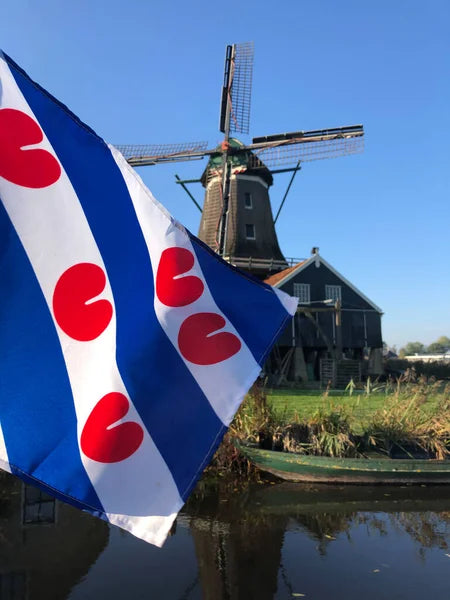
Supporting Frisian Language
When you buy from Skriuwer, you're not just getting a book—you’re helping create more Frisian books and educational resources like LearnFrisian.com. Your support directly helps us preserve and grow the Frisian language for future generations.
-
Making Languages Accessible
We believe in making languages easy to learn and accessible. While Frisian is our passion, we also want to help people learn other key languages like Dutch and English by providing helpful resources and learning tools.
-
Investing in Future Projects
Your purchase fuels more than just current projects. It helps us dream big and plan for the future, whether that’s developing new books, launching language-learning platforms, or supporting other educational initiatives. You're helping us build something lasting!
It behâld fan de Fryske taal
By Skriuwer.com leauwe wy dat it Frysk mear is as allinnich wurden – it is in libbend part fan ús erfgoed. Mar lykas in protte minderheidstalen stiet it Frysk foar de útdaging om te oerlibjen yn in wrâld dy't konstant feroaret. Dêrom is ús misje ienfâldich mar essinsjeel: it Frysk libben hâlde foar takomstige generaasjes.
Elts boek dat wy meitsje, elts ferhaal dat wy fertelle, en elts wurd dat wy publisearje, is diel fan in gruttere ynspanning om de Fryske kultuer te behâlden. Mar wy kinne it net allinnich dwaan. Mei jo help kinne wy in echt ferskil meitsje.

Hoe kinne jo helpe:
Keapje in boek: As jo ien fan ús boeken keapje, foegje jo net allinich in moai stik literatuer ta oan jo samling – jo stypje ek direkt it bewarjen fan de Fryske taal. Elts boek helpt de rykdom fan ús taal nei mear minsken te fersprieden. Jo kinne ek bydrage oan dizze saak troch it Frysk te learen fia ús partnerside, www.learnfrisian.com.
Donearje: As jo leauwe yn ús misje, kinne jo ek in bydrage dwaan om ús wurk troch te setten. Of it no giet om it finansieren fan nije publikaasjes, it stypjen fan ûnderwiisprogramma's, of it helpen om mear Frysk sprekkers te berikken, jo donaasje kin in bliuwend ferskil meitsje. Klikje gewoan op de knop hjirûnder om by te dragen!
Tegearre kinne wy derfoar soargje dat it Frysk in libben diel fan ús wrâld bliuwt. Doch mei ús op dizze reis – jo stipe hjoed betsjut in ljochtere takomst foar ús taal moarn.