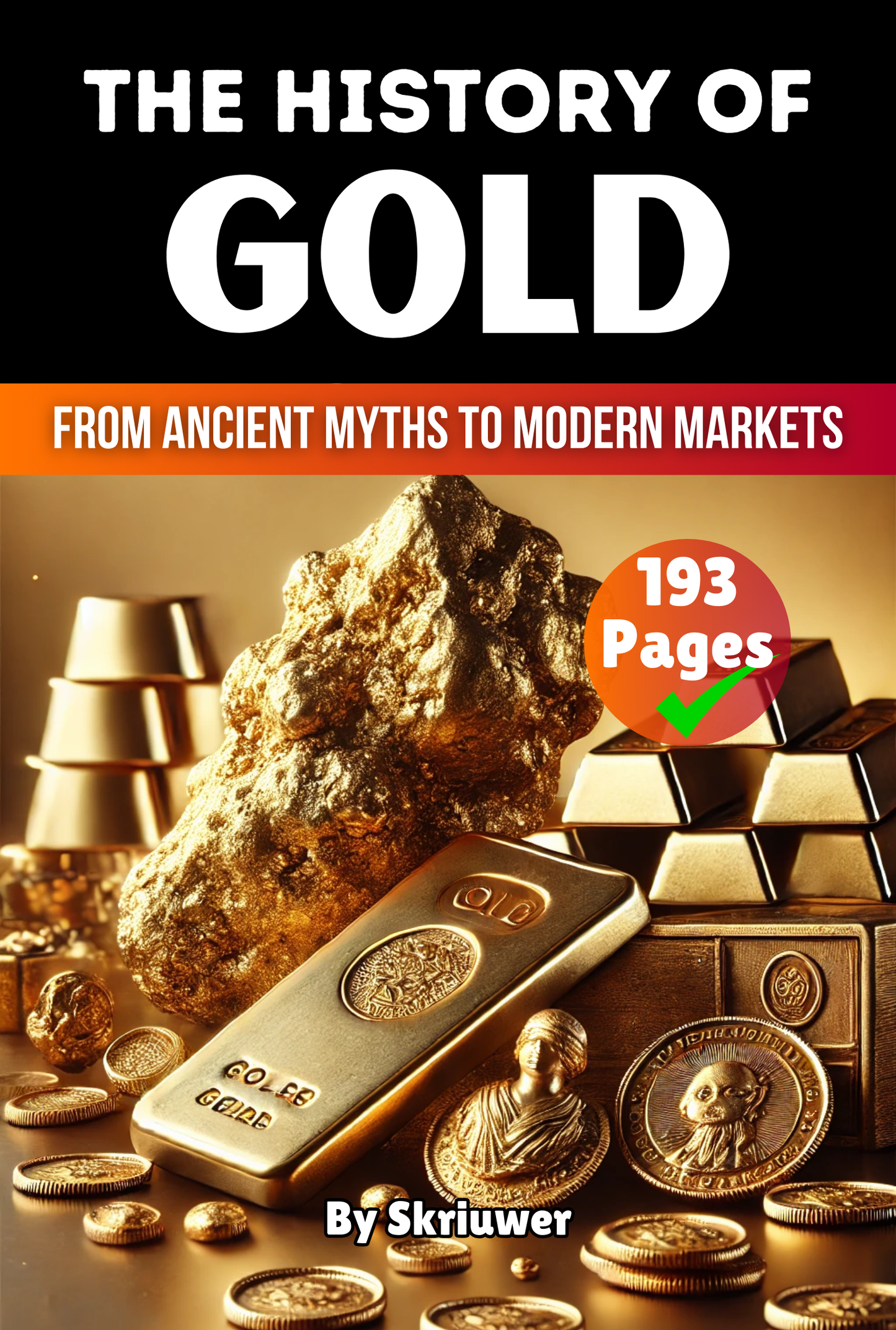
The History of Gold: From Ancient Myths to Modern Markets | Paperback Book
Verfügbarkeit für Abholungen konnte nicht geladen werden
This book explores the role of gold in human history over approximately 6,000 years, from ancient uses to modern economics. It discusses how gold influenced cultures, trade, and events across civilizations.
Key Topics Covered:
- Ancient Civilizations: Gold in Egyptian religious practices and temple treasures.
- Medieval and Exploration Periods: Viking uses, Mansa Musa's pilgrimage, and Spanish conquests in the Americas.
- Industrial and Modern Eras: The California Gold Rush, U.S. government policies in the 1930s, and gold's place in finance.
Additional Historical Points:
- Mining and Labor: Conditions in Roman and other historical mines.
- Cultural Beliefs: Aztec views of gold and alchemical pursuits.
- Economic Impacts: Market influences and storage during conflicts.
Reader Feedback Example: "This book covers Mansa Musa's pilgrimage and its effects." — Eleanor R. (Verified Purchase)
Book Features:
- Comprehensive Coverage: Examines gold's significance in various societies.
- Intended Audience: Suitable for those interested in economic history and precious metals.
TABLE OF CONTENTS
CHAPTER 1: EARLY TRACES OF GOLD IN PREHISTORIC TIMES
- Earliest human encounters with gold in riverbeds and natural deposits
- Primitive shaping and symbolic significance in burial and ritual
- Transition from basic gathering to rudimentary mining
CHAPTER 2: THE ROLE OF GOLD IN ANCIENT CIVILIZATIONS (SUMER AND EARLY EGYPT)
- Sumerian gold artifacts and temple use in Mesopotamia
- Egyptian “flesh of the gods” concept and vast temple treasures
- Emergence of religious and royal gold iconography
CHAPTER 3: GOLD IN THE INDUS VALLEY AND EARLY EAST ASIA
- Indus Valley use of gold in ornaments and trade networks
- Chinese Shang Dynasty’s limited gold usage yet symbolic importance
- Early metalworking skills and cross-cultural trade routes
CHAPTER 4: GOLD IN THE ANCIENT MEDITERRANEAN
- Minoan goldsmith techniques and religious objects
- Mycenaean shaft graves and lavish golden masks
- Mediterranean trade links shaping gold circulation
CHAPTER 5: GOLD IN THE BIBLICAL ERA AND ANCIENT ISRAEL
- Biblical accounts of gold in the Tabernacle and Temple
- Symbolic tension between divine devotion and idolatry (Golden Calf story)
- Tribute, temple ornaments, and alliances through gold
CHAPTER 6: THE CLASSICAL ERA: GOLD IN GREECE AND PERSIA
- Greek coinage evolution and the role of Lydia’s electrum/gold coins
- Persian darics as a unified imperial currency
- Greco-Persian conflicts partly financed by gold tributes
CHAPTER 7: GOLD IN THE ROMAN EMPIRE
- Introduction of the aureus and later the solidus in Roman coinage
- Mining innovations in Hispania and Dacia
- Use of gold for architecture, military pay, and imperial regalia
CHAPTER 8: EARLY MIDDLE AGES: GOLD AFTER THE FALL OF ROME
- Continuity of gold coinage among successor states and Germanic kingdoms
- Role of gold in monastic treasuries and church embellishments
- Trade reorientations and small-scale gold usage in early medieval Europe
CHAPTER 9: THE VIKING AGE AND GOLD
- Raids on monasteries and acquisition of golden artifacts
- Arm rings and jewelry as status symbols in Norse society
- Trade links, tribute, and cultural exchange with Byzantium and elsewhere
CHAPTER 10: THE ISLAMIC GOLDEN AGE AND GOLD
- Umayyad and Abbasid dinars as high-purity gold currency
- Religious patronage and architectural splendor using gold
- Trans-Saharan and Indian Ocean trade routes linking Africa, the Middle East, and Asia
CHAPTER 11: GOLD IN MEDIEVAL EUROPE
- Reintroduction of widespread gold coinage in Italian city-states (florin, ducat)
- Crusades and the flow of gold through Levantine trade
- Churches and royal courts using gold to signify power and devotion
CHAPTER 12: TRADE ROUTES AND THE SPREAD OF GOLD
- Silk Road, Indian Ocean, and trans-Saharan corridors for gold exchange
- Expansion of commercial links between East, West, and Africa
- Role of gold in forging diplomatic and cultural connections
CHAPTER 13: GOLD IN THE AMERICAS BEFORE EUROPEAN CONTACT
- Mesoamerican and Andean goldworking traditions (Aztec, Maya, Inca)
- Ritual and spiritual significance of gold for local rulers
- Trade and mining techniques preceding European arrival
CHAPTER 14: THE AGE OF EXPLORATION AND THE SEARCH FOR GOLD
- Spanish conquests in the New World (Aztec, Inca) driven by gold lust
- Portuguese African coastal ventures (Elmina, São Jorge da Mina)
- Treaty of Tordesillas and early colonial competition for gold sources
CHAPTER 15: GOLD IN THE RENAISSANCE PERIOD
- Italian banking (Medici, Bardi) and powerful gold currencies (florin, ducat)
- Artistic patronage in Florence, Venice, and royal courts
- Humanism, alchemy, and the broader cultural flourishing tied to gold
CHAPTER 16: GOLD IN EARLY MODERN EUROPE
- Consolidation of national states and the role of gold in financing wars
- Emergence of mercantilism and expansion of trade networks
- Colonial acquisitions in Africa and the Americas to secure gold resources
CHAPTER 17: GOLD IN AFRICA: EMPIRES AND TRADE
- Rise of West African empires (Ghana, Mali, Songhai) powered by gold
- Trans-Saharan routes and Islamic connections
- East African realms (Great Zimbabwe) and Swahili coastal trade
CHAPTER 18: THE GOLD RUSH ERA (19TH CENTURY)
- California and Australian gold rushes transforming local and global economies
- Migration booms, mining towns, and environmental consequences
- Societal impacts, indigenous displacement, and corporate mining takeovers
CHAPTER 19: EFFECTS OF GOLD ON COLONIALISM
- European chartered companies, forced labor systems, and resource exploitation
- Scramble for Africa and conflict over gold-rich territories
- Tension between liberal rhetoric and oppressive colonial practices
CHAPTER 20: THE TRANSFORMATION OF GOLD IN THE LATE 19TH CENTURY
- Triumph of the classical gold standard and global monetary stability
- Industrial mining breakthroughs (deep-level extraction, cyanidation)
- Consolidation of capital, final gold rushes, and geopolitical realignments
Product Details
Dimensions: 5.8 × 8.3 inches / 15.24 x 22.86 cm
Cover: Paperback

Why Skriuwer.com?
-
Supporting Frisian Language
When you buy from Skriuwer, you're not just getting a book—you’re helping create more Frisian books and educational resources like LearnFrisian.com. Your support directly helps us preserve and grow the Frisian language for future generations.
-
Making Languages Accessible
We believe in making languages easy to learn and accessible. While Frisian is our passion, we also want to help people learn other key languages like Dutch and English by providing helpful resources and learning tools.
-
Investing in Future Projects
Your purchase fuels more than just current projects. It helps us dream big and plan for the future, whether that’s developing new books, launching language-learning platforms, or supporting other educational initiatives. You're helping us build something lasting!
Erhaltung der friesischen Sprache
Bei Skriuwer.com glauben wir, dass die friesische Sprache mehr ist als nur Worte – sie ist ein lebendiger Teil unseres Erbes. Doch wie viele Minderheitensprachen steht auch das Friesische vor Herausforderungen, um in einer sich ständig verändernden Welt zu überleben. Deshalb ist unsere Mission einfach, aber entscheidend: die friesische Sprache für kommende Generationen lebendig und blühend zu halten.
Jedes Buch, das wir erschaffen, jede Geschichte, die wir erzählen, und jedes Wort, das wir veröffentlichen, ist Teil eines größeren Bestrebens, die friesische Kultur zu bewahren und zu feiern. Aber wir können das nicht allein tun. Mit Ihrer Hilfe können wir einen echten Unterschied machen.
Wie Sie helfen können:
Ein Buch kaufen: Wenn Sie eines unserer Bücher kaufen, fügen Sie nicht nur ein schönes Stück Literatur zu Ihrer Sammlung hinzu – Sie unterstützen direkt den Erhalt der friesischen Sprache. Jedes Buch hilft dabei, den Reichtum unserer Sprache an mehr Menschen zu verbreiten. Sie können auch zu dieser Sache beitragen, indem Sie die friesische Sprache über unsere Partnerseite www.learnfrisian.com lernen.
Spenden: Wenn Sie an unsere Mission glauben, können Sie auch mit einer Spende dazu beitragen, dass wir unsere Arbeit fortsetzen können. Ob es um die Finanzierung neuer Veröffentlichungen, die Unterstützung von Bildungsprogrammen oder das Erreichen von mehr friesischen Sprechern geht – Ihre Spende kann einen nachhaltigen Unterschied machen. Klicken Sie einfach auf den untenstehenden Button, um einen Beitrag zu leisten!
Gemeinsam können wir sicherstellen, dass die friesische Sprache ein lebendiger Teil unserer Welt bleibt. Begleiten Sie uns auf dieser Reise – Ihre Unterstützung heute bedeutet eine hellere Zukunft für unsere Sprache morgen.