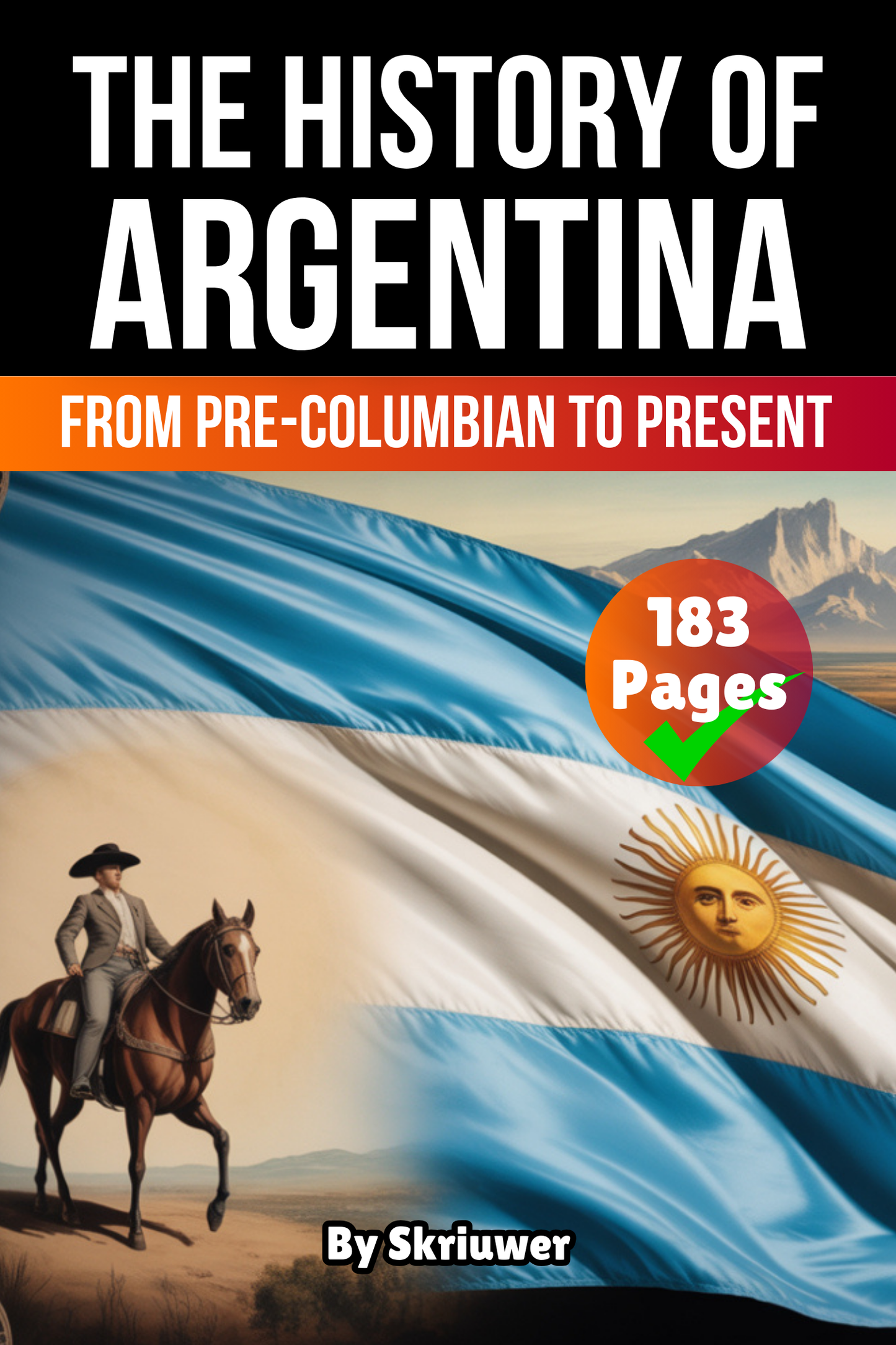
The History of Argentina: From Pre-Columbian To Present | Paperback Book
Verfügbarkeit für Abholungen konnte nicht geladen werden
This book explores the history of Argentina from pre-Columbian times to the present, covering indigenous cultures, colonial periods, independence movements, political developments, and economic challenges. It discusses key events such as conquests, rebellions, cultural evolutions, and modern crises.
Key Topics Covered:
- Pre-Columbian Era: Archaeological sites like Cueva de las Manos with handprints dating back approximately 9,000 to 13,000 years.
- Colonial Period: The founding of Buenos Aires by Pedro de Mendoza in 1536 and the role of enslaved Africans in society.
- 19th Century: Political conflicts under leaders like Juan Manuel de Rosas and indigenous campaigns such as the Conquest of the Desert led by Julio Argentino Roca.
- 20th Century: The Perón era, including the posthumous handling of Eva Perón's remains, the Dirty War with an estimated 30,000 disappearances, and the 2001 economic crisis.
- Cultural Aspects: Origins of tango influenced by African, European, and immigrant communities.
- Other Events: Jesuit missions in the region, gaucho rebellions, Nazi refugees post-World War II, and interactions with international organizations like the IMF.
Reader Feedback Example: "The discussion on the 2001 economic collapse provides context on events like bartering during the crisis." — Carlos R. (Verified Purchase)
Book Features:
- Comprehensive Timeline: Spans from ancient indigenous history to contemporary economic issues.
- Intended Audience: Suitable for those interested in Argentine heritage, cultural history, or political and economic analyses.
TABLE OF CONTENTS
CHAPTER 1: INTRODUCTION TO EARLY INHABITANTS: PRE-COLUMBIAN SOCIETIES
- Earliest inhabitants and their cultural diversity
- Geographical influence on indigenous lifestyles
- Legacy of rock art, ruins, and pre-Columbian traditions
CHAPTER 2: THE ARRIVAL OF THE SPANISH: EARLY COLONIAL ERA
- Initial Spanish expeditions and conflicts
- Foundation and re-foundation of Buenos Aires
- Emergence of the encomienda system and missionary work
CHAPTER 3: GROWTH OF COLONIAL ARGENTINA: THE SPANISH CROWN’S POLICIES
- Administrative structures and key royal decrees
- Economic pursuits and mercantilism
- Impact of colonial trade restrictions on local elites
CHAPTER 4: RISE OF BUENOS AIRES: PORT AND COMMUNITY LIFE
- Evolution of the port city as a commercial hub
- Social classes and cultural developments in colonial society
- Interactions between settlers, indigenous groups, and African enslaved people
CHAPTER 5: SEEDS OF INDEPENDENCE: ENLIGHTENMENT IDEAS
- Influence of European philosophical thought
- Local intellectual circles and their role in questioning colonial rule
- Shifts in economic and political thinking leading to reform ideas
CHAPTER 6: THE MAY REVOLUTION AND THE EARLY WARS OF INDEPENDENCE
- Key events of 1810 and the formation of local juntas
- Military campaigns and early patriotic fervor
- Challenges and resistance from loyalist forces
CHAPTER 7: EMERGENCE OF NATIONAL HEROES: BELGRANO, SAN MARTÍN, AND MORE
- Leadership and contributions of key figures to the independence cause
- Military strategies and battles shaping early Argentina
- Formation of a new national identity
CHAPTER 8: STRUGGLE FOR UNITY: CIVIL WARS AND REGIONAL DIVISIONS
- Federalists vs. Unitarians and their ideological differences
- Regional power bases and inter-provincial tensions
- Societal impact of ongoing civil strife
CHAPTER 9: THE ROSAS ERA: SHAPING A NATION
- Centralization of power under Juan Manuel de Rosas
- Social and political reforms to maintain control
- Opposition groups and exiles challenging Rosas’s rule
CHAPTER 10: CONSTRUCTION OF THE ARGENTINE STATE: MID-19TH CENTURY REFORMS
- Laying down constitutional frameworks
- Emergence of political leadership and parties
- Negotiations and agreements that influenced nation-building
CHAPTER 11: THE LIBERAL AGE: IMMIGRATION AND ECONOMIC EXPANSION
- Massive European immigration and demographic changes
- Growth of agricultural exports, railways, and infrastructure
- Rise of liberal governments and modernization efforts
CHAPTER 12: GROWTH OF POLITICAL PARTIES AND SOCIAL MOVEMENTS
- Formation of radical and conservative blocs
- Labor movements and early workers’ organizations
- Social reforms and the push for broader representation
CHAPTER 13: EARLY 20TH CENTURY TENSIONS: RADICALISM AND THE INFAMOUS DECADE
- Rise of the Radical Party and electoral reforms
- Political instability and coup d’états
- Economic pressures leading to authoritarian trends
CHAPTER 14: CULTURAL AND SOCIAL CHANGES IN EARLY 20TH CENTURY ARGENTINA
- Expansion of tango, literature, and visual arts
- Growth of public education and intellectual circles
- Evolving social norms and the impact of urbanization
CHAPTER 15: THE PERÓN ERA: POLITICAL SHIFTS AND SOCIAL IMPACT
- Juan and Eva Perón’s rise to power
- Populist policies, labor rights, and social welfare
- Polarization of Argentine society under Peronism
CHAPTER 16: MILITARY INTERVENTIONS AND THE CHANGING POLITICAL LANDSCAPE
- Frequent coups and shifting political alliances
- Role of the military in governance and policy-making
- Mounting tensions between civilians and military leaders
CHAPTER 17: SOCIOECONOMIC DEVELOPMENTS: AGRICULTURE, INDUSTRY, AND URBANIZATION
- Transformation of the rural economy and livestock production
- Industrialization efforts and factory workforce growth
- Rise of major cities and evolving urban life
CHAPTER 18: SHIFTING CULTURAL IDENTITIES: TANGO, LITERATURE, AND SPORTS
- Spread of tango worldwide and its national significance
- Influential writers, poets, and artists
- Growing passion for football (soccer) and other sports
CHAPTER 19: APPROACHING THE LATE 20TH CENTURY: DEMOCRACY AND DICTATORSHIP
- Political oscillations and social unrest
- Pressure for democratic reforms vs. authoritarian crackdowns
- Persistent issues setting the stage for future change
CHAPTER 20: REFLECTIONS ON THE LEGACY OF ARGENTINE HISTORY
- Long-term impacts of historical periods on national identity
- Lessons learned from cultural, political, and economic developments
- Continuing influence of Argentina’s past on its present
Product Details
Dimensions: 5.8 × 8.3 inches / 15.24 x 22.86 cm
Cover: Paperback

Why Skriuwer.com?
-
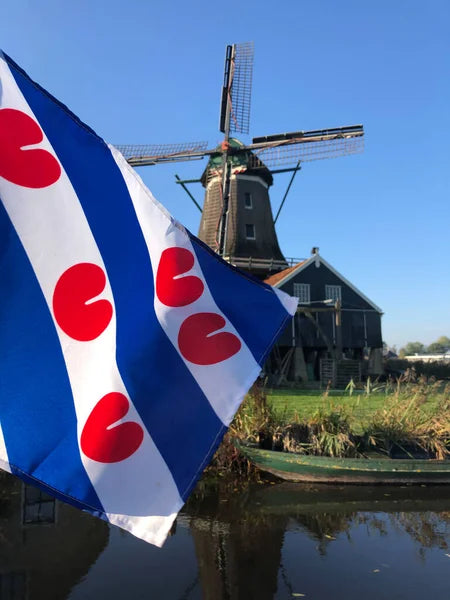
Supporting Frisian Language
When you buy from Skriuwer, you're not just getting a book—you’re helping create more Frisian books and educational resources like LearnFrisian.com. Your support directly helps us preserve and grow the Frisian language for future generations.
-
Making Languages Accessible
We believe in making languages easy to learn and accessible. While Frisian is our passion, we also want to help people learn other key languages like Dutch and English by providing helpful resources and learning tools.
-
Investing in Future Projects
Your purchase fuels more than just current projects. It helps us dream big and plan for the future, whether that’s developing new books, launching language-learning platforms, or supporting other educational initiatives. You're helping us build something lasting!
Erhaltung der friesischen Sprache
Bei Skriuwer.com glauben wir, dass die friesische Sprache mehr ist als nur Worte – sie ist ein lebendiger Teil unseres Erbes. Doch wie viele Minderheitensprachen steht auch das Friesische vor Herausforderungen, um in einer sich ständig verändernden Welt zu überleben. Deshalb ist unsere Mission einfach, aber entscheidend: die friesische Sprache für kommende Generationen lebendig und blühend zu halten.
Jedes Buch, das wir erschaffen, jede Geschichte, die wir erzählen, und jedes Wort, das wir veröffentlichen, ist Teil eines größeren Bestrebens, die friesische Kultur zu bewahren und zu feiern. Aber wir können das nicht allein tun. Mit Ihrer Hilfe können wir einen echten Unterschied machen.

Wie Sie helfen können:
Ein Buch kaufen: Wenn Sie eines unserer Bücher kaufen, fügen Sie nicht nur ein schönes Stück Literatur zu Ihrer Sammlung hinzu – Sie unterstützen direkt den Erhalt der friesischen Sprache. Jedes Buch hilft dabei, den Reichtum unserer Sprache an mehr Menschen zu verbreiten. Sie können auch zu dieser Sache beitragen, indem Sie die friesische Sprache über unsere Partnerseite www.learnfrisian.com lernen.
Spenden: Wenn Sie an unsere Mission glauben, können Sie auch mit einer Spende dazu beitragen, dass wir unsere Arbeit fortsetzen können. Ob es um die Finanzierung neuer Veröffentlichungen, die Unterstützung von Bildungsprogrammen oder das Erreichen von mehr friesischen Sprechern geht – Ihre Spende kann einen nachhaltigen Unterschied machen. Klicken Sie einfach auf den untenstehenden Button, um einen Beitrag zu leisten!
Gemeinsam können wir sicherstellen, dass die friesische Sprache ein lebendiger Teil unserer Welt bleibt. Begleiten Sie uns auf dieser Reise – Ihre Unterstützung heute bedeutet eine hellere Zukunft für unsere Sprache morgen.