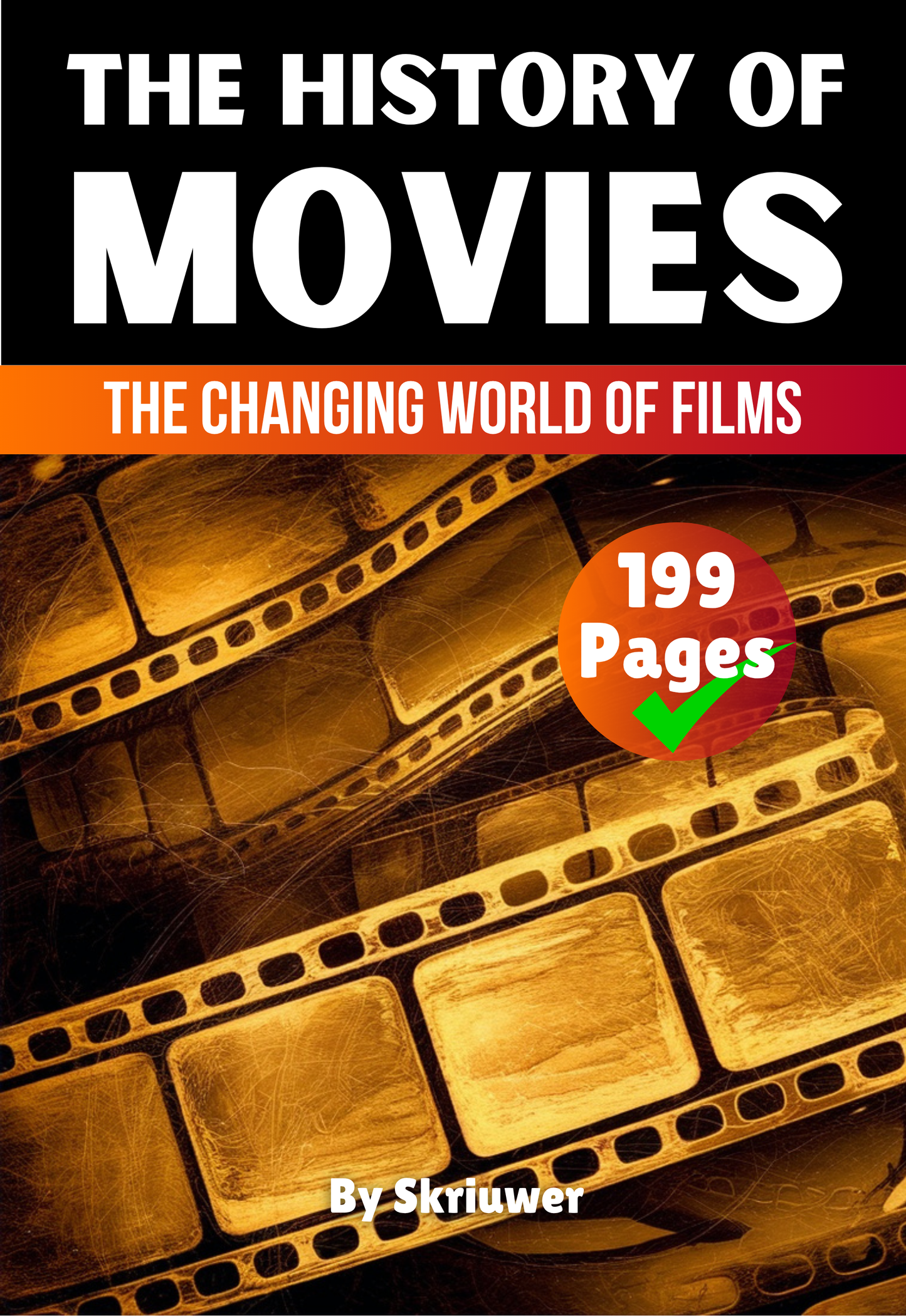

The History of Movies: The Changing World of Films | Paperpack Book
Det gick inte att ladda hämtningstillgänglighet
This captivating book traces the fascinating evolution of cinema over 150 years, from early inventions to today's digital era. Engagingly written with meticulous research, it explores the innovations, rivalries, and cultural impacts that made movies the world's most powerful storytelling medium.
Key Chapters and Highlights:
- The Birth of Hollywood: How patent disputes in the early 1900s pushed filmmakers west and created the studio system.
- Propaganda and Power: The role of film in 1930s Europe and Hollywood's complex relationship with global events.
- Technical Revolutions: The arrival of sound (Vitaphone), color (Technicolor), and modern effects like CGI.
- Rebel Movements: The French New Wave's handheld camera style and its influence on independent filmmaking.
- Behind-the-Scenes Stories: Production Code era challenges, viral moments like "Lazy Sunday," and the shift to streaming algorithms.
Reader Feedback Example: "This book brings film history to life in a way textbooks never could. The research is impressive, and the large print makes it perfect for long reading sessions." – Sofia T. (Film Professor, Verified Purchase)
Why Readers Love This Edition:
- Fresh perspectives on familiar stories, from silent era stars to modern blockbusters
- Perfect for cinephiles, students, or anyone who loves movies like Oppenheimer, classic Hollywood, or French New Wave directors
- Engaging narrative that reads like your favorite film, insightful, entertaining, and full of surprising connections
Experience the real story of how cinema's triumphs and turning points. Whether you're a casual viewer or serious enthusiast, this book reveals why movies continue to shape our world.
Add to cart today and discover cinema history like never before.
TABLE OF CONTENTS
CHAPTER 1: EARLY VISUAL STORYTELLING
-
Birth of visual narratives through cave art and puppetry
-
Gradual evolution toward magic lantern shows and optical toys
-
Foundations of storytelling methods prior to modern film
CHAPTER 2: PRECURSORS TO CINEMA
-
Technological breakthroughs that paved the way (magic lantern, photography)
-
Contributions of inventors like Muybridge, Marey, Edison, and the Lumière brothers
-
Transition from scientific curiosity to public entertainment
CHAPTER 3: THE SILENT ERA (LATE 1800S TO 1920S)
-
Expansion of silent film worldwide
-
Rise of major studios and the role of stars in silent cinema
-
Challenges, aesthetics, and the global appeal of silent narratives
CHAPTER 4: THE EMERGENCE OF HOLLYWOOD
-
Shift of production to Southern California
-
Development of the studio system and star contracts
-
Strategic factors (climate, distance from patent enforcers) that enabled Hollywood’s growth
CHAPTER 5: EUROPEAN FILM MOVEMENTS IN THE SILENT PERIOD
-
Expressionism in Germany, Impressionism in France, and their global influence
-
Artistic innovation under post-war conditions
-
Early pioneers and how they redefined film’s visual language
CHAPTER 6: THE TRANSITION TO SOUND
-
Technological hurdles of synchronized audio and the Vitaphone system
-
Impact on acting styles, set design, and production methods
-
Audience reception and the cultural shift from silent to talkie
CHAPTER 7: THE 1930S STUDIO SYSTEM
-
Consolidation of power by the Big Five studios
-
Imposition of the Production Code (Pre-Code Hollywood era)
-
Musicals, gangster films, and escapist entertainment during the Great Depression
CHAPTER 8: CLASSIC HOLLYWOOD IN THE 1940S
-
Wartime cinema, propaganda, and morale-boosting features
-
Key genres (film noir, war dramas) and influential directors
-
Post-war transformations and shifting audience tastes
CHAPTER 9: POST-WAR TRENDS AND INTERNATIONAL INFLUENCE
-
Effects of WWII on European and American film industries
-
Growing presence of documentary styles and cross-cultural exchanges
-
Independent production and the role of festivals
CHAPTER 10: THE RISE OF GENRE FILMS
-
Establishment of clear categories (westerns, musicals, horror, sci-fi)
-
Technological innovations (widescreen, color, sound) fueling spectacles
-
Marketing strategies targeting specific fan bases
CHAPTER 11: FILM NOIR AND CRIME DRAMA
-
Origins of film noir under post-war cynicism
-
Visual style, thematic concerns, and the femme fatale archetype
-
Evolution of the crime genre beyond early gangster films
CHAPTER 12: TECHNICOLOR AND THE GROWTH OF COLOR FILM
-
Shift from black-and-white to vibrant color processes
-
Influence of Technicolor on musicals, epics, and fantasy
-
Global adoption of color and how it shaped cinematic storytelling
CHAPTER 13: THE ROLE OF WAR IN SHAPING CINEMA
-
Use of films as propaganda tools during WWI and WWII
-
Post-war rebuilding, war-themed movies, and shifting public attitudes
-
Technical and narrative innovations prompted by conflicts
CHAPTER 14: CHANGES IN ACTING STYLES AND DIRECTING APPROACHES
-
From silent pantomime to Stanislavski-influenced realism
-
Impact of talkies, war dramas, and noir on performance techniques
-
Directorial shifts: emergent auteur theory and evolving cinematic grammar
CHAPTER 15: THE 1950S AND THE INFLUENCE OF TELEVISION
-
Rise of TV sets and its challenge to movie attendance
-
Studios’ responses (3D, widescreen, spectacle films)
-
Drive-ins, youth-oriented features, and changing consumer habits
CHAPTER 16: EUROPEAN ART CINEMA IN THE 1950S AND 1960S
-
Italian neorealism’s legacy and the ascent of Fellini, Antonioni, Visconti
-
French New Wave’s radical approach to narrative and style
-
Bergman in Sweden, British kitchen sink realism, and Eastern European experiments
CHAPTER 17: THE GOLDEN AGE OF ASIAN CINEMA
-
Post-war Japan with directors Kurosawa, Ozu, Mizoguchi
-
India’s Hindi (Bollywood) musicals, regional industries, and iconic stars
-
Hong Kong’s studio system, early wuxia, and cultural contexts
CHAPTER 18: POPULAR MOVEMENTS AND NEW WAVES OF THE 1960S
-
Global youth culture and political ferment shaping new wave aesthetics
-
Czechoslovak New Wave, Cinema Novo in Brazil, and extended European experimentation
-
Genre blending, festival prominence, and the questioning of social norms
CHAPTER 19: INDEPENDENT FILMMAKING IN THE 1960S
-
Rise of low-budget production, exploitation flicks, and underground film
-
Diverse financing methods and struggles with distribution and censorship
-
Impact on creative freedom, star directors emerging from indie roots
CHAPTER 20: SHIFTS IN THE INDUSTRY BY THE LATE 1960S
-
Convergence of television competition, loosening censorship, and new wave influences
-
Transition away from old studio rules, audience fragmentation, and counterculture demand
-
How this pivotal era paved the way for major transformations in modern cinema
Product Details
Dimensions: 6 × 9 inches / 15.24 x 22.86 cm
Cover: Paperback

Why Skriuwer.com?
-
Supporting Frisian Language
When you buy from Skriuwer, you're not just getting a book—you’re helping create more Frisian books and educational resources like LearnFrisian.com. Your support directly helps us preserve and grow the Frisian language for future generations.
-
Making Languages Accessible
We believe in making languages easy to learn and accessible. While Frisian is our passion, we also want to help people learn other key languages like Dutch and English by providing helpful resources and learning tools.
-
Investing in Future Projects
Your purchase fuels more than just current projects. It helps us dream big and plan for the future, whether that’s developing new books, launching language-learning platforms, or supporting other educational initiatives. You're helping us build something lasting!
Bevarande av det frisiska språket
På Skriuwer.com tror vi att det frisiska språket är mer än bara ord – det är en levande del av vårt arv. Men precis som många minoritetsspråk står frisiskan inför överlevnadsutmaningar i en ständigt föränderlig värld. Det är därför vår mission är enkel men avgörande: att hålla det frisiska språket levande och blomstrande för framtida generationer.
Varje bok vi skapar, varje berättelse vi berättar och varje ord vi publicerar är en del av en större insats för att bevara och fira den frisiska kulturen. Men vi kan inte göra det ensamma. Med din hjälp kan vi göra en verklig skillnad.

Hur Du Kan Hjälpa:
Köp en Bok: När du köper en av våra böcker lägger du inte bara till ett vackert litterärt verk i din samling – du stödjer direkt bevarandet av det frisiska språket. Varje bok hjälper till att sprida rikedomarna i vårt språk till fler människor. Du kan också bidra till denna sak genom att lära dig frisiskan via vår partnersida, www.learnfrisian.com.
Donera: Om du tror på vårt uppdrag kan du också göra en insats för att hjälpa oss att fortsätta vårt arbete. Oavsett om det handlar om att finansiera nya publikationer, stödja utbildningsprogram eller hjälpa oss att nå fler frisistalare, kan din donation ha en varaktig inverkan. Klicka bara på knappen nedan för att bidra!
Tillsammans kan vi säkerställa att det frisiska språket förblir en levande del av vår värld. Följ med oss på denna resa – ditt stöd idag innebär en ljusare framtid för vårt språk imorgon.