History of New Zealand

MĀORIPACIFICCOLONIZATIONCONFLICT

History of New Zealand

Land, Conflict and the Search for Unity

New Zealand — Aotearoa in te reo Māori — is one of the last significant landmasses to be settled by humans, yet its history is rich with discovery, conflict, and transformation. From the remarkable Polynesian navigators who first reached its shores to the tumultuous encounter between Māori and European settlers, and from the landmark Treaty of Waitangi to modern bicultural democracy, New Zealand's story is a profound meditation on land, sovereignty, and the search for unity.

Quick Facts

  • Māori arrival in Aotearoa: approximately 1280 AD
  • British sovereignty: February 6, 1840 (Treaty of Waitangi)
  • Population: approximately 5 million
  • First country to grant women the vote: 1893
  • Capital: Wellington; largest city: Auckland
  • Official languages: English, Te Reo Māori, NZ Sign Language

Polynesian Discovery & Māori Culture

New Zealand was among the last major landmasses on Earth to be settled by humans. The ancestors of the Māori — extraordinary Polynesian navigators sailing double-hulled waka hourua (canoes) — made the extraordinary voyage from eastern Polynesia, arriving in Aotearoa around 1280 AD. This was not accidental discovery but deliberate exploration, guided by knowledge of stars, currents, winds, and bird migration.

The settlers adapted to New Zealand's dramatically different environment with remarkable speed. They hunted the giant flightless moa (which they drove to extinction within a century or two), established permanent settlements, developed a sophisticated agricultural system centered on the kumara (sweet potato), and created a richly complex culture. By the time Europeans arrived, Māori society was organized into iwi (tribes) and hapū (subtribes), with elaborately carved meeting houses, a rich oral tradition, and a deeply spiritual relationship with the land — Papatūānuku, the Earth Mother.

Did You Know?

The Polynesian navigation that brought the Māori to New Zealand is considered one of history's greatest feats of exploration. Using only stars, ocean swells, winds, and bird behavior, Polynesian navigators crossed thousands of kilometers of open Pacific Ocean centuries before European ships had reliable navigational instruments.

European Exploration & Contact

The Dutch explorer Abel Tasman became the first European to sight New Zealand in 1642, but his encounter with Māori ended violently when four of his crew were killed. He never landed and named the land "Staten Landt" — later renamed Nova Zeelandia by Dutch cartographers, after the Dutch province of Zeeland.

It was not until James Cook's voyages — beginning in 1769 — that sustained European engagement with New Zealand began. Cook circumnavigated both main islands and produced detailed charts, establishing peaceful relations with many Māori communities and documenting the land's extraordinary natural richness. His voyages opened New Zealand to European eyes. In the decades that followed, sealers, whalers, and traders arrived, establishing the first permanent European settlements. Missionaries arrived in 1814, beginning the transformation of Māori society through Christianity and literacy in te reo Māori.

The Musket Wars: Unintended Consequences

The introduction of European muskets transformed Māori inter-tribal warfare with devastating consequences. Between approximately 1807 and 1842, the Musket Wars caused an estimated 20,000 to 40,000 Māori deaths as tribes with early access to firearms achieved sudden military advantages. This period dramatically reshaped Māori demographics and territorial boundaries — and created urgent pressure for Māori chiefs to engage with British authorities, ultimately contributing to the signing of the Treaty of Waitangi.

The Treaty of Waitangi

On February 6, 1840, at Waitangi in the Bay of Islands, representatives of the British Crown and approximately 500 Māori chiefs signed the Treaty of Waitangi — New Zealand's founding document. The Treaty promised Māori the protection of the Crown, guaranteed their rights to their lands and resources, and granted them the rights of British subjects.

However, the Treaty was written in two versions — English and te reo Māori — that differed significantly in meaning. The English version suggested Māori ceded sovereignty to the Crown; the Māori version (te Tiriti) used the concept of "kāwanatanga" (governance) rather than sovereignty, with Māori chiefs retaining "tino rangatiratanga" (full chieftainship) over their lands. These different understandings of what was agreed upon would fuel conflict for generations and remain central to New Zealand's political and cultural life today.

Did You Know?

Waitangi Day — February 6 — is New Zealand's national day, commemorating the signing of the Treaty. It is often also a day of protest by Māori groups seeking acknowledgment of Treaty breaches. The day uniquely reflects New Zealand's ongoing bicultural dialogue and the nation's determination to confront rather than ignore its colonial history.

Land Wars & Conflict

The decades following the Treaty saw rapidly escalating tensions over land. European settlers poured into New Zealand, hungry for farmland. Māori chiefs who had signed the Treaty expecting their land rights to be protected found instead that colonial governments used questionable methods — pre-emptive purchases, legal manipulation, and outright confiscation — to acquire millions of acres of Māori land.

The New Zealand Wars (1845-1872) — also called the Land Wars — were a series of armed conflicts between the Crown and various Māori groups. The wars saw significant Māori military achievements, including the Battle of Gate Pā in 1864 where Māori defenders repulsed a much larger British force. Ultimately, however, superior Crown resources prevailed. Following the wars, the government confiscated approximately 3.2 million acres of Māori land under the New Zealand Settlements Act — even punishing tribes that had remained loyal to the Crown. The consequences of this dispossession continue to shape Māori socioeconomic outcomes today.

The Waitangi Tribunal: Reckoning with History

Established in 1975 and given powers to investigate historical Treaty breaches in 1985, the Waitangi Tribunal has been one of the world's most significant attempts by a state to formally address colonial injustice. Through Treaty settlements, the Crown has returned billions of dollars worth of assets and formal apologies to wronged iwi. Critics argue settlements are inadequate; supporters see them as a model for indigenous reconciliation. The process remains ongoing.

Modern New Zealand

New Zealand achieved full independence from Britain in 1907 (as a Dominion) and through the Statute of Westminster in 1947. New Zealanders served with great distinction in both World Wars, and the ANZAC legend — forged at Gallipoli in 1915 — became central to national identity. New Zealand was the first country to grant women the right to vote in 1893 under Kate Sheppard's suffrage movement, a landmark in world history.

The late 20th century saw a dramatic Māori cultural renaissance — a revival of te reo Māori, traditional arts, and political activism. The 1970s and 1980s brought waves of Pacific Islander immigration and significant social change. Today New Zealand is a diverse, progressive democracy known for its natural beauty, pioneering social policies, and its ongoing effort to build a bicultural partnership between Māori and the Crown — though significant economic and social disparities remain and the Treaty's promises continue to be debated and negotiated.

Did You Know?

New Zealand was the first self-governing country in the world to grant women the right to vote in 1893 — 27 years before the United States did so. The achievement was largely driven by Kate Sheppard, whose portrait appears on the New Zealand $10 note. Sheppard collected petitions signed by nearly a third of all adult New Zealand women at the time.

📚 Featured Book

The History of New Zealand: Land, Conflict and the Search for Unity

From Polynesian voyagers to Treaty struggles and modern democracy — the definitive story of Aotearoa New Zealand told through its people and the land they fought for.

Get This Book →
"In Aotearoa, the land is not background — it is a living ancestor. To understand New Zealand, you must first understand that the land remembers."— Māori Elder Tradition

Meet Our Authors

Behind every book at Skriuwer is a dedicated writer passionate about history, language, and sharing knowledge with the world. Our authors come from different countries and backgrounds, but share a common commitment: producing research-backed, engaging books that give readers access to perspectives they won't easily find elsewhere.

Each author contributes to our mission of preserving the Frisian language — a cause that unites our entire community of writers and readers.

Auke

Hi, I'm Auke, a passionate advocate for the Frisian language with deep roots in Frisian culture. I grew up in this vibrant heritage and have dedicated myself to preserving our unique linguistic identity. It's spoken by about 500,000 people, mostly in Friesland, Netherlands. As a key contributor to Skriuwer.com, I work with others to create books that educate and inspire, helping ensure the Frisian language, recognized as an official language alongside Dutch, stays alive for future generations. My work comes from a strong belief in language as the foundation of history and belonging. I'm proud that proceeds from these books support nonprofit efforts like De Fryske Wrâld. Join me in sustaining this ancient European tongue. Let's keep Frisian thriving.

Jennifer

Jennifer Joseph is an expert in history and languages. She highlights the ties between cultures, conflicts, and communication. She earned a BA in International Relations from the University of Rochester in New York, USA, and an MA in International Law from the Hebrew University of Jerusalem. This background combines strong research with simple, easy-to-read stories.

Her career includes teaching English online to Chinese students, which boosted her skills in cultural exchange. As an American living in the South of France, her broad view comes from travels starting in childhood. These trips sparked her love for uncovering hidden stories in history among diverse groups.

At Skriuwer.com, as a team member and copywriter, she has written books on history and languages. They explore forgotten times and how ideas shape societies.

Yahia

Yahia Fathy is an Egyptian author and editor living in Spain, dedicated to exploring the histories of countries, empires, and ancient civilizations through clear and thoughtful writing.

With fluency in multiple languages, he brings a broad cultural view to his work, combining solid research with careful editing to produce books that are accurate, engaging, and easy to follow. As an editor, he focuses on shaping complex ideas into straightforward narratives that readers can appreciate without effort.

Over the past year, Yahia has been active in publishing, motivated simply by his enjoyment of the process offering fresh insights into the past for those eager to learn.

Outside of his writing and editing, he spends time studying languages and cultures, finding new ways to link historical events across different societies.

History goes beyond lists of dates and facts; it reveals the key stories that have built our world. In my roles as author and editor, I aim to present these stories with precision and appeal, encouraging readers to discover the lasting impact of nations and empires on our lives today.
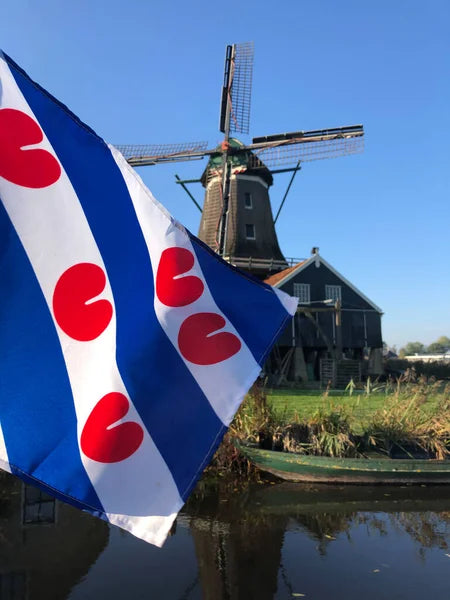
  • Supporting Frisian Language

    When you buy from Skriuwer, you're not just getting a book—you’re helping create more Frisian books and educational resources like LearnFrisian.com. Your support directly helps us preserve and grow the Frisian language for future generations.

  • Making Languages Accessible

    We believe in making languages easy to learn and accessible. While Frisian is our passion, we also want to help people learn other key languages like Dutch and English by providing helpful resources and learning tools.

  • Investing in Future Projects

    Your purchase fuels more than just current projects. It helps us dream big and plan for the future, whether that’s developing new books, launching language-learning platforms, or supporting other educational initiatives. You're helping us build something lasting!

Preserving the Frisian Language

At Skriuwer.com, we believe that the Frisian language is more than just words—it's a living, breathing part of our heritage. But like many minority languages, it faces challenges of survival in an ever-changing world. That’s why our mission is simple yet vital: to keep the Frisian language alive and thriving for generations to come.

Every book we create, every story we tell, and every word we publish is part of a larger effort to preserve and celebrate Frisian culture. But we can’t do it alone. With your help, we can make a real difference.

Learn About Our Mission Here

How You Can Help:

  • When you purchase one of our books, you’re not just adding a beautiful piece of literature to your collection—you’re directly supporting the preservation of the Frisian language. Each book helps to spread the richness of our language to more people.

  • You can also contribute to this cause by learning the Frisian language through our partner site, www.learnfrisian.com.

  • Donate: If you believe in our mission, you can also make a contribution to help us continue our work. Whether it’s funding new publications, supporting educational programs, or helping us reach more Frisian speakers, your donation can make a lasting impact. Just click the button below to contribute!

Together, we can ensure that the Frisian language remains a vibrant part of our world. Join us in this journey—your support today means a brighter future for our language tomorrow.

Donate with PayPal