History of Greenland

ARCTICVIKINGSINUITCOLONIZATION

History of Greenland

From Ice Age Hunters to Modern Nation

Greenland — the world's largest island — has been home to successive waves of human cultures for over 4,500 years. From the mysterious Paleo-Eskimo peoples to Norse Vikings and the resilient Inuit, Greenland's story is one of survival, adaptation, and identity forged against one of Earth's most unforgiving environments. Today it stands as an autonomous territory within the Kingdom of Denmark, navigating its own path toward greater self-determination.

Quick Facts

  • Population: approximately 57,000
  • World's largest island (2.16 million km²)
  • Norse settlement began ~985 AD under Erik the Red
  • Danish territory since 1814
  • Granted home rule 1979; expanded autonomy 2009
  • Capital: Nuuk (formerly Godthab)

Prehistoric Greenland & the Paleo-Eskimos

The first humans arrived in Greenland around 2500 BC — the Saqqaq people, part of the broader Arctic Small Tool tradition. These Paleo-Eskimos crossed from Canada and settled along the western coast, hunting seals and caribou with finely crafted stone tools. They thrived for over a millennium before mysteriously disappearing around 800 BC.

They were followed by the Dorset people (circa 800 BC–1500 AD), who brought improved cold-weather technologies including snow shelters and oil lamps. DNA evidence has confirmed that neither Saqqaq nor Dorset peoples were ancestors of the modern Inuit — they represent entirely separate migrations that ultimately went extinct.

Did You Know?

Greenland's Saqqaq culture is genetically distinct from both modern Inuit and Native Americans, suggesting a separate migration event from Siberia roughly 4,500 years ago. This was confirmed by sequencing DNA from a 4,000-year-old hair sample found preserved in permafrost.

Viking Age & Norse Settlements

In 985 AD, the exiled Norse chieftain Erik the Red led a fleet from Iceland to a land he strategically named "Greenland" — believing an appealing name would attract settlers. The Norse established two main colonies: the Eastern Settlement near modern Nuuk and the Western Settlement further north. At their peak, these communities numbered around 5,000 people farming, raising livestock, and trading walrus ivory with Europe.

The Norse Greenlanders built stone churches, participated in European trade networks, and even launched expeditions to Vinland (North America) around 1000 AD under Leif Eriksson. However, by the mid-15th century, both Norse colonies had vanished — victims of the Little Ice Age, declining ivory prices, the Black Death in Europe, and possibly conflict with the incoming Inuit.

The Norse Disappearance Mystery

Why did Norse Greenland collapse? Historians debate whether the colonists were too rigid in their European farming practices, refusing to adapt Inuit survival techniques. Climate cooling made agriculture increasingly impossible, while their primary export — walrus ivory — was undercut by cheaper African elephant ivory. The last written record of the Norse Greenlanders dates to 1408, describing a wedding in a church that still stands in ruins today.

The Inuit Domination

The Thule people — direct ancestors of today's Greenlandic Inuit — migrated from Alaska and Canada beginning around 1200 AD, spreading rapidly across the entire island. Their technology was far superior to the Dorset peoples for Arctic conditions: they hunted whales from kayaks, built heated sod houses (igluvigait), and used dog sleds for long-distance travel.

The Thule/Inuit culture absorbed and replaced all earlier peoples. When European contact resumed in the 17th century, it was the Inuit who greeted explorers along every coastline. Their language, Kalaallisut, remains the primary language of Greenland today.

Did You Know?

The Inuit developed over 50 distinct terms related to different types of snow and ice conditions — not just a linguistic curiosity, but a practical survival vocabulary essential for navigating Arctic terrain safely across seasons.

European Colonization

In 1721, the Norwegian-Danish missionary Hans Egede arrived in Greenland hoping to find surviving Norse Christians. Instead, he encountered only Inuit. He remained anyway, establishing a mission at Godthab (now Nuuk) and beginning the colonial era. The Danish-Norwegian crown soon followed with trading posts and forts, incorporating Greenland into its Atlantic empire.

The colonial period brought disease, cultural disruption, and forced religious conversion. However, it also brought literacy in Kalaallisut and eventually a hybrid Greenlandic-Danish culture. During World War II, when Nazi Germany occupied Denmark, the US established bases in Greenland under the 1941 Defense Agreement — cementing the island's strategic importance to Western powers.

Strategic Greenland: A Cold War Flashpoint

Greenland's position made it invaluable during the Cold War. The US constructed Thule Air Base (now Pituffik Space Base) in the far north — still one of America's most important military installations. In 1946, President Truman offered Denmark $100 million in gold to purchase Greenland. Denmark refused. The island's geopolitical importance has only grown with the melting Arctic and the opening of new shipping routes.

Path to Autonomy

Greenland became an official county of Denmark in 1953, granting its people full Danish citizenship. Growing Greenlandic cultural pride and the influence of decolonization movements worldwide led to a 1979 referendum granting Home Rule. Greenland then withdrew from the European Economic Community in 1985 — the only territory ever to leave what became the EU — to protect its fishing grounds.

In 2009, expanded Self-Rule granted Greenland control over most domestic affairs, with the prospect of full independence left to Greenlandic voters to decide. The discovery of significant mineral, oil, and rare earth deposits has intensified the independence debate. Greenland's people are weighing the economic benefits of their resources against the risks of leaving Danish subsidies behind.

Did You Know?

Greenland is home to one of the world's largest rare earth element deposits near Kvanefjeld — potentially worth trillions of dollars. Control of these resources is central to ongoing independence debates, as well as to US and Chinese geopolitical competition in the Arctic.

📚 Featured Book

The History of Greenland: Tracing Cultures Through Millennia

A sweeping journey from the first Paleo-Eskimo hunters to the modern push for independence — discover the full story of Earth's largest island.

Get This Book →
"The history of Greenland is written in ice — patient, layered, and full of secrets waiting to be revealed."— Arctic Explorer Tradition

Meet Our Authors

Behind every book at Skriuwer is a dedicated writer passionate about history, language, and sharing knowledge with the world. Our authors come from different countries and backgrounds, but share a common commitment: producing research-backed, engaging books that give readers access to perspectives they won't easily find elsewhere.

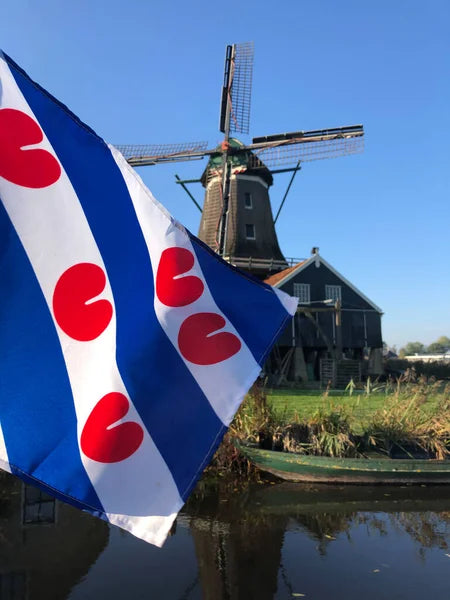
Each author contributes to our mission of preserving the Frisian language — a cause that unites our entire community of writers and readers.

Auke

Hi, I'm Auke, a passionate advocate for the Frisian language with deep roots in Frisian culture. I grew up in this vibrant heritage and have dedicated myself to preserving our unique linguistic identity. It's spoken by about 500,000 people, mostly in Friesland, Netherlands. As a key contributor to Skriuwer.com, I work with others to create books that educate and inspire, helping ensure the Frisian language, recognized as an official language alongside Dutch, stays alive for future generations. My work comes from a strong belief in language as the foundation of history and belonging. I'm proud that proceeds from these books support nonprofit efforts like De Fryske Wrâld. Join me in sustaining this ancient European tongue. Let's keep Frisian thriving.

Jennifer

Jennifer Joseph is an expert in history and languages. She highlights the ties between cultures, conflicts, and communication. She earned a BA in International Relations from the University of Rochester in New York, USA, and an MA in International Law from the Hebrew University of Jerusalem. This background combines strong research with simple, easy-to-read stories.

Her career includes teaching English online to Chinese students, which boosted her skills in cultural exchange. As an American living in the South of France, her broad view comes from travels starting in childhood. These trips sparked her love for uncovering hidden stories in history among diverse groups.

At Skriuwer.com, as a team member and copywriter, she has written books on history and languages. They explore forgotten times and how ideas shape societies.

Yahia

Yahia Fathy is an Egyptian author and editor living in Spain, dedicated to exploring the histories of countries, empires, and ancient civilizations through clear and thoughtful writing.

With fluency in multiple languages, he brings a broad cultural view to his work, combining solid research with careful editing to produce books that are accurate, engaging, and easy to follow. As an editor, he focuses on shaping complex ideas into straightforward narratives that readers can appreciate without effort.

Over the past year, Yahia has been active in publishing, motivated simply by his enjoyment of the process offering fresh insights into the past for those eager to learn.

Outside of his writing and editing, he spends time studying languages and cultures, finding new ways to link historical events across different societies.

History goes beyond lists of dates and facts; it reveals the key stories that have built our world. In my roles as author and editor, I aim to present these stories with precision and appeal, encouraging readers to discover the lasting impact of nations and empires on our lives today.
  • Supporting Frisian Language

    When you buy from Skriuwer, you're not just getting a book—you’re helping create more Frisian books and educational resources like LearnFrisian.com. Your support directly helps us preserve and grow the Frisian language for future generations.

  • Making Languages Accessible

    We believe in making languages easy to learn and accessible. While Frisian is our passion, we also want to help people learn other key languages like Dutch and English by providing helpful resources and learning tools.

  • Investing in Future Projects

    Your purchase fuels more than just current projects. It helps us dream big and plan for the future, whether that’s developing new books, launching language-learning platforms, or supporting other educational initiatives. You're helping us build something lasting!

Preserving the Frisian Language

At Skriuwer.com, we believe that the Frisian language is more than just words—it's a living, breathing part of our heritage. But like many minority languages, it faces challenges of survival in an ever-changing world. That’s why our mission is simple yet vital: to keep the Frisian language alive and thriving for generations to come.

Every book we create, every story we tell, and every word we publish is part of a larger effort to preserve and celebrate Frisian culture. But we can’t do it alone. With your help, we can make a real difference.

Learn About Our Mission Here

How You Can Help:

  • When you purchase one of our books, you’re not just adding a beautiful piece of literature to your collection—you’re directly supporting the preservation of the Frisian language. Each book helps to spread the richness of our language to more people.

  • You can also contribute to this cause by learning the Frisian language through our partner site, www.learnfrisian.com.

  • Donate: If you believe in our mission, you can also make a contribution to help us continue our work. Whether it’s funding new publications, supporting educational programs, or helping us reach more Frisian speakers, your donation can make a lasting impact. Just click the button below to contribute!

Together, we can ensure that the Frisian language remains a vibrant part of our world. Join us in this journey—your support today means a brighter future for our language tomorrow.

Donate with PayPal