History of Croatia
History of Croatia
From Illyrian Tribes to European Nation
Quick Facts
- Gained independence from Yugoslavia: June 25, 1991
- Joined the European Union: July 1, 2013
- Adriatic coastline: approximately 1,778 km
- Medieval Kingdom of Croatia founded: ~925 AD
- Capital: Zagreb
- Population: ~3.9 million
Ancient Illyria & Roman Province
Before Croatia existed, the region was inhabited by the Illyrians — an ancient Indo-European people who settled the western Balkans from around 1000 BC. The Illyrians were fierce warriors known for their naval prowess in the Adriatic. They established a powerful kingdom that at times extended across much of the western Balkans and resisted both Macedonian and Celtic invasions.
Roman legions finally subdued the Illyrians after years of brutal warfare, completing their conquest by 9 AD. The region became the Roman provinces of Dalmatia and Pannonia, and underwent rapid Romanization. Major cities like Salona (near modern Split) and Jadera (Zadar) flourished. The most famous legacy of Roman Croatia is Diocletian's Palace in Split — built in the early 4th century by the Emperor Diocletian, a native of the region, who retired there. The palace remains one of the best-preserved Roman structures in the world and is still inhabited today.
Emperor Diocletian, who built his retirement palace in what is now Split, was born in the Roman province of Dalmatia — making him one of the most powerful Romans ever to come from Croatian soil. Part of his palace is still a living neighborhood with shops, apartments, and cafes inside the original Roman walls.
Croatian Kingdom & Medieval Era
Slavic tribes began migrating into the former Roman territories in the 6th and 7th centuries AD. The Croats emerged as a distinct people, gradually Christianized under Frankish influence in the 9th century. In 925 AD, King Tomislav united the Croatian tribes and was recognized by the Pope as the first king of Croatia — a pivotal moment in national identity that Croatians celebrate to this day.
Medieval Croatia was a kingdom of considerable power, controlling territories along the Adriatic coast and inland. However, the death of King Zvonimir in 1089 without an heir triggered a succession crisis. In 1102, the Croatian nobility signed the Pacta Conventa with Hungary's king, entering into a personal union with the Kingdom of Hungary. Croatia retained considerable autonomy under this arrangement, but the union would define Croatian political life for the next eight centuries.
The Pacta Conventa Debate
Historians have long debated whether the 1102 Pacta Conventa represents a voluntary union between equals or a form of subjugation to Hungary. Croatian national tradition emphasizes that the agreement preserved Croatian autonomy and statehood. Hungarian historiography has at times portrayed it as full incorporation. The question of Croatian sovereignty within this union remains historically sensitive — and was actively invoked during 19th and 20th century independence movements.
Ottoman Threat & Habsburg Rule
The Ottoman Empire's expansion into the Balkans posed an existential threat to Croatia. Following the catastrophic Battle of Mohacs in 1526 — where the Ottoman forces destroyed the Hungarian-Croatian kingdom — the Croatian nobility turned to the Habsburg dynasty for protection. The Habsburgs gained the Croatian throne, incorporating Croatia into their empire as a frontier territory against the Ottomans.
For two centuries, the Military Frontier (Vojna Krajina) — a heavily fortified zone along Croatia's border — served as Europe's shield against Ottoman expansion. The region was populated with Orthodox Serb settlers (Vlachs) who received land in exchange for military service, creating a demographic and religious complexity that would have tragic consequences centuries later. By the late 17th century, the Ottomans were in retreat, and Croatia began rebuilding under Habsburg rule.
The word "cravat" — the forerunner of the modern necktie — comes from Croatian soldiers (Croats/Hrvats) who wore distinctive neck scarves during the Thirty Years War. French soldiers adopted the style and the term "la Croate" evolved into "cravate," eventually becoming the global fashion accessory we know today.
Yugoslav Era
Following the collapse of the Austro-Hungarian Empire after World War I, Croatia joined the newly formed Kingdom of Serbs, Croats and Slovenes in 1918 — later renamed Yugoslavia. This union proved deeply troubled. Serbian political dominance caused resentment among Croats, leading to the rise of the extreme nationalist Ustasha movement.
During World War II, Nazi Germany and Fascist Italy sponsored the Independent State of Croatia (1941-1945), a puppet state run by the Ustasha regime. This government perpetrated horrific crimes against Serbs, Jews, and Roma, operating concentration camps including the notorious Jasenovac. The memory of this period — and the simultaneous crimes committed by Chetniks and other forces — created wounds that would not fully heal and would resurface devastatingly in the 1990s. After the war, Croatia became one of six republics of communist Yugoslavia under Marshal Tito.
Tito's Yugoslavia: Unity Through Suppression?
Josip Broz Tito kept Yugoslavia together through a combination of genuine pan-Yugoslav ideology, economic development, and firm suppression of nationalism. His famous response to ethnic tensions was "Brotherhood and Unity." After Tito's death in 1980, the system he built began to fracture. Critics argue that Tito's approach merely postponed ethnic conflicts rather than resolving them. The wars of Yugoslav succession that followed proved the most destructive in Europe since World War II.
Independence & Modern Croatia
As Yugoslavia dissolved following the end of the Cold War, Croatia declared independence on June 25, 1991. The declaration triggered a brutal war as the Yugoslav People's Army and Serbian paramilitaries attacked, besieging the city of Vukovar (which fell after 87 days) and bombarding the medieval city of Dubrovnik. By the war's end in 1995, following Operation Storm — Croatia's military campaign to retake occupied territory — the country had secured its internationally recognized borders but at great human cost.
Croatia rebuilt rapidly, joining NATO in 2009 and the European Union in 2013. In 2023, it adopted the Euro as its currency and joined the Schengen Area — completing its integration into European institutions. The country has become a major tourism destination, with its Adriatic coast, Plitvice Lakes, and medieval cities drawing millions of visitors annually.
Dubrovnik, Croatia's pearl of the Adriatic, operated as the Republic of Ragusa for nearly 450 years (1358-1806) — one of the first states in the world to abolish the slave trade (1416) and to recognize American independence. Today it is famous worldwide as the filming location for King's Landing in Game of Thrones.
Explore more world history in our encyclopedia
► History Encyclopedia — Explore World HistoryThe History of Croatia: From Illyria to the Habsburgs
From ancient Illyrian warriors to the courts of Vienna — explore the full sweep of Croatian history, culture and identity along the Adriatic shore.
Get This Book →Related Pages
History Encyclopedia HubHistory of GreenlandHistory of New ZealandHistory of Ancient GreeceMeet Our Authors
Behind every book at Skriuwer is a dedicated writer passionate about history, language, and sharing knowledge with the world. Our authors come from different countries and backgrounds, but share a common commitment: producing research-backed, engaging books that give readers access to perspectives they won't easily find elsewhere.
Each author contributes to our mission of preserving the Frisian language — a cause that unites our entire community of writers and readers.
Auke
Hi, I'm Auke, a passionate advocate for the Frisian language with deep roots in Frisian culture. I grew up in this vibrant heritage and have dedicated myself to preserving our unique linguistic identity. It's spoken by about 500,000 people, mostly in Friesland, Netherlands. As a key contributor to Skriuwer.com, I work with others to create books that educate and inspire, helping ensure the Frisian language, recognized as an official language alongside Dutch, stays alive for future generations. My work comes from a strong belief in language as the foundation of history and belonging. I'm proud that proceeds from these books support nonprofit efforts like De Fryske Wrâld. Join me in sustaining this ancient European tongue. Let's keep Frisian thriving.
Jennifer
Jennifer Joseph is an expert in history and languages. She highlights the ties between cultures, conflicts, and communication. She earned a BA in International Relations from the University of Rochester in New York, USA, and an MA in International Law from the Hebrew University of Jerusalem. This background combines strong research with simple, easy-to-read stories.
Her career includes teaching English online to Chinese students, which boosted her skills in cultural exchange. As an American living in the South of France, her broad view comes from travels starting in childhood. These trips sparked her love for uncovering hidden stories in history among diverse groups.
At Skriuwer.com, as a team member and copywriter, she has written books on history and languages. They explore forgotten times and how ideas shape societies.
Yahia
Yahia Fathy is an Egyptian author and editor living in Spain, dedicated to exploring the histories of countries, empires, and ancient civilizations through clear and thoughtful writing.
With fluency in multiple languages, he brings a broad cultural view to his work, combining solid research with careful editing to produce books that are accurate, engaging, and easy to follow. As an editor, he focuses on shaping complex ideas into straightforward narratives that readers can appreciate without effort.
Over the past year, Yahia has been active in publishing, motivated simply by his enjoyment of the process offering fresh insights into the past for those eager to learn.
Outside of his writing and editing, he spends time studying languages and cultures, finding new ways to link historical events across different societies.
History goes beyond lists of dates and facts; it reveals the key stories that have built our world. In my roles as author and editor, I aim to present these stories with precision and appeal, encouraging readers to discover the lasting impact of nations and empires on our lives today.
Why Skriuwer.com?
-
Supporting Frisian Language
When you buy from Skriuwer, you're not just getting a book—you’re helping create more Frisian books and educational resources like LearnFrisian.com. Your support directly helps us preserve and grow the Frisian language for future generations.
-
Making Languages Accessible
We believe in making languages easy to learn and accessible. While Frisian is our passion, we also want to help people learn other key languages like Dutch and English by providing helpful resources and learning tools.
-
Investing in Future Projects
Your purchase fuels more than just current projects. It helps us dream big and plan for the future, whether that’s developing new books, launching language-learning platforms, or supporting other educational initiatives. You're helping us build something lasting!
Preserving the Frisian Language
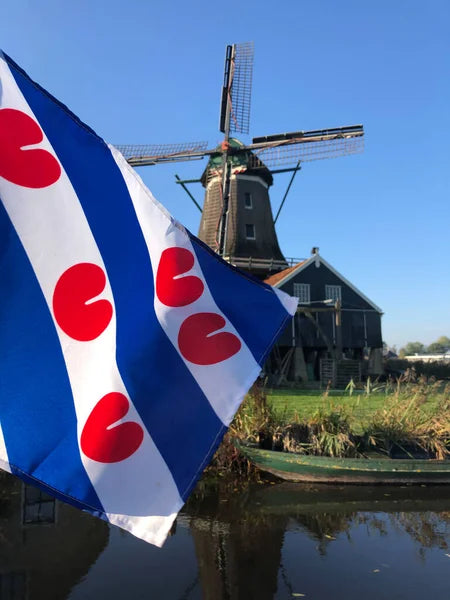
At Skriuwer.com, we believe that the Frisian language is more than just words—it's a living, breathing part of our heritage. But like many minority languages, it faces challenges of survival in an ever-changing world. That’s why our mission is simple yet vital: to keep the Frisian language alive and thriving for generations to come.
Every book we create, every story we tell, and every word we publish is part of a larger effort to preserve and celebrate Frisian culture. But we can’t do it alone. With your help, we can make a real difference.

How You Can Help:
- When you purchase one of our books, you’re not just adding a beautiful piece of literature to your collection—you’re directly supporting the preservation of the Frisian language. Each book helps to spread the richness of our language to more people.
- You can also contribute to this cause by learning the Frisian language through our partner site, www.learnfrisian.com.
- Donate: If you believe in our mission, you can also make a contribution to help us continue our work. Whether it’s funding new publications, supporting educational programs, or helping us reach more Frisian speakers, your donation can make a lasting impact. Just click the button below to contribute!
Together, we can ensure that the Frisian language remains a vibrant part of our world. Join us in this journey—your support today means a brighter future for our language tomorrow.