
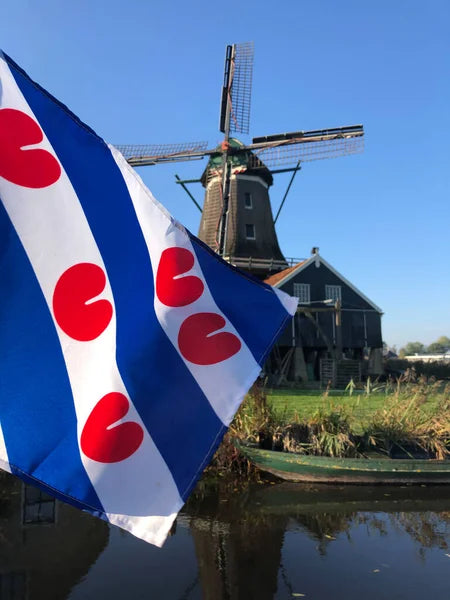
The History of the Netherlands: Water, Walls, and Wars | Paperback Book
Impossible de charger la disponibilité du service de retrait
Revised Book Description (Google Merchant Center compliant)
This book provides an overview of the Netherlands' history from prehistoric times to the modern era. It covers political, cultural, economic, and technological developments that shaped the region.
Key Topics Covered:
- Prehistoric and Ancient Periods: Early settlements and interactions with Rome, including the Batavian Revolt.
- Medieval and Early Modern Era: Water management techniques, the Eighty Years' War, and the Dutch Golden Age.
- VOC and Trade: The Dutch East India Company and its global activities.
- 19th–20th Century: Napoleonic period, Belgian independence, and World War II resistance.
Additional Historical Points:
- Engineering Achievements: Land reclamation and defensive strategies.
- Economic Changes: Stock market developments and colonial trade.
Reader Feedback Example: "This book covers historical events and their context." – Elena V. (Verified Purchase)
Book Features:
- Chronological structure with references to primary events.
- Intended Audience: Suitable for readers interested in European and Dutch history.
TABLE OF CONTENTS
CHAPTER 1: PREHISTORIC ORIGINS OF THE LOWLANDS
- Earliest hunter-gatherer communities
- Transition from foraging to farming
- Megalithic tombs and social structures
- Bronze and Iron Age developments
CHAPTER 2: THE ROMAN ERA AND EARLY INFLUENCES
- Roman frontier along the Rhine (limes)
- Batavian Revolt and tribal alliances
- Influence on trade and infrastructure
- Long-term cultural and legal impacts
CHAPTER 3: EARLY MEDIEVAL PERIOD – FRANKS, FRISIANS, AND SAXONS
- Post-Roman power vacuum
- Frankish expansion and conversion to Christianity
- Frisian independence and maritime culture
- Saxon settlements and local governance
CHAPTER 4: RISE OF COUNTIES AND DUCHIES
- Formation of regional power bases
- The role of feudalism and vassalage
- Securing trade routes and coastal defense
- Growing urban centers and economic shifts
CHAPTER 5: THE BURGUNDIAN PERIOD
- Centralization under Burgundian dukes
- Court culture and patronage of the arts
- Urban growth and merchant influence
- Tensions leading to broader territorial ambitions
CHAPTER 6: THE HABSBURG NETHERLANDS
- Habsburg inheritance and central governance
- Administrative reforms and local resistance
- Economic prosperity and global connections
- Prelude to religious conflicts
CHAPTER 7: THE REFORMATION AND RELIGIOUS STRIFE
- Spread of Protestant ideas
- Persecutions and opposition by Catholic authorities
- Polarization among nobles and citizens
- Seeds of a broader political revolt
CHAPTER 8: THE DUTCH REVOLT (EIGHTY YEARS’ WAR)
- Escalating tensions with Spanish rule
- Key battles and turning points
- Leadership of William of Orange
- Formation of a northern alliance
CHAPTER 9: FORMATION OF THE DUTCH REPUBLIC
- Formal independence from Spain
- Establishment of the States General
- Internal power dynamics (Orangists vs. Republicans)
- Diplomatic recognition and early challenges
CHAPTER 10: THE DUTCH GOLDEN AGE – SOCIETY AND CULTURE
- Social hierarchy and religious diversity
- Scientific advances and global exploration
- Artistic achievements (Rembrandt, Vermeer, etc.)
- Rise of urban prosperity and middle-class influence
CHAPTER 11: THE DUTCH GOLDEN AGE – TRADE AND EXPANSION
- The Dutch East India Company (VOC) and its impact
- Global trading networks and colonial pursuits
- Financial innovations and stock exchanges
- Competition with European powers
CHAPTER 12: CONFLICTS AND THE ANGLO-DUTCH WARS
- Rivalry over seas and trade routes
- Naval battles and key admirals
- Shifts in European alliances
- Impact on Dutch trade and economy
CHAPTER 13: THE LATE 17TH AND 18TH CENTURIES
- Post-Golden Age economic adjustments
- Political and social changes in the Republic
- Growing internal divisions and power struggles
- Enlightenment ideas taking hold
CHAPTER 14: THE AGE OF ENLIGHTENMENT IN THE NETHERLANDS
- Philosophical and scientific discussions
- Publishing, tolerance, and intellectual networks
- Influence on politics and societal reforms
- Seeds of modern civil liberties
CHAPTER 15: THE BATAVIAN REPUBLIC AND NAPOLEONIC INFLUENCE
- French Revolutionary wars reaching Dutch soil
- End of the Dutch Republic and start of Batavian Republic
- Napoleonic rule and administrative changes
- Shifts in governance, economy, and daily life
CHAPTER 16: FOUNDING OF THE KINGDOM OF THE NETHERLANDS
- Aftermath of the Napoleonic era
- Creation of a unified kingdom (1815)
- Constitutional framework and royal authority
- Initial efforts at national unity
CHAPTER 17: INDUSTRIALIZATION AND SOCIAL CHANGES
- Early industrial growth and urbanization
- Changes in labor conditions and society
- Railways, canals, and infrastructure
- Emergence of new social classes and reforms
CHAPTER 18: THE BELGIAN REVOLUTION
- Growing tensions between northern and southern provinces
- Conflict and eventual secession of Belgium
- Diplomatic challenges for the young kingdom
- Consequences for Dutch identity and economy
CHAPTER 19: LATE 19TH CENTURY – COLONIAL EXPANSION AND INTERNAL REFORMS
- Further development of overseas colonies
- Shifts in Dutch colonial policies
- Educational reforms and modernization efforts
- Rise of political movements and parties
CHAPTER 20: CONCLUSION AND REFLECTIONS ON 19TH-CENTURY DEVELOPMENTS
- Major transformations from medieval to modern state
- Lingering impacts of earlier centuries
- Evolving national identity and governance
- Foundations laid for future changes
Product Details
Dimensions: 5.8 × 8.3 inches / 15.24 x 22.86 cm
Cover: Paperback

Why Skriuwer.com?
-
Supporting Frisian Language
When you buy from Skriuwer, you're not just getting a book—you’re helping create more Frisian books and educational resources like LearnFrisian.com. Your support directly helps us preserve and grow the Frisian language for future generations.
-
Making Languages Accessible
We believe in making languages easy to learn and accessible. While Frisian is our passion, we also want to help people learn other key languages like Dutch and English by providing helpful resources and learning tools.
-
Investing in Future Projects
Your purchase fuels more than just current projects. It helps us dream big and plan for the future, whether that’s developing new books, launching language-learning platforms, or supporting other educational initiatives. You're helping us build something lasting!
Préserver la langue frisonne
Chez Skriuwer.com, nous croyons que la langue frisonne est bien plus que des mots – c'est une partie vivante de notre héritage. Mais comme de nombreuses langues minoritaires, elle fait face à des défis de survie dans un monde en constante évolution. C'est pourquoi notre mission est simple mais essentielle : maintenir la langue frisonne vivante et florissante pour les générations futures.
Chaque livre que nous créons, chaque histoire que nous racontons et chaque mot que nous publions fait partie d'un effort plus large pour préserver et célébrer la culture frisonne. Mais nous ne pouvons pas le faire seuls. Avec votre aide, nous pouvons vraiment faire une différence.

Comment Vous Pouvez Aider :
Achetez un Livre : Lorsque vous achetez l'un de nos livres, vous n'ajoutez pas seulement une belle œuvre littéraire à votre collection – vous soutenez directement la préservation de la langue frisonne. Chaque livre contribue à diffuser la richesse de notre langue à davantage de personnes. Vous pouvez également contribuer à cette cause en apprenant la langue frisonne via notre site partenaire, www.learnfrisian.com.
Faites un Don : Si vous croyez en notre mission, vous pouvez également faire un don pour nous aider à poursuivre notre travail. Qu'il s'agisse de financer de nouvelles publications, de soutenir des programmes éducatifs ou de nous aider à toucher davantage de locuteurs frisons, votre don peut avoir un impact durable. Cliquez simplement sur le bouton ci-dessous pour contribuer !
Ensemble, nous pouvons faire en sorte que la langue frisonne reste une partie vivante de notre monde. Rejoignez-nous dans cette aventure – votre soutien aujourd'hui signifie un avenir plus radieux pour notre langue demain.