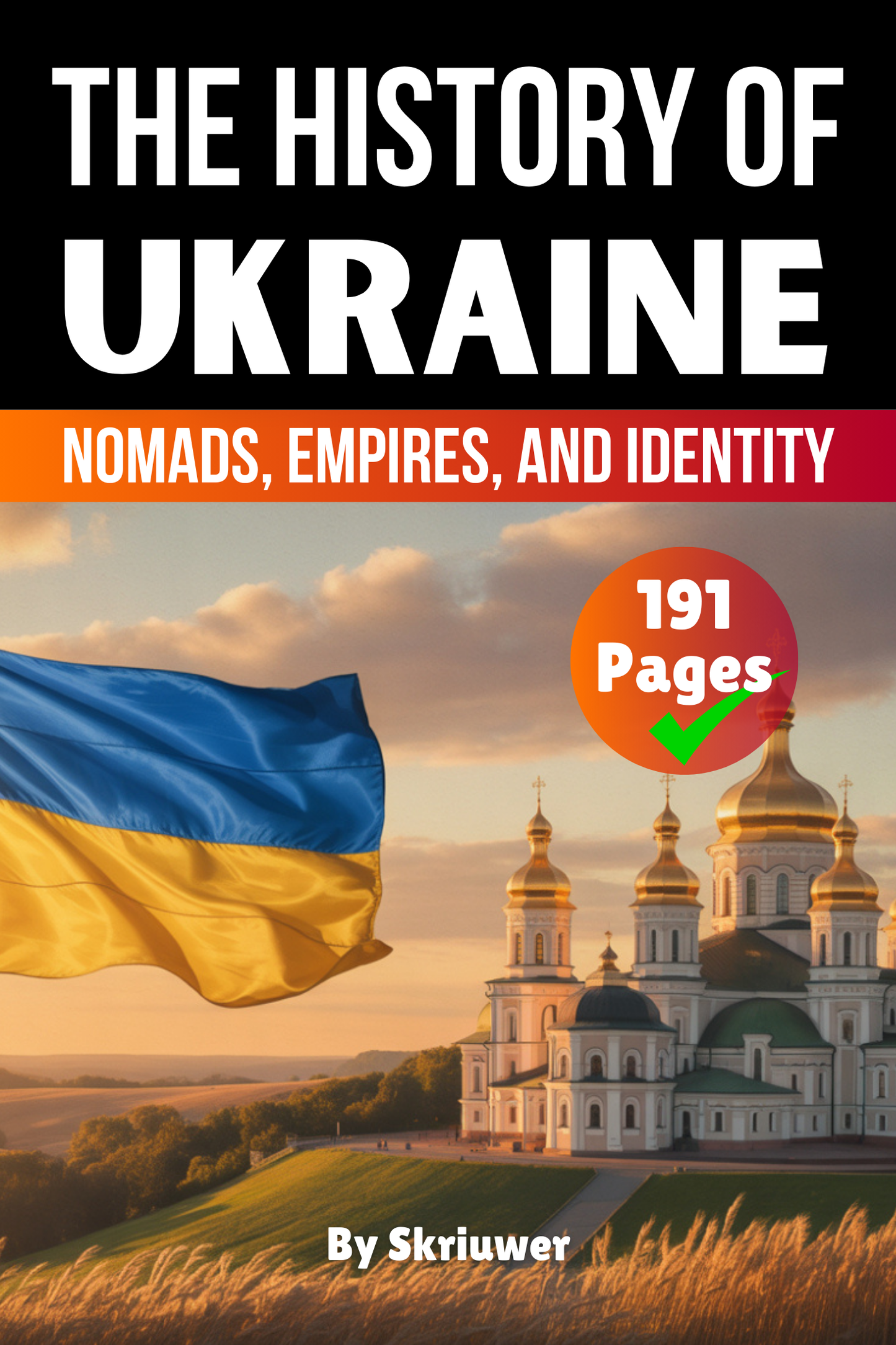
The History of Ukraine: Nomads, Empires, and Identity | Paperback Book
No se pudo cargar la disponibilidad de retiro
This book provides an overview of Ukraine's history over 5,000 years, from ancient settlements to modern times. It discusses cultural, political, and social developments in the region.
Key Topics Covered:
- Prehistoric and Ancient Periods: Sites associated with the Trypillia culture and Scythian artifacts.
- Kievan Rus' Era: The dynasty's influences and connections to Byzantine traditions.
- Cossack Period: Uprisings and their role in regional autonomy.
- 19th Century: Literary figures like Taras Shevchenko and cultural expressions.
- Imperial Interactions: Relations with neighboring powers, including Polish, Russian, and Ottoman influences.
Additional Historical Points:
- Trade and Exchanges: Interactions with Greek colonists and steppe nomads.
- Mongol Invasions: Impacts on cities like Kyiv.
- Administrative Changes: Policies under rulers like Catherine the Great.
Reader Feedback Example: "This book covers historical periods and events." — SlavicScholar (Verified Purchase)
Book Features:
- Comprehensive Timeline: Explores major eras and figures.
- Intended Audience: Suitable for those interested in Eastern European history and cultural resilience.
TABLE OF CONTENTS
CHAPTER 1: GEOGRAPHICAL OVERVIEW AND EARLIEST HUMAN SETTLEMENTS
- Earliest traces of human activity in the region
- Influence of rivers and steppe lands on migration
- Paleolithic artifacts and the transition to the Mesolithic
CHAPTER 2: THE NEOLITHIC PERIOD AND THE CUCUTENI-TRYPILLIA CULTURE
- Adoption of farming and permanent settlements
- Remarkable pottery and artistic achievements
- Social organization and decline of the culture
CHAPTER 3: EARLY BRONZE TO IRON AGE CULTURES AND STEPPE SOCIETIES
- Introduction of metalworking and its impacts
- Trade networks linking East and West
- Interaction between settled communities and nomads
CHAPTER 4: GREEK COLONIES, SCYTHIANS, AND SARMATIANS
- Foundation of Greek colonies on the Black Sea coast
- Scythian dominance and cultural influences
- Sarmatian incursions and their legacy
CHAPTER 5: THE EARLY SLAVIC TRIBES AND THE FORMATION OF KIEVAN RUS
- Origins of the Slavic peoples
- Transition from tribal groups to structured principalities
- Kyiv’s emergence as a major center
CHAPTER 6: THE REIGN OF THE VARANGIAN PRINCES AND THE CHRISTIANIZATION OF RUS
- Role of Viking (Varangian) influences in governance
- Volodymyr the Great’s conversion to Christianity
- Cultural and religious ramifications of Christianization
CHAPTER 7: THE GOLDEN AGE OF KIEVAN RUS AND ITS CULTURAL ACHIEVEMENTS
- Reign of Yaroslav the Wise and legal reforms
- Expansion of literacy, architecture, and trade
- Flourishing of religious art and manuscript culture
CHAPTER 8: THE DECLINE OF KIEVAN RUS AND THE MONGOL INFLUENCE
- Fragmentation into regional principalities
- Mongol invasion and establishment of tribute systems
- Long-term effects on political and social structures
CHAPTER 9: THE RISE OF THE GRAND DUCHY OF LITHUANIA AND POLISH INFLUENCE
- Consolidation of power by Lithuanian rulers
- Union with Poland and religious diversity
- Integration of Ukrainian lands under new governance
CHAPTER 10: THE POLISH-LITHUANIAN COMMONWEALTH AND THE EMERGENCE OF THE COSSACKS
- Nobility and social hierarchies under the Commonwealth
- Origins of the Cossack communities
- Military service and defense of the steppe frontier
CHAPTER 11: THE COSSACK HETMANATE AND BOHDAN KHMELNYTSKY
- Formation of the Hetmanate as a Cossack state
- Khmelnytsky’s uprising against Polish rule
- Diplomatic and military strategies of the Cossacks
CHAPTER 12: SHIFTS IN POWER: THE RUSSIAN EMPIRE AND THE FATE OF THE HETMANATE
- Treaties and alignments with Moscow
- Gradual erosion of Cossack autonomy
- Social and cultural changes under imperial influence
CHAPTER 13: THE 18TH CENTURY: CATHERINE THE GREAT AND THE PARTITIONING OF SURROUNDING LANDS
- Expansion of the Russian Empire’s borders
- Reforms impacting serfs and nobility
- Political restructuring and centralization
CHAPTER 14: THE 19TH CENTURY: SERFDOM, NATIONAL MOVEMENTS, AND CULTURAL REVIVAL
- Conditions of the peasantry and serfdom
- Emergence of Ukrainian cultural and linguistic revival
- Influence of European revolutionary ideas
CHAPTER 15: THE INFLUENCE OF ROMANTICISM AND THE GROWTH OF UKRAINIAN IDENTITY
- Romantic literary trends and folklore rediscovery
- Taras Shevchenko’s role in national consciousness
- Spread of historical and cultural awareness
CHAPTER 16: THE LATE 19TH CENTURY: ECONOMIC AND SOCIAL CHANGES UNDER IMPERIAL RULE
- Industrial development and urbanization
- Shifts in land ownership and class structures
- Emergence of new social and political movements
CHAPTER 17: NATIONAL AWAKENING AND POLITICAL DEVELOPMENTS BEFORE THE 20TH CENTURY
- Formation of Ukrainian political parties
- Role of intellectuals in public discourse
- Increasing calls for autonomy and recognition
CHAPTER 18: INTELLECTUAL CURRENTS AND LITERARY FIGURES IN THE 19TH CENTURY
- Advancement of education and academic societies
- Key writers, poets, and thinkers shaping public opinion
- Socio-political undercurrents fueling national aspirations
CHAPTER 19: EARLY 20TH CENTURY TENSIONS (PRE-WWI) – SETTING THE STAGE
- Growing unrest and social fractures
- Ethnic diversity and competing loyalties
- Economic pressures leading up to the global conflict
CHAPTER 20: SUMMARY OF PRE-MODERN TRANSFORMATIONS AND CULTURAL LEGACY
- Review of influences shaping Ukrainian lands
- Lasting cultural and historical contributions
- Foundations for future developments and statehood
Product Details
Dimensions: 5.8 × 8.3 inches / 15.24 x 22.86 cm
Cover: Paperback

Why Skriuwer.com?
-
Supporting Frisian Language
When you buy from Skriuwer, you're not just getting a book—you’re helping create more Frisian books and educational resources like LearnFrisian.com. Your support directly helps us preserve and grow the Frisian language for future generations.
-
Making Languages Accessible
We believe in making languages easy to learn and accessible. While Frisian is our passion, we also want to help people learn other key languages like Dutch and English by providing helpful resources and learning tools.
-
Investing in Future Projects
Your purchase fuels more than just current projects. It helps us dream big and plan for the future, whether that’s developing new books, launching language-learning platforms, or supporting other educational initiatives. You're helping us build something lasting!
Preservar la lengua frisona
En Skriuwer.com, creemos que el idioma frisón es más que solo palabras: es una parte viva de nuestro patrimonio. Pero, como muchas lenguas minoritarias, enfrenta desafíos para sobrevivir en un mundo en constante cambio. Es por eso que nuestra misión es simple pero vital: mantener viva la lengua frisona para las generaciones futuras.
Cada libro que creamos, cada historia que contamos y cada palabra que publicamos es parte de un esfuerzo mayor por preservar y celebrar la cultura frisona. Pero no podemos hacerlo solos. Con tu ayuda, podemos marcar una verdadera diferencia.
Cómo Puedes Ayudar:
Compra un Libro: Al comprar uno de nuestros libros, no solo estás agregando una hermosa obra literaria a tu colección, sino que también estás apoyando directamente la preservación del idioma frisón. Cada libro ayuda a difundir la riqueza de nuestra lengua a más personas. También puedes contribuir a esta causa aprendiendo frisón a través de nuestro sitio asociado, www.learnfrisian.com.
Dona: Si crees en nuestra misión, también puedes hacer una contribución para ayudarnos a continuar nuestro trabajo. Ya sea para financiar nuevas publicaciones, apoyar programas educativos o ayudarnos a llegar a más hablantes de frisón, tu donación puede tener un impacto duradero. Solo tienes que hacer clic en el botón de abajo para contribuir.
Juntos podemos asegurarnos de que el idioma frisón siga siendo una parte vibrante de nuestro mundo. Únete a nosotros en este viaje: tu apoyo hoy significa un futuro más brillante para nuestro idioma mañana.