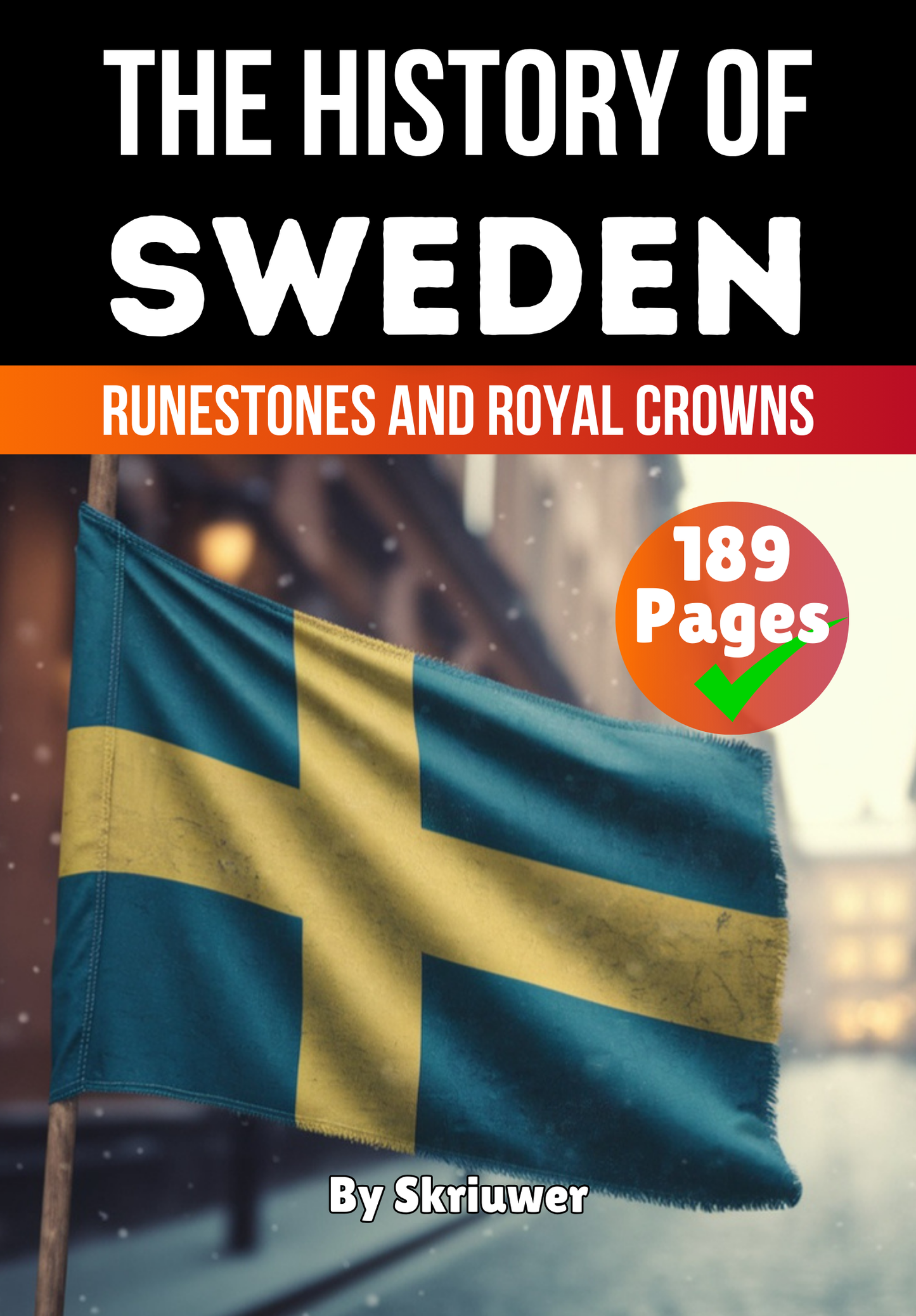
The History of Sweden: Runestones and Royal Crowns | Paperback Book
Verfügbarkeit für Abholungen konnte nicht geladen werden
This book provides an overview of Sweden's history from the Viking Age to modern times, covering political, cultural, and military developments. It discusses key figures, events, and societal changes that shaped the nation.
Key Topics Covered:
- Viking Period: Trade centers like Birka and runestone memorials.
- Medieval Unions: The Kalmar Union and related conflicts.
- Reformation Era: Gustav Vasa's policies and church reforms.
- 17th–18th Century Wars: Gustavus Adolphus' campaigns and Charles XII's reign.
- 19th Century Transitions: The Bernadotte dynasty's establishment.
Reader Feedback Example: "This book describes battles and historical events clearly." — Dr. Elin Vogt (Scandinavian History, Uppsala University)
Book Features:
- Comprehensive Coverage: Explores periods from early raids to dynastic shifts.
- Intended Audience: Suitable for those interested in Scandinavian history and military events.
TABLE OF CONTENTS
Chapter 1: The Stone Age and Early Settlers
- Early human migration routes
- Hunter-gatherer life and mobility
- Transition from Mesolithic to Neolithic farming
Chapter 2: The Bronze Age and Emerging Societies
- Long-distance trade in copper and tin
- Development of bronze tools and weapons
- Rock carvings and religious practices
Chapter 3: The Iron Age and Tribal Formations
- Spread of ironworking technology
- Contacts with the Roman Empire
- Hillforts and tribal power structures
Chapter 4: The Viking Age: Trade, Exploration, and Society
- Longships and voyages across seas and rivers
- Birka and Helgö as major trade centers
- Runestones, jarls, and Viking social hierarchies
Chapter 5: Christianization and New Power Structures
- Missionaries and royal conversions
- Church’s growing role in governance
- Tensions between pagan traditions and Christianity
Chapter 6: Early Medieval Kingdoms and Law Codes
- Regional laws and local Things
- Riksdag precursors and noble conflicts
- Attempts at unifying legal structures
Chapter 7: Royal Dynasties and Shifting Alliances
- Civil wars between Sverker and Eric lines
- Magnus Ladulås’s efforts to consolidate power
- Foreign marriages influencing dynastic politics
Chapter 8: The Rise of Towns and Commercial Growth
- Hanseatic trade connections
- Urban charters, guilds, and merchant influence
- Commercial changes affecting social structures
Chapter 9: The Kalmar Union and Queen Margaret
- Union’s establishment in 1397
- Power imbalances favoring Denmark
- Swedish noble resentment and eventual rebellions
Chapter 10: Internal Conflicts and Noble Power
- Civil wars under union rule
- Engelbrekt Engelbrektsson’s uprising
- Sten Sture regents guarding Swedish autonomy
Chapter 11: The Road to Independence from the Union
- Stockholm Bloodbath of 1520
- Gustav Vasa’s rebellion
- Dissolution of the Kalmar Union
Chapter 12: The Early Vasa Era
- Reformation and royal control over the Church
- New taxation and centralized administration
- Rural uprisings, including Dacke’s rebellion
Chapter 13: Gustav Vasa’s Reforms and Centralization
- Reduction of noble influence
- Mining sector and expanded revenue
- Foundations of a modern Swedish state
Chapter 14: Expansion under Gustavus Adolphus
- Military innovations and lighter artillery
- Conflicts with Poland-Lithuania and Denmark
- Rising Baltic dominance and early triumphs
Chapter 15: The Thirty Years’ War and Its Effects
- Sweden’s intervention in German conflicts
- Key victories at Breitenfeld and Lützen
- Peace of Westphalia and territorial gains
Chapter 16: The Great Power Period and Baltic Dominance
- Territorial expansion after Westphalia
- Charles X and Charles XI’s consolidation
- Absolute monarchy and state reforms
Chapter 17: The Great Northern War and Decline
- Charles XII’s ambitious campaigns
- Narva and Poltava as pivotal battles
- Treaty of Nystad and the end of Swedish empire
Chapter 18: The Age of Liberty and Parliamentary Rule
- Rise of Hats vs. Caps party factions
- Looser censorship and economic shifts
- Gustav III’s 1772 coup d’état ending the era
Chapter 19: Gustav III, Enlightenment, and Conflicts
- Cultural reforms (opera, theater, literature)
- Russo-Swedish War (1788–1790)
- Assassination of the king in 1792
Chapter 20: The Napoleonic Era and the Transition to 19th Century
- Loss of Finland to Russia (1809)
- Adoption of the Bernadotte dynasty
- Union with Norway and constitutional changes
Product Details
Dimensions: 5.8 × 8.3 inches / 15.24 x 22.86 cm
Cover: Paperback

Why Skriuwer.com?
-
Supporting Frisian Language
When you buy from Skriuwer, you're not just getting a book—you’re helping create more Frisian books and educational resources like LearnFrisian.com. Your support directly helps us preserve and grow the Frisian language for future generations.
-
Making Languages Accessible
We believe in making languages easy to learn and accessible. While Frisian is our passion, we also want to help people learn other key languages like Dutch and English by providing helpful resources and learning tools.
-
Investing in Future Projects
Your purchase fuels more than just current projects. It helps us dream big and plan for the future, whether that’s developing new books, launching language-learning platforms, or supporting other educational initiatives. You're helping us build something lasting!
Erhaltung der friesischen Sprache
Bei Skriuwer.com glauben wir, dass die friesische Sprache mehr ist als nur Worte – sie ist ein lebendiger Teil unseres Erbes. Doch wie viele Minderheitensprachen steht auch das Friesische vor Herausforderungen, um in einer sich ständig verändernden Welt zu überleben. Deshalb ist unsere Mission einfach, aber entscheidend: die friesische Sprache für kommende Generationen lebendig und blühend zu halten.
Jedes Buch, das wir erschaffen, jede Geschichte, die wir erzählen, und jedes Wort, das wir veröffentlichen, ist Teil eines größeren Bestrebens, die friesische Kultur zu bewahren und zu feiern. Aber wir können das nicht allein tun. Mit Ihrer Hilfe können wir einen echten Unterschied machen.
Wie Sie helfen können:
Ein Buch kaufen: Wenn Sie eines unserer Bücher kaufen, fügen Sie nicht nur ein schönes Stück Literatur zu Ihrer Sammlung hinzu – Sie unterstützen direkt den Erhalt der friesischen Sprache. Jedes Buch hilft dabei, den Reichtum unserer Sprache an mehr Menschen zu verbreiten. Sie können auch zu dieser Sache beitragen, indem Sie die friesische Sprache über unsere Partnerseite www.learnfrisian.com lernen.
Spenden: Wenn Sie an unsere Mission glauben, können Sie auch mit einer Spende dazu beitragen, dass wir unsere Arbeit fortsetzen können. Ob es um die Finanzierung neuer Veröffentlichungen, die Unterstützung von Bildungsprogrammen oder das Erreichen von mehr friesischen Sprechern geht – Ihre Spende kann einen nachhaltigen Unterschied machen. Klicken Sie einfach auf den untenstehenden Button, um einen Beitrag zu leisten!
Gemeinsam können wir sicherstellen, dass die friesische Sprache ein lebendiger Teil unserer Welt bleibt. Begleiten Sie uns auf dieser Reise – Ihre Unterstützung heute bedeutet eine hellere Zukunft für unsere Sprache morgen.