The Psychology of Fear: Why We Love to Be Scared
The Psychology of Fear: Why We Love to Be Scared
Fear is one of the most powerful emotions humans experience, yet paradoxically, we deliberately seek it out for entertainment and pleasure. From horror movies to haunted houses, thriller novels to extreme sports, millions of people regularly expose themselves to fear-inducing situations. This apparent contradiction raises a fascinating question: why do we love to be scared when our survival instincts tell us to avoid danger? The psychology of fear reveals a complex interplay of biological, psychological, and social factors that explain our peculiar attraction to fear.
Understanding the Fear Response
To understand why we enjoy fear, we must first examine how fear works in our bodies. When we encounter something frightening, our amygdala—a small, almond-shaped structure in the brain—triggers what's known as the "fight-or-flight" response. Our body releases stress hormones like adrenaline and cortisol, increasing heart rate, blood pressure, and alertness. This physiological response evolved to protect us from genuine threats, but it doesn't distinguish between real danger and imaginary peril.
The key insight in the psychology of fear is that we can experience this thrilling rush while maintaining a sense of safety. When reading a suspenseful novel like Stephen King's "The Shining," we know intellectually that we're secure in our homes, yet our bodies respond to the terror of Jack Torrance's descent into madness. This disconnect between intellectual safety and emotional excitement creates a unique pleasure that purely peaceful activities cannot provide.
The Role of Control and Safety
One crucial factor that determines whether fear becomes enjoyable is the element of control. We willingly experience fear when we choose to do so and can stop whenever we wish. This sense of agency transforms fear from a threatening experience into entertainment. When you close a horror book or leave a haunted attraction, you're choosing to end the fear experience. This controllability makes the psychology of fear distinctly different from experiencing real danger.
Psychologists call this the "benign masochism" theory—we enjoy fear precisely because it's safe. The boundary between reality and fiction, or between actual danger and simulated peril, acts as a protective barrier. This is why many people who love psychological thrillers won't read books about real-world tragedies without the same enthusiasm. Works like Paula Hawkins' "The Girl on the Train" provide thrilling fear within a contained narrative framework.
The Arousal Sweet Spot
Not all fear is enjoyable—there's an optimal level of arousal that produces pleasure. This concept relates to what psychologists call the Yerkes-Dodson law, which describes the relationship between stress levels and performance. Too little arousal feels boring, while too much causes distress. The ideal state for fear entertainment falls in a sweet spot where stimulation is high but still manageable.
This explains why different people enjoy different intensities of fear. Some prefer subtle psychological horror that builds dread gradually, while others crave intense jump scares and graphic violence. The psychology of fear varies significantly among individuals based on personality traits, past experiences, and neurochemistry. Readers who enjoy the atmospheric dread in Shirley Jackson's "The Haunting of Hill House" might find the visceral terror of more extreme horror overwhelming.
The Narrative and Empathy Connection
Fear becomes particularly compelling when we emotionally invest in characters facing danger. Our capacity for empathy means we genuinely care about fictional people, triggering real emotional and physiological responses. When a beloved character faces peril, our concern isn't merely intellectual—it activates our nervous system as if the danger were real.
This is why the psychology of fear in storytelling depends so heavily on character development and narrative quality. A poorly written thriller fails to scare us because we don't care about the characters. But in masterfully crafted works like Gillian Flynn's "Gone Girl," the psychological complexity and character depth create genuine investment, making the tension unbearable in the best possible way.
Social and Cultural Dimensions
Our enjoyment of fear isn't purely individual—it's deeply social. Humans are inherently social creatures, and experiencing fear together strengthens bonds. Watching a horror film with friends, visiting a haunted house as a group, or discussing a thrilling book in a book club creates shared experiences that enhance the fear response and subsequent bonding.
Cultural factors also shape how we engage with fear. Different societies have varying comfort levels with violence, gore, and disturbing content. The psychology of fear is influenced by cultural norms, personal values, and childhood conditioning. Someone raised in a culture celebrating horror traditions might have fundamentally different responses to scary content than someone from a background where horror entertainment was discouraged.
The Cathartic Release
Beyond the immediate pleasure of arousal, experiencing fear in controlled settings may provide psychological benefits. Some psychologists suggest that engaging with fear through fiction serves a cathartic function, allowing us to process anxiety, explore dark possibilities, and rehearse responses to danger in a safe environment. This might explain why people often feel calm and satisfied after experiencing intense fear through entertainment.
Reading novels that explore existential dread or violence might help us confront uncomfortable truths about human nature and mortality. Through characters' struggles, we gain perspective on our own fears and anxieties, potentially building resilience.
Conclusion
The psychology of fear reveals that our attraction to scary entertainment isn't perverse—it's deeply human. By combining genuine arousal with a sense of safety and control, fear-based entertainment provides unique pleasure and psychological value. Whether through novels, films, or other media, our love of being scared demonstrates the remarkable complexity of human emotion and our endless creativity in pursuing fulfillment.
If you're interested in exploring these themes further, Skriuwer.com offers an extensive collection of psychology books, thrillers, and horror novels that delve into fear, suspense, and the darker aspects of human nature. Discover your next favorite book that will keep you on the edge of your seat.
Books You Might Like
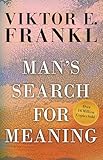
Man's Search for Meaning
Viktor E. Frankl

The Body Keeps the Score
Bessel van der Kolk, M.D.

12 Rules For Life
Jordan B. Peterson

Thinking, Fast and Slow
Daniel Kahneman