Best Popular Science Books
Curated by Skriuwer Editors · Updated April 2026 · Affiliate links
The best science books make the complexity of the universe feel accessible, even thrilling. These are the top-rated popular science titles, ranked by readers who came away with their minds genuinely expanded.
Popular science books solve a problem that science itself does not. Academic papers are written by specialists for specialists: dense, hedged, and inaccessible unless you already have the background to read them. Popular science books take ideas that changed how scientists understand the world and translate them into prose that anyone can follow. The best ones do this without dumbing down the ideas, which is a harder task than it looks.
This list covers the full range of popular science: physics (from quantum mechanics to cosmology), biology (evolution, genetics, neuroscience, ecology), mathematics (number theory, probability, complexity), and the history and philosophy of science (how scientific revolutions happen, why scientists are often wrong before they are right). We ranked by reader reviews because sustained reader satisfaction is a better signal than critical acclaim for deciding what to actually pick up.
A note on what makes a good popular science book different from a bad one: the best ones stay honest about what we do not know. They distinguish between what has been established by multiple independent lines of evidence and what is a working hypothesis. The worst ones overclaim certainty to make the narrative cleaner. When you read a science book that says 'scientists have discovered that...' with no caveats, that is a warning sign.
The FAQ below covers the most common questions about which books to start with by field and how to evaluate popular science claims. The ranked list is below.
Quick comparison, top 5
The ranked list
- 1

Yuval Noah Harari
(110,000 reviews)One hundred thousand years ago, at least six human species inhabited the earth. Today there is just one. Us. How did our species succeed in the battle for dominance? Why did our fo…
Buy on Amazon → - 2

Bessel van der Kolk, M.D.
(90,000 reviews)A pioneering researcher and one of the world’s foremost experts on traumatic stress offers a bold new paradigm for healing Trauma is a fact of life. Veterans and their families d…
Buy on Amazon → - 3

Matthew Walker
(55,000 reviews)'Astonishing ... an amazing book ... absolutely chocker full of things that we need to know' Chris Evans 'Matthew Walker is probably one of the most influential people on the plane…
Buy on Amazon → - 4

Neil deGrasse Tyson
(33,000 reviews)Over a year on the New York Times bestseller list and more than a million copies sold. The essential universe, from our most celebrated and beloved astrophysicist. What is the natu…
Buy on Amazon → - 5

Yuval Noah Harari
(32,000 reviews)From the author of the international bestseller Sapiens: A Brief History of Humankind comes an extraordinary follow-up that explores the future of the human species. Humans today e…
Buy on Amazon → - 6
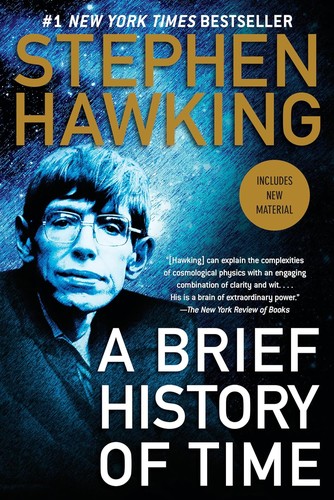
Stephen Hawking
(27,000 reviews)Was there a beginning of time? Could time run backwards? Is the universe infinite or does it have boundaries? These are just three of the questions considered in an internationally…
Buy on Amazon → - 7

Jared Diamond
(19,000 reviews)Why did Eurasians conquer, displace, or decimate Native Americans, Australians, and Africans, rather than the reverse? Jared Diamond argues that the gaps in power and technology be…
Buy on Amazon → - 8

Siddhartha Mukherjee
(12,000 reviews)The #1 NEW YORK TIMES Bestseller The basis for the PBS Ken Burns Documentary The Gene: An Intimate History Now includes an excerpt from Siddhartha Mukherjee’s new book Song of th…
Buy on Amazon → - 9

Steven Pinker
(5,000 reviews)Steven Pinker's brilliant, witty, and provocative book explains everything you always wanted to know about language: how it works, how children learn it, how it changes, how the br…
Buy on Amazon → - 10

Guy Deutscher
(3,500 reviews)"Guy Deutscher is that rare beast, an academic who talks good sense about linguistics... he argues in a playful and provocative way, that our mother tongue does indeed affect how w…
Buy on Amazon → - 11

The 50 Craziest Conspiracies
★ Our PickSkriuwer.com
(235 reviews)Some conspiracy theories are ridiculous. Others turned out to be true. This book covers 50 of the most mind-bending ones and takes you through the evidence, the origins, and the re…
Buy on Amazon → - 12

Skriuwer.com
(93 reviews)This book retells 20 major Greek myths in clear, modern prose while staying faithful to the ancient sources. It presents the stories of gods, heroes, and mortals as they appear in …
Buy on Amazon → - 13

Skriuwer.com
(74 reviews)This is not a children's dinosaur book. It's a look at prehistoric life as it actually was: violent, bizarre, and far more frightening than anything Hollywood has put on screen. Sc…
Buy on Amazon → - 14

Skriuwer.com
(73 reviews)America teaches its own history better than most countries. The problem is what gets left out. This book covers the episodes that don't fit neatly into the national mythology. The …
Buy on Amazon → - 15

Skriuwer.com
(61 reviews)Did the world's largest animals really go extinct 65 million years ago, or is there more to the dinosaur story than museums and textbooks have ever told you? This book examines the…
Buy on Amazon →
Frequently asked questions
What is the best popular science book for someone with no scientific background?
A Short History of Nearly Everything by Bill Bryson is the most widely recommended starting point for people who want to understand how science works across multiple fields. Bryson covers physics, chemistry, biology, and geology by following the stories of the scientists who made each discovery, which makes the ideas feel human and contextual rather than abstract. It has been in print for over 20 years and consistently earns strong reviews from readers who describe themselves as non-scientific.
What are the best books about evolution and biology?
The Selfish Gene by Richard Dawkins (1976) is still the clearest explanation of gene-centered natural selection ever written for a general audience. Dawkins introduced the concept of the meme in this book. For a more recent account covering modern genetics and genomics, The Gene by Siddhartha Mukherjee (2016) is comprehensive and beautifully written. For ecology and conservation, The Sixth Extinction by Elizabeth Kolbert won the Pulitzer Prize and explains the ongoing mass extinction through field reporting across five continents.
What are the best books about physics for non-physicists?
Seven Brief Lessons on Physics by Carlo Rovelli is 79 pages and covers general relativity, quantum mechanics, the structure of space, and the nature of time in prose that reads like philosophy. For more depth, The Elegant Universe by Brian Greene covers string theory and the effort to unify physics. On the history side, The Making of the Atomic Bomb by Richard Rhodes is the most complete account of the Manhattan Project and the physics behind it, and it won the Pulitzer.
What is the best book about the human brain?
The Brain That Changes Itself by Norman Doidge covers neuroplasticity (the brain's ability to reorganize itself throughout life) through case studies of patients and researchers. It is accessible and the case studies are gripping. For a broader neuroscience overview, Incognito by David Eagleman argues that most of our decision-making happens below conscious awareness. For the connection between brain science and mental health, The Body Keeps the Score by Bessel van der Kolk has the highest review count in this category.
What are the best science books about how science works (not what science has found)?
The Structure of Scientific Revolutions by Thomas Kuhn (1962) is the most influential philosophy of science book ever written. It introduced the concept of the paradigm shift and changed how scientists think about their own fields. For a more recent and more readable account, The Science Delusion by Rupert Sheldrake is controversial but raises legitimate questions about how scientific assumptions calcify into dogma. For understanding how statistics are misused in science, How to Lie with Statistics by Darrell Huff is still the clearest short guide.
Is there a science book that covers mathematics without requiring a math background?
The Man Who Loved Only Numbers by Paul Hoffman (about the mathematician Paul Erdos) requires no mathematical background and is primarily a character study of obsessive mathematical genius. For actual mathematical ideas in accessible prose, Fermat's Last Theorem by Simon Singh tells the 350-year story of a single unsolved equation through the lives of the mathematicians who worked on it. Both books demonstrate that mathematical thinking can be gripping subject matter without requiring the reader to do any calculations.