Best Greek Mythology Books in 2026
Curated by Skriuwer Editors · Updated April 2026 · Affiliate links
Greek mythology has fascinated readers for millennia, from the brutal gods of Olympus to the heroes who defied them. These are the best Greek mythology books available today, ranked by reader popularity. Whether you want the original dark myths or modern retellings, this list covers the full range.
Greek mythology is the oldest binge-worthy storytelling on the planet. The characters are flawed, the gods are petty, and the stakes are cosmic, which is exactly why these stories still sell millions of copies every year. The question is not whether you should read Greek mythology, it is which book to start with, and that depends on what kind of reader you are.
We ranked this list by real reader response, not by what critics think should matter. Every title below has thousands of Amazon reviews and a rating strong enough to survive modern, skeptical readers. We also flagged which books are dense and academic, which are fast paperback reads, and which are better as audiobooks if you commute or walk a lot.
A few notes on scope. We included retellings (Madeline Miller, Natalie Haynes, Pat Barker), reference collections (Edith Hamilton, Stephen Fry, Robert Graves), primary source translations (Homer, Hesiod), and a couple of illustrated editions that work well for younger readers or people who want the myths without a 600-page commitment. We did not include textbooks or academic monographs, those belong on a separate list.
If you are new to Greek mythology and have no idea where to begin, jump to the FAQ at the bottom of the page, we answer the three most common starting-point questions there. Otherwise, start scrolling, the ranked list is next.
Quick comparison, top 5
The ranked list
- 1

Madeline Miller
(220,000 reviews)WINNER OF THE ORANGE PRIZE FOR FICTION 2012 Greece in the age of heroes. Patroclus, an awkward young prince, has been exiled to the court of King Peleus and his perfect son Achille…
Buy on Amazon → - 2

Madeline Miller
(85,400 reviews)Madeline Miller takes a minor figure from Homer's Odyssey, the witch Circe, and builds a full novel around her. An instant number one New York Times bestseller, Circe is the finest…
Buy on Amazon → - 3
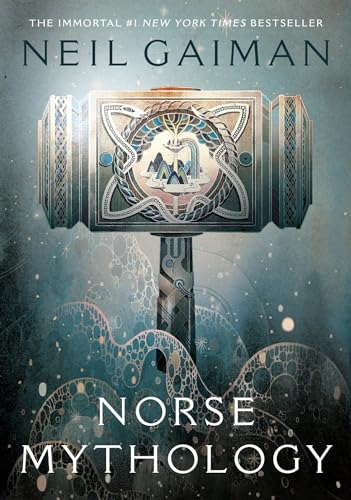
Neil Gaiman
(65,000 reviews)Neil Gaiman's bestselling retelling of the major Norse myths, from the creation of the world through the death of Baldur to Ragnarok. Gaiman stays close to the source material in t…
Buy on Amazon → - 4

Unknown Author
(31,000 reviews)Heroes by Unknown Author — one of the most acclaimed books in its field.
Buy on Amazon → - 5

Edith Hamilton
(21,000 reviews)Sparknotes presents a clear discussion of the action and thoughts of the work.
Buy on Amazon → - 6
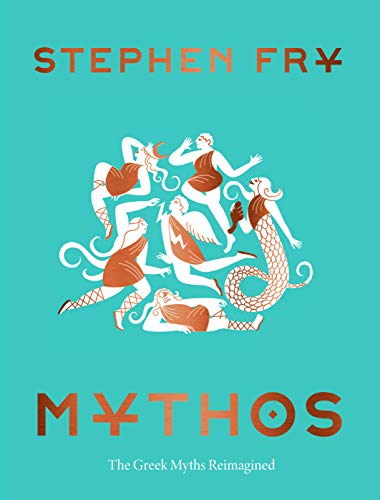
Stephen Fry
(16,800 reviews)Stephen Fry retells the Greek myths from the creation of the universe through the age of the Olympians, in warm, witty, modern prose. Mythos is the most popular recent entry point …
Buy on Amazon → - 7

Homer, translated by Robert Fagles
(14,000 reviews)Dating to the ninth century BCE, Homer's timeless poem still vividly captures the horror and heroism of men and gods wrestling with one another's fates on the fields of Troy. Fagle…
Buy on Amazon → - 8

Joseph Campbell
(10,500 reviews)Since its release in 1949, The Hero with a Thousand Faces has influenced millions of readers by combining the insights of modern psychology with Joseph Campbell's revolutionary und…
Buy on Amazon → - 9📚
Andrew George
(4,200 reviews)The world oldest great work of literature, predating Homer by centuries, in Andrew George award-winning Penguin Classics translation. A story about friendship, grief, and the fear …
Buy on Amazon → - 10

Snorri Sturluson
(2,200 reviews)Snorri Sturluson's 13th century Prose Edda in the standard Penguin Classics translation by Jesse Byock. This is the single most important primary source for Norse mythology, organi…
Buy on Amazon → - 11

Arthur Cotterell
(1,500 reviews)Over 500 alphabetical entries describing the central mythical figures of each culture (classical, Celtic, and Norse) and over 550 illustrations spanning fifteen centuries of fine a…
Buy on Amazon → - 12

Geraldine Pinch
(1,400 reviews)Spanning ancient Egyptian culture--from 3200 BC to AD 400--Pinch opens a door to this hidden world and casts light on the nature of myths and how they relate to the evolution of Eg…
Buy on Amazon → - 13

Stephan Weaver
(1,200 reviews)The gods of Ancient Egypt conjure up images of hieroglyphs with animal-headed people, fantastic civilizations, and a past that seems both unimaginably distant and still tenuously c…
Buy on Amazon → - 14

robert a armour
(900 reviews)"Robert Armour's classic text, long cherished by a generation of readers, is now complemented with more than 50 new photographs by Egyptologist Edwin Brock and drawings by Elizabet…
Buy on Amazon → - 15

Skriuwer.com
(146 reviews)America tells its own story better than any country in the world. This book asks whether that story is complete. It covers American history from the pre-Columbian era through colon…
Buy on Amazon →
Frequently asked questions
What is the best Greek mythology book for complete beginners?
Mythology, by Edith Hamilton, is still the most forgiving entry point. It was written in 1942 for readers who had zero background, it organizes the myths thematically instead of chronologically, and it quietly explains context without lecturing. If you want something more modern and conversational, Mythos by Stephen Fry covers the same core myths with a lighter, wittier touch. Pick Hamilton if you want a reference you will keep on the shelf forever. Pick Fry if you want to binge it like a podcast.
Should I read retellings like Circe and Song of Achilles, or start with the original myths?
Both, in that order. Read a short overview first (Fry or Hamilton), then jump into retellings. Retellings assume you already know roughly who Odysseus, Achilles, Medea, and Hecate are. If you go straight to Circe without knowing the Odyssey, you will still enjoy it, but you will miss about a third of the depth, because Madeline Miller is in constant conversation with Homer. The retelling hits harder when you know the source.
Do I really need to read Homer? Is the Iliad and Odyssey worth it?
Yes, but pick the right translation. Emily Wilson's Odyssey (2017) and her Iliad (2023) are the most readable in English right now, she chose a plain, fast meter that keeps you turning pages. If you want something more formal and classical-sounding, Robert Fagles is the other modern standard. Skip the Victorian-era translations unless you love archaic prose, they are what made people think Homer is boring. The stories are not boring, the old translations are.
What is the difference between Greek mythology and Roman mythology?
The Romans imported Greek gods and renamed them. Zeus became Jupiter, Hera became Juno, Aphrodite became Venus, Athena became Minerva. The Greek versions have more story, more personality, and more sex and betrayal, because the Romans sanitized a lot when they absorbed the pantheon. If you care about the original stories, read Greek sources. If you care about how these gods were invoked in Roman political life, read Ovid (Metamorphoses) and Virgil (Aeneid).
Are there good Greek mythology audiobooks?
Stephen Fry narrates his own Mythos trilogy and it is excellent, he was a Cambridge classicist before he was a comedian. Madeline Miller's Circe, narrated by Perdita Weeks, is also one of the most-praised mythology audiobooks of the last decade. For Homer, pick Emily Wilson's translations read by Claire Danes (Odyssey) or Audra McDonald (Iliad). Avoid unabridged versions of Robert Graves's The Greek Myths on audio unless you enjoy encyclopedia entries read aloud, the book is reference material, not narrative.
Which Greek mythology book should I buy for a 10 to 14 year old?
The Percy Jackson series by Rick Riordan is the easy answer and the right one, it introduces Greek gods through modern middle-school characters and has a 97 percent satisfaction rate in that age bracket. For a more serious approach, D'Aulaires' Book of Greek Myths (the illustrated 1962 edition, still in print) is the classic children's introduction, a lot of adult mythology fans started there.
Is there a single book that covers every Greek myth?
The complete reference is Robert Graves's The Greek Myths, two volumes, about 1,100 pages total. It tries to catalog every variant of every myth with notes on sources. It is exhaustive but dry, think of it as Wikipedia in paper form. For a single-volume attempt, Timothy Gantz's Early Greek Myth is more scholarly and more respected by classicists today, because Graves has some outdated interpretive claims. Neither book is a fun read, both are amazing references.