Best Books About Ancient Rome in 2026, Ranked by Reader Reviews
Curated by Skriuwer Editors · Updated April 2026 · Affiliate links
Ancient Rome built the most enduring empire in history and gave us laws, roads, and language that still shape our world today. These are the best books about Ancient Rome, from the Republic's rise to the Empire's fall, ranked by history enthusiasts who love the eternal city.
Rome is the most documented civilization in the ancient world, and one of the most misunderstood. Popular culture gives us gladiators, orgies, and decadent emperors. The actual record gives us a republic that ran on patronage and bribery for 500 years before it broke, an empire held together by roads and the legal fiction of a restored republic, and a succession of rulers ranging from brilliant administrators to genuine lunatics who somehow did not destroy the machine they inherited.
This list is ranked by real reader reception, not academic prestige. The books that appear here are the ones that thousands of readers actually finished and found worth recommending. We included three types of books: broad narratives that cover the whole arc from kings to republic to empire (Tom Holland, Mary Beard, Adrian Goldsworthy); focused studies of specific periods or figures (Cicero, Caesar, Augustus, the late empire); and a small number of primary sources in readable modern translations that let you hear how the Romans thought in their own words.
A note on scope. Roman history spans roughly 1,200 years from the traditional founding in 753 BCE to the fall of the western empire in 476 CE. The books on this list skew toward the Republic and early Empire, which is where most of the dramatic action and most of the best writing concentrate. If you want the later empire, look specifically for books on Diocletian, Constantine, and the 3rd century crisis.
Brand new to Rome? Start with Tom Holland's Rubicon. It covers the fall of the Republic with the pace of a thriller and the sourcing of a proper historian. From there, the FAQ below gives you a suggested reading path depending on what aspect of Rome interests you most.
Quick comparison, top 5
The ranked list
- 1

Marcus Aurelius
(75,000 reviews)The "Meditations" of Roman Emperor Marcus Aurelius are a readable exposition of the system of metaphysics known as stoicism. Stoics maintained that by putting aside great passions,…
Buy on Amazon → - 2

Ryan Holiday, Stephen Hanselman
(65,000 reviews)From the team that brought you The Obstacle Is the Way and Ego Is the Enemy, a beautiful daily devotional of Stoic meditations—an invitation to reflect on what we control, what w…
Buy on Amazon → - 3

Ryan Holiday
(35,000 reviews)Ryan Holiday's first Stoic-inspired book and the one that put modern Stoicism on the cultural map. Holiday builds his case from a passage in Marcus Aurelius: 'The impediment to act…
Buy on Amazon → - 4

Ronan Farrow
(14,000 reviews)In 2017, a routine reporting assignment evolved into a race against time to expose one of Hollywood's most powerful predators. But Ronan Farrow uncovered more than just abuse. Work…
Buy on Amazon → - 5

Mary Beard
(11,458 reviews)Mary Beard takes the reader through the first thousand years of Roman history, from the legendary founding of the city to the Caracalla edict of 212 CE that granted citizenship to …
Buy on Amazon → - 6

Tom Holland
(10,000 reviews)'The bloodstained drama of the last decades of the Roman republic... is told afresh with tremendous wit, narrative verve and insight' 'I owe a debt of gratitude to Tom Holland not …
Buy on Amazon → - 7

Seneca
(9,000 reviews)Seneca's correspondence with his friend Lucilius covers grief, wealth, time, fear of death, and the practice of philosophy in everyday life. Written near the end of his life, the l…
Buy on Amazon → - 8
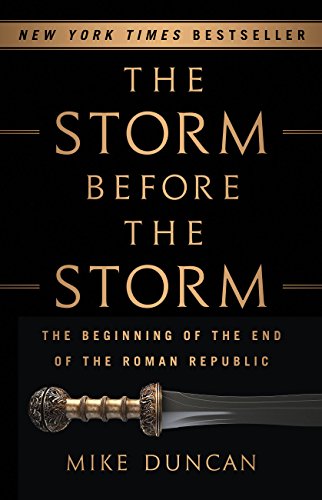
Mike Duncan
(6,800 reviews)Mike Duncan, the historian and broadcaster behind The History of Rome podcast, traces the years 146 to 78 BCE, the half-century before Caesar in which the Roman Republic quietly br…
Buy on Amazon → - 9
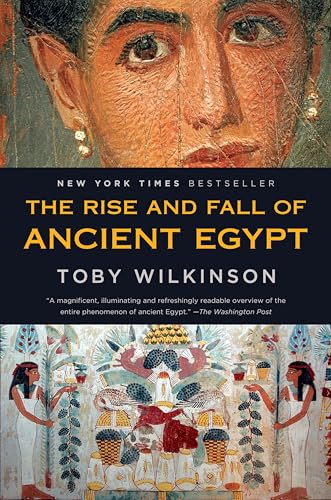
Toby Wilkinson
(3,600 reviews)Toby Wilkinson tells the full three-thousand-year story of ancient Egypt, from the first unification of the country around 3000 BCE to its absorption by Rome after the death of Cle…
Buy on Amazon → - 10

Stacy Schiff
(3,500 reviews)Pulitzer Prize-winning biography that strips away two thousand years of Roman propaganda to reconstruct the actual Macedonian queen of Egypt. Stacy Schiff is unusually careful abou…
Buy on Amazon → - 11

Adrian Goldsworthy
(3,200 reviews)The first major biography in decades examines the full complexity of Julius Caesar's character in an incisive portrait that shows why his political and military leadership continue…
Buy on Amazon → - 12

Alain de Botton
(2,800 reviews)In an age when most philosophy has retreated to technical problems within the academy, Alain de Botton uses the ideas of the great philosophers to illuminate the most pressing conc…
Buy on Amazon → - 13

Adrian Keith Goldsworthy
(2,200 reviews)By the end of the fifth century, Roman rule had vanished in western Europe and much of northern Africa. Applying the scholarship, perspective, and narrative skill that defined his …
Buy on Amazon → - 14

Daniel P. Mannix
(1,700 reviews)Daniel Mannix's 1958 classic was the source material for the original Gladiator film and the 2024 Peacock series of the same name. Lurid in places but built on close reading of Rom…
Buy on Amazon → - 15

Barry Strauss
(1,280 reviews)Barry Strauss, professor of classics at Cornell, reconstructs the Ides of March as a political event rather than a single dramatic scene. The book covers the conspirators Shakespea…
Buy on Amazon →
Frequently asked questions
What is the best Roman history book for complete beginners?
Rubicon by Tom Holland is the standard recommendation and for good reason. It covers the fall of the Roman Republic through Julius Caesar, Pompey, Cicero, Mark Antony, and the transition to empire, treating the whole period like a political thriller because it actually was one. Holland writes with pace and without assuming prior knowledge. Once you finish Rubicon, Mary Beard's SPQR covers the full thousand-year arc with more academic depth.
Do I need to read primary sources like Caesar and Cicero?
Not to enjoy Roman history, but primary sources dramatically change how you understand it. Caesar's Gallic Wars in the Caroline Alexander translation reads as fast as a modern war memoir and gives you Caesar's own voice, which is propagandistic but absolutely compelling. Cicero's letters, translated by Shackleton Bailey in the Penguin Classics edition, are the closest thing we have to a real-time political diary of the Republic's collapse. Marcus Aurelius's Meditations in the Gregory Hays translation is a genuinely affecting personal document. Pick one and try it alongside the narrative histories.
What is the most accurate portrayal of ancient Rome in fiction?
Steven Saylor's Roma Sub Rosa series (starting with Roman Blood) is meticulously researched historical mystery set in the late Republic. Robert Harris's Cicero trilogy (Imperium, Lustrum, Dictator) is the most novelistically accomplished recent Roman fiction, dramatizing Cicero's career from an outsider lawyer to the Republic's greatest orator to his murder on Antony's orders. Colleen McCullough's Masters of Rome series is the most exhaustive, seven novels covering 100 years of late Republican history in tremendous detail.
How did Rome fall, and which book explains it best?
Rome's fall is one of history's most debated questions, and there is no single explanation. Edward Gibbon's 18th-century Decline and Fall of the Roman Empire is the landmark work and still worth reading for its prose, but many of its specific arguments have been revised. Peter Heather's The Fall of the Roman Empire (2006) is the most compelling recent single-volume account, focusing on external pressure from the Hunnic migrations. Bryan Ward-Perkins's The Fall of Rome and the End of Civilization focuses on the material evidence, showing how dramatically life quality declined. Both are worth reading because they disagree productively.
Were the Romans really as corrupt and violent as they seem?
By modern standards, yes, and they knew it. Roman political culture was openly transactional in ways that modern democracies officially prohibit. Gladiatorial combat was entertainment, and the Romans discussed the ethics of it thoughtfully without abolishing it. Slavery was structural and brutal. But measured against their own stated ideals, Romans were also self-critical, the literature is full of complaints about corruption, greed, and the decline from ancestral virtue. The complexity is part of what makes Roman history so interesting: a civilization that built lasting law and infrastructure while being perfectly comfortable with violence as spectacle.
What is the best book about Julius Caesar specifically?
Adrian Goldsworthy's Caesar: Life of a Colossus is the most complete modern biography, roughly 600 pages and meticulously researched. Philip Freeman's Julius Caesar is shorter and more accessible if you want a fast read. For a dramatically different angle, read Plutarch's Life of Caesar in a modern translation alongside a biography, Plutarch was a near-contemporary with access to sources we have lost, and his account includes details that modern biographers cannot verify but cannot dismiss.